
Jaya Parvati Vrat is one of the gentlest and, at the same time, one of the most powerful observances to reach us from the depths of Vedic tradition. It is dedicated to Parvati — the one who, through devotion and patience, once won the heart of Shiva himself. That is why women turn to her: those still waiting for a worthy man to enter their life, and those already beside someone they love, who wish to give thanks for him and pray for his health and for long years together. This isn’t restriction for its own sake. It’s about reclaiming, for five days, a stillness in which your own inner voice can be heard again — and, within that stillness, something larger becomes audible too.
In this article:
- What Jaya Parvati Vrat Is
- The Legend: Devotion That Outlasts Fate
- When Jaya Parvati Vrat Falls in 2026
- The Classic Ritual: Five Days of Devotion
- A Modern Adaptation for City Life
- Classic vs. Modern: A Side-by-Side Comparison
What Jaya Parvati Vrat Is
Five days, every year, at the height of the Indian summer, women across Gujarat — and, increasingly, women far beyond it — sit down before a small altar and speak the same intention: may my life hold as much love and devotion as passed between Shiva and Parvati. That is how Jaya Parvati Vrat begins — an observance in honour of Goddess Parvati in her form as Jaya, “the one who triumphs.” Unmarried women keep this fast praying for a worthy life partner. Married women keep it for their husband’s health and long life, for warmth and peace within the home. The tradition lives on most strongly in Gujarat, carried carefully from mother to daughter, generation after generation.
The vrat begins on Ashadha Shukla Trayodashi — the thirteenth day of the waxing moon in the month of Ashadha — and runs for five days. At its heart is the aluna diet: a complete avoidance of salt. This isn’t austerity for its own sake. In setting salt aside, a woman sets aside excess flavour from her life for a while — so she can feel, more clearly, what she truly wants.
The Legend: Devotion That Outlasts Fate
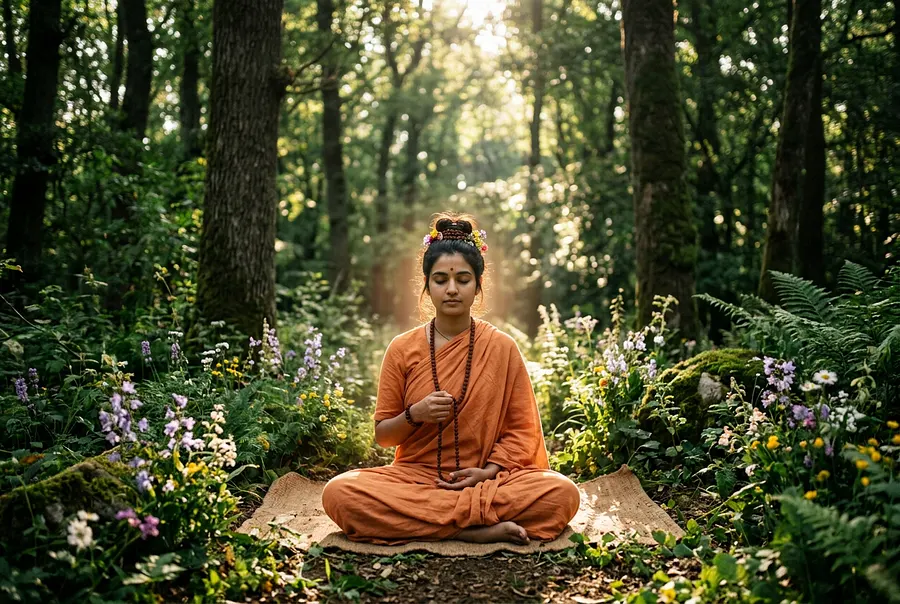
Behind the fast is a story of its own — the Jaya Parvati Vrat Katha, read aloud or told each day of the observance. It tells of a Brahmin family, devoted with their whole hearts to Shiva, yet denied for years what they had prayed for. One day the god showed them a path — into a forest, to a forgotten Shiva Linga that no one honoured anymore. On the way, tragedy struck: a snakebite, and a life hanging by a thread. But the woman never stopped praying. And her faith, her unbroken devotion, brought her loved one back.
This story is told a little differently from place to place — sometimes it’s the husband who is bitten, sometimes a son, and sometimes it’s young Parvati herself, who spent years in the forest in austerity to win Shiva’s heart. The details change, but one thing stays the same: genuine devotion can change even what seemed already decided.
When Jaya Parvati Vrat Falls in 2026
In 2026, the observance begins on Monday, July 27, and runs for five days, closing on Saturday, August 1, on Krishna Tritiya. A few sources give July 26 as the start date instead — the difference comes from how the lunar tithi is read for a particular place of observation. The date follows the lunar tithi rather than the ordinary calendar, so the averaged Indian tables you’ll find online can be an hour or two off from the exact time where you live. The simplest fix is not to guess, but to calculate it directly for your own location — our Lunar Calendar just needs a date and a city, and it works out the timing for your own coordinates and time zone.
The Classic Ritual: Five Days of Devotion
And now, the heart of it all: the practice itself. Simple on the surface, deep at its core, because it’s built on austerity, clarity of intention, and daily worship.
A few days before the fast begins — or on its first day — seven kinds of grain are sown in a small pot: javara. Wheat, barley, sesame, and other seeds. By the end of the fast, they’ve sprouted into tender green shoots — a living symbol of new life, and of what can grow given time and care.
Each of the five days unfolds in the same rhythm:
- Morning bath. Rising before sunrise, bathing, wearing clean clothes — traditionally red, yellow, or green.
- Sankalpa. Before the altar, the devotee states her intention — what this fast is being kept for.
- Puja. The Shiva Linga is bathed with water or milk (abhisheka); flowers, sandalwood paste, kumkum, and incense are offered, and an oil lamp is lit. The javara shoots are adorned with a sacred thread.
- Recitation. “Om Namah Shivaya” is chanted — an invocation to Shiva for protection and strength — along with “Om Gauryai Namah,” addressed to Parvati herself for blessings in marriage and family life. The Vrat Katha is read.
- Diet. No salt at all — not even sea or rock salt. Wheat, grains, vegetables, and spices are avoided. Milk, dairy, fruit, nuts, and sugar are allowed.
The fifth day is different. Women stay awake through the whole night — jagaran — singing bhajans and praying together, holding each other up. The next morning, the green javara shoots are carried, with gratitude, to a river, a pond, or a tree near a temple. Only then does the fast end: salt returns to the table, and with it, ordinary life — though not quite the same as before.
A Modern Adaptation for City Life
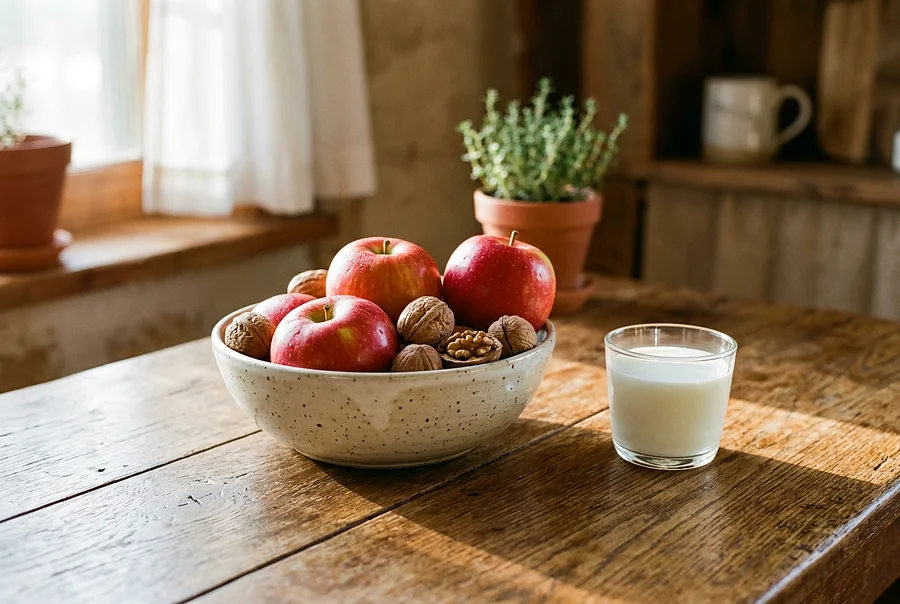
Not every one of us can grow javara, reach a temple, or hold to five strict days without salt — and there’s nothing wrong with that. The essence of the ritual doesn’t live in exact repetition of its details, but in the sincerity of the intention and the willingness to slow down, even for a few days.
A small corner of home can become your temple: an image of Shiva and Parvati — or simply two smooth stones as a symbol of the pair — a candle, fresh flowers. In place of seven grains, an ordinary potted plant will do: mint or basil, tied with a red thread as a mark of the intention you’ve planted.
From the fast, take what’s genuinely workable in your life: setting aside salt and processed food for at least one day, giving yourself a digital detox from news and social media, shifting to a light diet of fruit, nuts, and simple dairy.
And, of course, finding fifteen to twenty minutes of quiet each day. Light a candle, sit with it, listening for the harmony of the feminine and the masculine within you, repeat the mantra “Om Namah Shivaya” silently. If the idea of making this a lasting part of your life, rather than a one-off gesture, appeals to you, the Club runs a meditation course called “Inner Anchor” — it’s built around finding and strengthening exactly the kind of inner steadiness this ancient ritual honours.
On the final day of the practice, thank yourself and the space around you, water the plant, and wish peace on your home and the people you love.
Classic vs. Modern: A Side-by-Side Comparison
To make the two paths easy to see side by side — the ancient and the everyday:
| Classic Ritual | Modern Adaptation | |
| Altar | A temple or home Shiva Linga | A corner of the home with symbolic objects |
| Symbol of growth | Seven grains (javara) in a pot | A potted plant — mint or basil |
| Diet | No salt, grain, or vegetables — 5 days | No salt or processed food for at least 1 day |
| Practice | Puja, mantras, Vrat Katha twice daily | 15–20 minutes of stillness, one mantra a day |
| Closing | Jagaran, immersing the shoots in water | Gratitude, watering the plant |
Five days without salt are, when you think about it, five days without excess noise. Less flavour in the food, more attention to what’s happening within. Perhaps that’s why this observance keeps returning to women of every generation: it isn’t really about restriction. It’s about the pause it creates — a pause in which your own voice, and what truly matters to you, becomes audible again.
If the year, for you, is less a calendar and more a sequence of such pauses and returns, the “Vedic Rituals of the Year” programme is worth a look — it helps you build a conscious relationship with these rhythms, year after year, rather than only now and then.