Contents
- Introduction
- Chapter 1. Why “I like it” is not an argument
- Chapter 2. Your chart is the starting point
- Chapter 3. Stones that are dangerous specifically for you
- Chapter 4. The principle of repetition — when the chart says “yes”
- Chapter 5. Aspects — the final check
- Chapter 6. Cleansing — erasing what belongs to others
- Chapter 7. Activation — when a stone becomes a talisman
- Chapter 8. The first month — tuning the connection
- Conclusion. A stone won’t do the work for you, but it will strengthen you
Introduction
When walking into a jewelry store or browsing online marketplace catalogs, most of us choose stones intuitively — by color, brilliance, or the feeling of “mine” versus “not mine.” Some listen to the advice of a salesperson, some follow fashion trends, and some simply choose what looks beautiful and goes well with their wardrobe.
And there is nothing wrong with that if we are talking about jewelry, plain and simple.
But if you want a stone to work for you — to strengthen certain qualities, attract opportunities, protect you, or help you achieve a specific goal — then a random choice may not only fail to help, but may even cause harm. Yes, exactly that. A stone that is perfect for your friend may become a source of problems for you. And this is not about mysticism, but about a specific mechanism that was understood thousands of years ago.
In this article, I will explain the path a stone takes from being a faceless item in a display case to becoming a true talisman — your personal ally. This is a path based on the method of Jyotish, Vedic astrology, where choosing a stone is an exact science rather than intuitive guesswork.
Chapter 1. Why “I like it” is not an argument
Let’s be honest: how did you choose stones before?
Most likely, you walked into a store, looked at the display, and something caught your eye. A beautiful color, an interesting cut, a pleasant price. Or the salesperson said, “It suits you, take it.” Or you googled “stones for Taurus,” got a list of twenty names, and chose the one you could find in the nearest store.
All of that works when what you need is a piece of jewelry. Something beautiful for your neck or hand. An accessory for a dress. A gift that is nice to unwrap.
But a talisman is a different story.
A stone in a display case belongs to no one. It lies there for weeks, months, sometimes years. Hundreds of hands pass over it: salespeople move it around, customers try it on and put it back, cleaners wipe it down. Every touch leaves a trace. Every glance leaves an imprint. The stone absorbs all of it like a sponge.
And then you bring it home, put it on, and wait… for what? For it to start working for you? But it does not even know who you are yet. It is packed with other people’s energies, desires, and emotions. Some woman may have tried it on before you while thinking about divorce. The salesperson may have held it while worrying about an unpaid loan. All of that is inside the stone you just bought because it was “beautiful.”
But that is only half the problem.
The real issue is something else: are you even sure this stone suits you? Not in the sense that it “matches your eyes,” but in the sense that it is actually safe for you. Does it strengthen what should be strengthened? Does it agitate what would be better left untouched?
Here is a simple example. Blue sapphire is the stone of Saturn. Powerful, beautiful, prestigious. Many people want to wear it. But if Saturn in your chart is afflicted or placed in a hostile position, that stone will amplify everything negative this planet carries. Health problems, depression, losses, isolation. You wanted protection and strength, and instead you got an intensification of everything that was already a weak point.
And no salesperson in a jewelry store will tell you that. Not because they are malicious — they simply do not know. Their job is to sell. Your job is to understand what you are buying.
That is exactly why the Jyotish method of gemstone selection exists. Not guessing, not intuition, not lists from the internet, but an exact calculation based on your birth chart.
Chapter 2. Your chart is the starting point
So if not intuition and not the advice of a salesperson, then what?
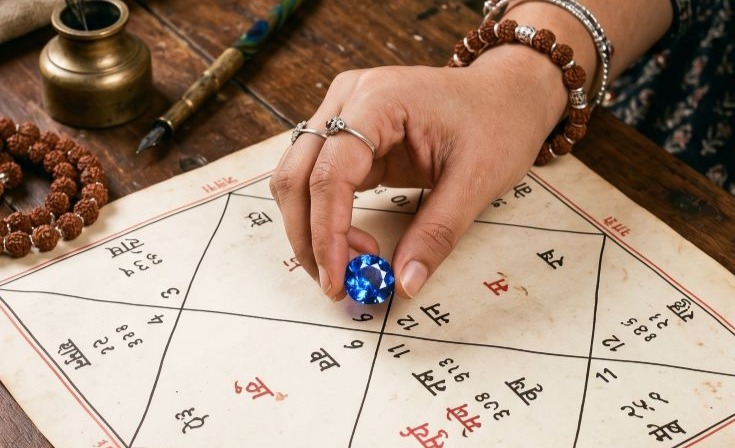
The answer is: your birth chart. Janma Kundali in Sanskrit. It is a snapshot of the sky at the moment you were born — where the planets stood, in which signs, in which houses, and how they related to one another. This snapshot is unique. There are no two people on Earth with absolutely identical charts unless they were born in the same minute in the same place.
Why Jyotish rather than familiar Western astrology? The difference is fundamental. The Western system uses the tropical zodiac — it is tied to the seasons and over two thousand years has shifted by about 24 degrees relative to the actual constellations. Jyotish works with the sidereal zodiac — it looks at the sky as it actually is right now. When a Jyotish astrologer says your Sun is in Taurus, it is truly in the constellation of Taurus, not just in the sector that was given that name two thousand years ago.
In addition, Jyotish includes nakshatras — 27 lunar mansions that provide far finer calibration than just the zodiac sign. Two people may both be Taurus, but if one is born in the nakshatra Krittika and the other in Rohini, those are completely different stories, different characters, different stones.
Three things are needed for a calculation: date of birth, time of birth, and place of birth. Time is critical. A difference of half an hour can shift the rising sign, and that changes the entire chart. If you do not know your exact birth time, it is better to restore it through rectification than to guess.
Once the chart has been built, several key parameters must be examined.
The Sun sign is your outer nature, the way you manifest in the world. The Moon sign is your inner world, emotions, and subconscious. Lagna, the rising sign, is the main filter through which everything else passes; it reflects your physical constitution, health, and the general direction of your destiny. The birth nakshatra is a subtle tuning point that determines deep inclinations and favorable energies. The day of the week matters too — each day has its own planetary ruler, and that also affects the choice.
Each of these parameters is connected to certain stones. The Sun — ruby. The Moon — pearl. Mars — red coral. Mercury — emerald. Jupiter — yellow sapphire. Venus — diamond. Saturn — blue sapphire. Rahu — hessonite. Ketu — cat’s eye. But this is only the surface. Nakshatras have their own stones. The placement of planets in the houses gives its own recommendations.
When all of this is combined, it produces an initial list. Usually it contains 12 to 15 stones that potentially suit you. They are connected with strong or favorable points in your chart. These are the candidates that could become your talisman.
Could — but not necessarily.
Because the next step is to understand which of these candidates are actually dangerous specifically for you.
Chapter 3. Stones that are dangerous specifically for you
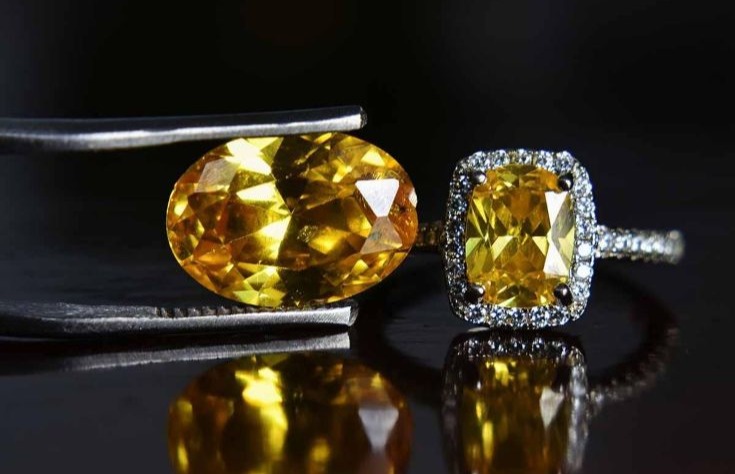
This is where we get to what ordinary articles usually leave out.
The internet is full of lists titled “stones by zodiac sign.” You type in your sign, get a dozen names, and it seems that all of them “suit” you. Pick any one and wear it in good health.
But the truth is that among those “suitable” stones there may be some that are poison for you. Not metaphorically, but quite specifically: they will strengthen what in your chart is already overloaded or damaged. It is like prescribing a person with high blood pressure a drug that raises blood pressure. Formally, it is medicine. In reality, it is harmful.
In Jyotish, there is the concept of afflicted planets and hostile planetary relationships. If a planet in your chart is weak, in debilitation, or aspected by malefic grahas, then its stone is contraindicated for you. You put it on, and instead of enhancement you get an aggravation of all the problems that planet carries.
Here is a concrete example. Suppose you are Taurus by ascendant. For Taurus, Saturn rules the ninth and tenth houses — in theory, these are good houses related to career and fortune. So blue sapphire should help, right? Not so fast. We need to see where Saturn is placed in the actual chart. If it is conjunct Rahu or Ketu, if it is aspected by Mars, if it is in the twelfth house of losses, then Saturn’s stone will strengthen not “career and fortune,” but the problems carried by this afflicted Saturn: depression, delays, obstacles, chronic illness.
Or another example — serpentine. It is a beautiful, inexpensive stone, and many people wear it. But for some signs it is categorically unsuitable because it is linked to energies that will act destructively.
Filtering out dangerous stones is a mandatory stage. So we take the initial list of 12 to 15 candidates and ruthlessly cross out everything connected with afflicted planets, hostile energies, and houses of loss and obstacles. That does not mean the crossed-out stones are bad in themselves — they are bad for you, specifically for your chart. For someone else, that same sapphire may be their best ally.
After filtering, the list narrows. Usually 6 to 8 stones remain that are definitely safe and potentially useful. Better already. Now we can work.
But how do you choose the one, the main one, from among them?
Chapter 4. The principle of repetition — when the chart says “yes”
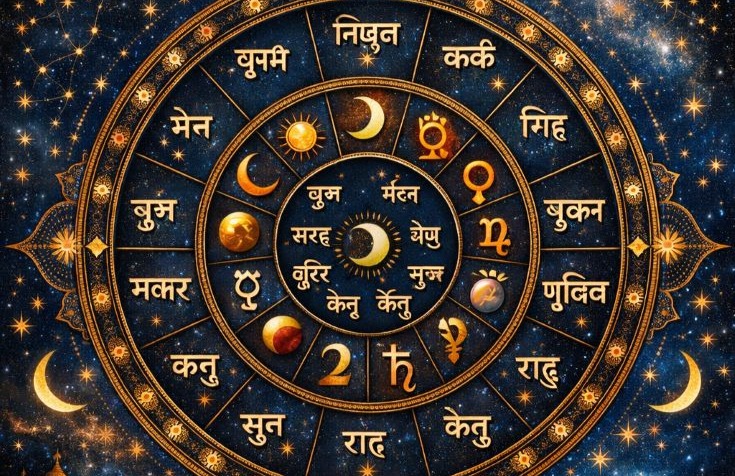
Now we come to the heart of the method.
You have 6 to 8 safe stones. All of them are linked to favorable planets in your chart. Any of them can be worn without risk. But which one will truly become yours? Which one will not simply “do no harm,” but will actually strengthen, help, and work?
The answer comes through repetition.
Here is how it works. We analyze the chart not by one parameter, but through several layers. The year of birth gives its indications. The month gives its own. The day gives its own. The hour gives its own. The nakshatra gives its own. The lunar day gives its own. Each layer is like a vote cast for certain stones.
And then you begin to notice: the same stone keeps showing up again and again. By year — carnelian. By day of the week — carnelian. For example, three votes from different sources point in the same direction.
This is not a coincidence. It is a signal.
When a stone appears in several parameters at once, it means that its energy resonates with your chart on a deep level. It does not just “suit” you — it is yours. The universe is literally underlining it several times: this one, take this one.
Let’s look at a real example. A woman was born on May 15, 1969, on a Thursday, at 2:30 PM. Her goal is to attract a partner into her life.
We build the chart: the solar sign is Taurus, the lunar sign is Aries, and the lagna is Leo. Next, we consistently analyze several parameters used in Jyotish when selecting a stone: basic birth data, time indicators, and additional aspect relationships.
| Parameter | Value | Stone / stones |
| Year of birth | 1969 | carnelian |
| Month of birth | May | ruby |
| Lunar day | second | black pearl, mother-of-pearl |
| Day of the week | Thursday, the day of Jupiter | sapphire, carnelian, carnelian |
| Time of birth | 2:30 PM | beryl |
| Additional indicator | favorable Virgo aspect | Virgo stones |
The correspondences between chart parameters and stones are determined within the Jyotish system through a combination of planetary rulers, time indicators, and aspect relationships.
After that, we move to the filtering stage and exclude stones associated with tense or unfavorable influences for this chart. In our example, sapphire and serpentine are removed from the list.
Then we look at which stones appear more often than others. Carnelian appears twice — by year of birth and by day of the week. That is why it becomes the main candidate.
Next, we check the characteristics: carnelian helps attract the energy of the opposite sex and раскрывает the inner energy of love. It is an exact match for the request.
The solution is found.
This is how, step by step, one clear leader crystallizes out of several candidates. Not because you chose it, but because the chart chose it for you.
Sometimes two stones are tied — both appear with the same frequency. In that case, we move on to the next level of verification.
Chapter 5. Aspects — the final check
When two or three equally strong candidates remain, aspects come to the rescue.
An aspect is the angular distance between planets in the chart. Planets look at one another, influence one another, and that influence may be harmonious or tense.
A trine — an aspect of 120 degrees — is considered the most favorable. If the planet ruling the stone is in trine to important points in your chart, that is a green light. The energy will flow easily, and the stone will switch on naturally, without resistance.
A sextile — 60 degrees — is also good, though somewhat weaker.
A square — 90 degrees — is tension. Planets in square to one another create friction and conflict. The stone of a planet that is in square to your Lagna or Moon may work sharply, cause discomfort, and demand constant adaptation.
An opposition — 180 degrees — is even more difficult. It is a tug-of-war, a constant confrontation of energies.
So if one of two stones is linked to a planet in trine and the other to a planet in square, the choice is obvious. I choose the one in the harmonious aspect.
But it is important to look not only at aspects, but also at the overall strength of the planet. In Jyotish there is the concept of Shadbala — sixfold strength, a complex indicator of how capable a planet is of giving results. If a planet is strong, well placed, in a friendly sign, and not combust by the Sun, its stone will work powerfully. If a planet is weak, even without bad aspects, the stone may simply produce no effect.
The ideal candidate is a stone of a planet that is strong, favorable for your rising sign, in good aspects, and appears in several parameters of the calculation at once.
Once such a stone has been found — congratulations. The theoretical part is complete. You know exactly what you need.
But the stone is still on the display shelf. Or in a package from the seller. Or in the jewelry box your grandmother gave you. It is still not yours. For it to become a talisman, three more stages are needed: cleansing, activation, and tuning the connection.
Chapter 6. Cleansing — erasing what belongs to others
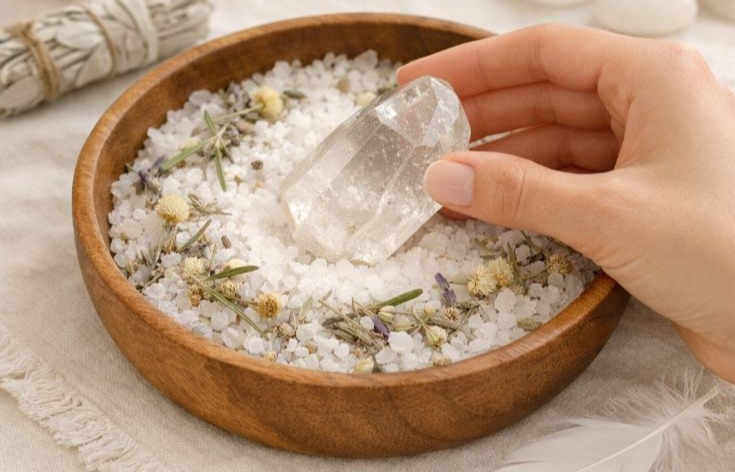
You are holding your stone in your hands. The very one your chart pointed to. Beautiful, correct, yours by every calculation.
But not quite yours yet.
Stones are crystalline structures that record and store information very well. This is not esotericism, it is physics: quartz is used in watches and electronics precisely because it can stably hold vibrations. The same property works with subtler energies too.
Your stone went through a long journey before reaching you. It was mined from the earth — often under far from humane conditions. It was processed in a factory. It traveled through several countries. It sat in a warehouse, then in a display case. Dozens of hands touched it, hundreds of eyes looked at it. Every contact left an imprint. The stone is packed with other people’s information like an old hard drive.
Before writing your own program onto it, the drive must be formatted.
There are several cleansing methods, and the choice depends on the type of stone.
Salt is a powerful cleanser. It draws out negativity like a sponge. The stone is buried in dry sea salt for one to three days. But not all stones tolerate salt: porous, soft, or cracked stones may be damaged.
Running water is gentler and safer for most stones. Ideally, it should be a natural source — a spring, stream, or river. If that is not available, tap water will do, as long as it is flowing rather than stagnant. Hold the stone under the stream for fifteen to twenty minutes, imagining the water washing away everything foreign.
Moonlight is especially good for stones associated with the Moon and feminine planets. Place the stone under the light of the full Moon or waxing Moon for the entire night. Under the waning Moon, do this only if the goal is cleansing rather than charging.
Earth is the deepest method. The stone is buried in the ground for three days, a week, or sometimes longer. The earth resets it completely, but it takes time and does not suit every stone.
Smoke — incense, sage, sandalwood. Pass the stone through the smoke while asking that it be cleansed of other people’s energies. This is a quick method and works well as a preliminary or supportive one.
How do you know the stone is clean? You can feel it. The stone becomes neutral, empty, quiet. Before cleansing it may have felt “noisy,” “heavy,” or “cloudy.” Afterward it feels like a blank page.
If you are unsure, it is better to leave it longer. There is no need to rush. An extra day in salt will not hurt, but an under-cleansed stone will continue to radiate what belongs to others.
The finish line is in sight.
Chapter 7. Activation — when a stone becomes a talisman
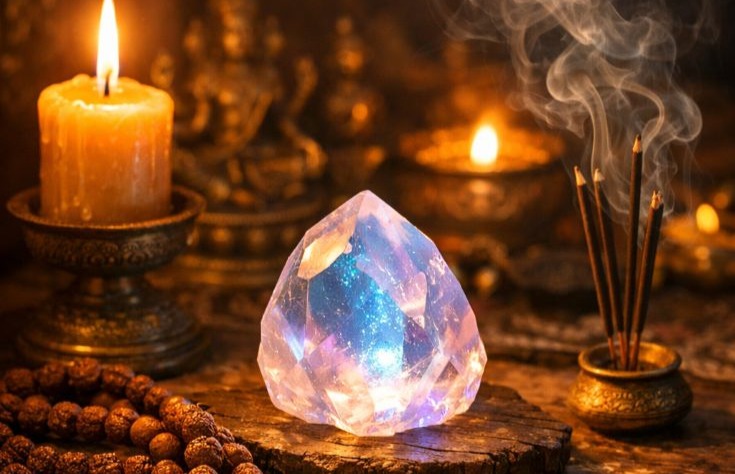
The stone has been cleansed. It is empty, neutral, ready to work. Now it needs to be switched on.
Activation is the moment when a mineral stops being just a beautiful crystal and becomes your instrument. Before that, it belonged to no one. After that, it is yours. Connected to you, tuned to you, working for you.
And here it is critically important to choose the right time.
In Jyotish, time is not an abstraction. Each day of the week is ruled by a certain planet, and a stone should be activated on the day of its planet. Ruby and Sun stones — on Sunday. Pearl and Moon stones — on Monday. Red coral — on Tuesday, the day of Mars. Emerald — on Wednesday, the day of Mercury. Yellow sapphire — on Thursday, the day of Jupiter. Diamond and Venus stones — on Friday. Blue sapphire — on Saturday, the day of Saturn.
But the day of the week is only the first layer. Then we look at the lunar day, tithi. A waxing Moon is favorable, especially the fifth, tenth, and eleventh lunar days. The full Moon is suitable for lunar stones. During the waning Moon, it is better not to activate a stone — the energy is in decline.
Deeper still is the planetary hour. The day is divided into 24 planetary hours, each ruled by one of the seven planets. Ideally, the day, the lunar day, and the hour all align in energy. Sunday, waxing Moon, solar hour — and you activate a ruby. Such a combination gives maximum strength.
Finding the right time is a separate task. Sometimes the ideal window opens once a month, sometimes once every few months. There is no point in rushing: it is better to wait for the right moment than to activate the stone at the wrong time and later wonder why it does not work.
Now for the ritual itself.
On the morning of the chosen day, take a shower and put on clean clothes. Sit in a quiet place where no one will disturb you. Place the stone in front of you. You may light a candle or incense, but that is optional — your state matters more than the setting.
Take the stone in your hands. Feel its weight, temperature, texture. Close your eyes. Take a few deep breaths to calm the mind.
Now — the mantra. Each planet has its own mantra, and during activation it is recited a specific number of times. For the Sun: “Om Suryaya Namaha,” 108 times. For the Moon: “Om Chandraya Namaha,” 108 times. For Mars: “Om Mangalaya Namaha.” For Mercury: “Om Budhaya Namaha.” For Jupiter: “Om Guru Brihaspataye Namaha.” For Venus: “Om Shukraya Namaha.” For Saturn: “Om Shanaye Namaha.”
Personally, I recite the mantra aloud or in a whisper while holding the stone in my hands. Prayer beads help you keep count — 108 beads, one round after another. With each repetition, I imagine the stone filling with light.
After the mantra comes intention. The more precise the request, the more precise the work.
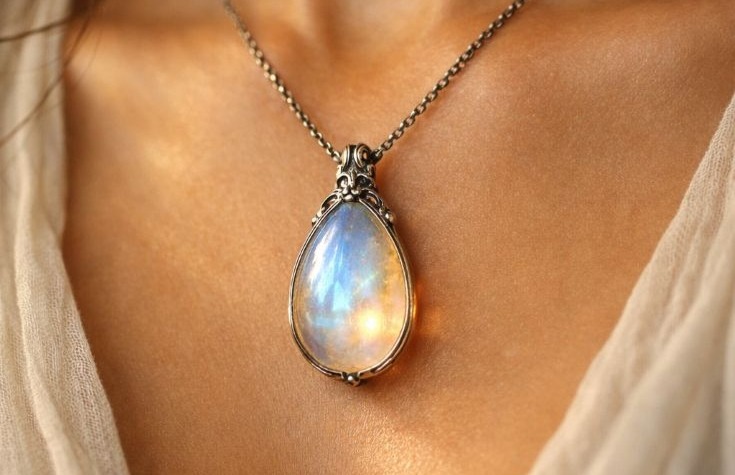
And finally — the first wearing. Put the stone on your body. A ring goes on the finger associated with the planet. The thumb is not used. The index finger — Jupiter. The middle finger — Saturn. The ring finger — Sun and Venus. The little finger — Mercury. If it is a pendant, wear it so that the stone touches the skin rather than lying over clothing.
That is all. The stone is activated. It is no longer just a stone — it is your talisman.
But this is not the end of the road. It is the beginning of a relationship.
Chapter 8. The first month — tuning the connection
Activation is like a wedding. It is an important ritual, a beautiful moment, but a real marriage is built not on the wedding day, but over years of life together. It is the same with a stone. The first weeks after activation are a period of adjustment, when you and the stone get used to one another.
The first 21 days are especially important.
Wear the stone constantly. Do not take it off at night, do not put it away in a box “for a special occasion.” The stone should be with you, on your body, in your field. It is tuning itself to your rhythm, your energy, your life. If you keep taking it off and putting it back on, the tuning gets disrupted and the bond does not form.
There are exceptions when the stone should be removed. Intimacy — stones do not like that energy, especially stones of “pure” planets such as Jupiter. Visits to cemeteries, morgues, and places connected with death. Contact with dirt or chemicals — simply to avoid damaging it. In all other cases, wear it.
In the first days, pay attention to your dreams. A stone may communicate with you through dreams, especially in the beginning when the bond is still fresh. Vivid, unusual dreams are a good sign — it means contact is being established. Write them down if you can; later you may notice patterns.
Observe external events. Sometimes a stone begins to work immediately and powerfully: suddenly you get a call with a job offer, an old conflict resolves, long-awaited news arrives. Sometimes it works quietly and gradually, and you notice changes only after a month or two when looking back. Both options are normal. Stones work differently, and so do people.
Watch the state of the stone. If it starts to grow cloudy, change color, or lose its shine, that is a signal. The stone is taking on negativity and protecting you, and this is reflected in its appearance. Such a stone should be cleansed outside the regular schedule. If the dullness does not pass, it may mean the stone has “used itself up” and a new one is needed.
A crack or chip is a serious sign. The stone has taken a blow that was meant for you. Thank it and set it aside — a cracked stone will no longer work, because its structure has been compromised. This is not a tragedy; it is a normal part of the process. Stones are consumable in the sense that they protect at their own expense.
If the stone gets lost, do not search too obsessively. Sometimes stones leave when they have completed their task. Sometimes they leave when you no longer need them or when they have even stopped being suitable for you. Let it go, and if you feel the need, choose a new one.
After 21 days, the connection is usually established. The stone feels like a part of you, and you stop noticing it, just as you stop noticing a wedding ring after several years of marriage. This is a good sign — it means the merging has taken place.
After that, simply live together. The stone works in the background, strengthening what it should strengthen, protecting where it should protect. Your task is simply to cleanse it from time to time (once every month or two, on the full Moon or new Moon), thank it, and remember that it is an ally, not a servant.
Conclusion. A stone won’t do the work for you, but it will strengthen you
Let’s sum it up.
A talisman stone is not a magic pill. It will not fulfill your wishes instead of you, it will not bring wealth to someone lying on the couch, and it will not build a relationship for someone who is afraid to leave the house. A stone is an amplifier. It takes what you are doing and adds power. It supports you where you are making effort. It protects you where you are vulnerable. But it does not replace action.
At the same time, a properly chosen stone is a serious force. It is like a favorable wind for a ship: you still have to sail yourself, but with the wind you will get there faster and spend less effort. Or like a good tool in the hands of a craftsman: a skilled person can hammer in a nail even with a bad tool, but with a good one it is faster, more precise, and more enjoyable.
The path from a display case to a working talisman is not a quick one. You build the chart, analyze the parameters, filter out dangerous stones, find the one that appears in several layers, check aspects and planetary strength, choose the activation time, perform the ritual, and go through the tuning period. Every stage has its nuances, and each requires knowledge and attention.
Can you walk this path on your own? Yes, if you have the time, the desire, and the willingness to study Jyotish. It is a beautiful and profound system, and getting acquainted with it changes your outlook on life in itself.
But there is also a simpler way.
If you want to receive your stone selected according to all the rules — with analysis of your birth chart, consideration of nakshatra and aspects, filtering of dangerous options, calculation of the activation time, and detailed instructions on how to perform the ritual — I can do this for you.
Write to me. I will explain the process in more detail and answer your questions. And if you decide to proceed, I will carry out a personal selection after which you will know exactly which stone is yours, why it is that one, and how to make it your ally.