Yoga has become very popular in the last 2-3 decades. This has led to a surge in yoga practitioners as well as yoga teachers. Unfortunately, not all of them have an inquisitive mind to get to the bottom of it and find out the real reason behind certain traditions and approaches in yoga. As an analogy, I would like to give an example through one of the most vivid, in my opinion, mythical Vedic stories.
The parable of the Brahman and the cat

A brahman had a favorite cat. When the brahman was performing puja (worship of the gods), the cat started to go wild – knocking over incense holders, throwing flowers and offerings, and shitting on the altar. Then the brahman began to tie the cat to a tree for the duration of the ritual. The little son of the brahman, looking at his father, learned to honor the gods and to perform the rituals correctly.
Years passed, the old brahman and his cat died, and the young brahman’s son, observing all the rules of the ritual of honoring the gods, bought another cat and began to tie it to a tree during puja….
As you see, sometimes blind adherence to traditions leads to the loss of the meaning and the root cause of customs. Moreover, very often ignorance of the root cause leads to distortion of the meaning of the tradition, which inevitably substitutes the tradition itself. It is most important not only to know and honor the knowledge received, but also to be interested in the meaning embedded in it.
Such distortions of information are manifested in almost all spheres of life. First of all, it is associated with changes in the style and rhythm of people’s lives. It is influenced by modernization, information saturation, and globalization of life patterns and values. The centuries-old history of yoga development has also been subjected to these external influences. Very often yoga teachers are so immersed in the daily routine, trying to win their place under the sun, that they do not think about these or those established dogmas and rules in yoga, continuing to declare them to their students without going deeper into the essence of the matter.
I admit that as a yoga teacher, I also tended to perpetuate certain myths because I was taught them and believed in their reality. However, the more I researched the issue, inquired into the details, and deepened my knowledge of yoga, the more truths I rediscovered.
In this article, I will share with you my most important findings and misunderstandings that are increasingly common among yoga practitioners. Read on and share which of these myths has been a revelation for you. Or maybe despite certain facts, you are not yet ready to change your approach to further practice?

1. Everyone should practice asanas in the same way
This great myth has long earned its place in the world of yoga. The tuning of the body while performing an asana is considered critical by many yoga teachers. Many even argue that it is dangerous to health to perform asanas without their “proper” tuning. However, if all asanas could be performed by anyone, then the body and its capabilities would be the same for everyone. Then what about those who have a body structure different from the “average” one – if a person has a narrow pelvis, short arms little rotation in a joint, etc.?
Ayurveda has been saying for many thousands of years that each person has an individual nature and uniqueness. Each of us is truly unique both in our nature and of course in our body structure. In a general sense, of course, we are all alike, but on deeper comparison, there are more differences in us than similarities – from the molecular structure of DNA to our fingerprints. With each person being so unique, it is fundamentally flawed to expect every yogi to perform every asana the same way.
For example, in Virabhadrasana 2 (“Warrior 2”), a person with wide hips will need to spread their legs a little wider than usual to keep their balance and not hurt their knees. Another person with a shallow pelvis may need to reduce the distance between the feet. The same is true for every yoga pose.
One must take a balanced approach to each asana, relating it to the body structure, flexibility, and physical capabilities of the yoga practitioner, as well as adapting the asanas to the strengths and limitations of each practitioner.
2. All asanas are suitable for all practitioners
For one practitioner, Warrior Pose I (Virabhadrasana I) may seem very easy, but for another practitioner, it may cause a pulling pain in the hip of the back leg or a crunch in the lower back. The same may be the case with camel pose (Ushtrasana) or pyramid pose (Parshvottanasana). Some people like the wheel pose (Urdhva Dhanurasana), while others can’t even figure out how to get into it.
Similar to the myth of asanas being all the same, the claim that everyone should be able to do all the basic asanas is also fundamentally flawed. Some practitioners may never be able to safely practice headstands (Shirshasana) because their body proportions simply won’t allow it. Others may never be able to bend deep enough to go into Kapotasana (pigeon pose). This does not mean that they are not dedicated enough or spiritual enough, or that their chakras are blocked. It simply means that their actual physical flexibility does not allow for such stretches and body postures.
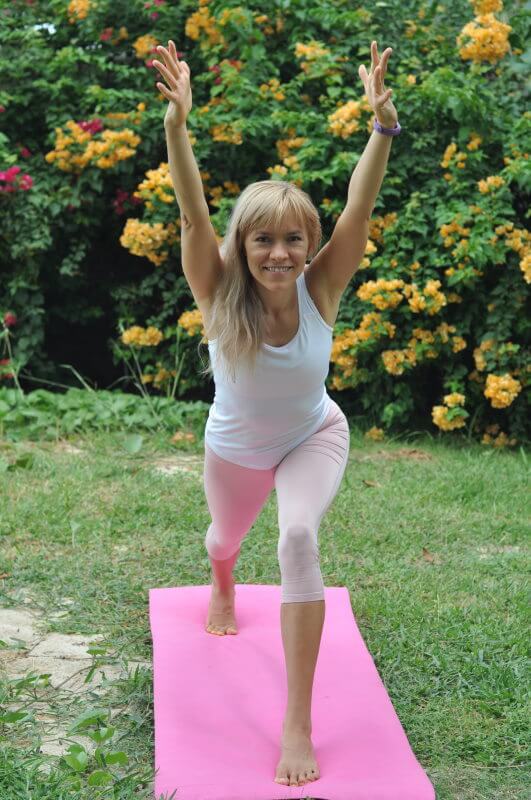
We all have physical limitations. For some, it may exclude a whole category of postures from practice. For others, it may just mean that their body position in a particular asana will not be very deep. A person’s body structure, especially their bone structure, is the determining factor in whether or not they will be able to go into a particular asana or not – no more, no less.
Therefore, instead of berating yourself for your inability to “master” certain poses, it is better to observe yourself – to study your body and its possibilities. Nowadays the variety of asanas is so great that absolutely everyone can find suitable variants for himself.
3. Asanas are very ancient
The age of yoga is the subject of much discussion and debate. We will not delve into them, but if we rely on the images of people in meditative postures engraved on stones, we can say that yoga is about 5000 years old (and maybe more!). The word “yoga” first appeared in written form in the Rigveda, one of the oldest sacred scriptures of Hinduism.
Contrary to popular belief these days, asana and yoga are not synonymous. The ancient philosophy of yoga has been studied and practiced for thousands of years. However, asana as we know it today is very young – about 100 years old.
In today’s world, yoga is recognized as a few “classic” texts upon which most schools and accretions in yoga rely. These include Patanjali’s Yoga Sutras, the Hatha Yoga Pradipika, the Gheranda Samhita, and the Shiva Samhita. In the oldest of these, Patanjali’s Yoga Sutras, the meaning of “asana” as a comfortable and stable posture for meditation is mentioned only in passing. The Shiva Samhita and the Hatha Yoga Pradipika, which date from the 15th-17th century AD, already mention more asanas, 4 and 16 respectively. In the Gheranda Samhita there are 32 asanas!

The Hatha Yoga Pradipika was one of the first texts to present physical postures as a form of yoga practice, but these postures were very limited in number and different from those now practiced in modern yoga classes.
The modern era of yoga was initiated and founded by Tirumalai Krishnamacharya, 1888-1989. He was the first to transform asana into a true physical art form with influences from gymnastics, dance, and military teachings and called it yoga. It was his influence and his students that helped to actively spread yoga as we know it today.
In 1926, the King of Mysore invited Tirumalai Krishnamacharya to teach him and his family the philosophy of yoga. Krishnamacharya was primarily an expert in the Vedas, and when he began to teach his students (mostly boys) the philosophy of yoga, he found that they were unable to focus and hold their attention. So he developed a system of “military” exercises and physical postures that would “generate” the energy of his students so that they could, after much practice, diligently study the scriptures. In essence, this was the creation of our modern asana practice in yoga.
Thus, the asanas that we mostly practice today in Hatha Yoga, Vinyasa Flow, Power Yoga, and other modern styles of yoga are not more than 100 years old. These are just some of the many myths about yoga.
In summary, I urge you to be alert and curious. And when you are told something that seems unreasonable to you, don’t be afraid to question it. And if it’s important to you, research sources that you trust.
Study, seek, and learn!

Author of the article:
Olya Amitara
Healthy lifestyle consultant