There are different options for what body position you can take during meditation and, probably, at different stages of development, each of them has its place.
In this article, I will talk about the classical approach to meditative pose.
The classic meditation pose is called the Seven-PartVeronaa Pose. It was first described by the Buddha (or rather, his disciples) in a text dedicated to Yoga Tantra, called “The Enlightenment of Vairocana.”
Vairochana is one of the manifestations of Buddha, symbolizing the enlightened form.
It is believed that when the body assumes the seven-fold posture of Vairochana, the various energies of the body begin to circulate better. In particular, wind energies (vayu) are activated, making it possible to eliminate negative emotions.
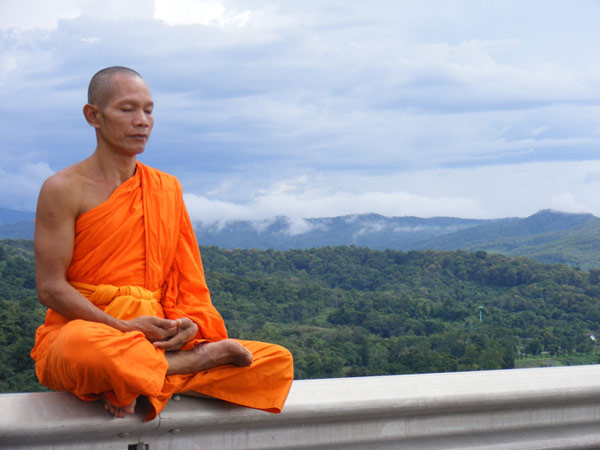
In the seven-part Vairochana pose, there are seven parts of the body that need to be correctly positioned:
- Legs
- Hands
- Back
- Head
- Lower jaw
- Language
- Eyes
Let’s take a closer look at the requirements for the position of each of them during meditation:
1. LEGS
With the help of your legs you need to create a stable support, a foundation for the body. The main task is to create a physical foundation that is both comfortable and stable. Your body should be in a comfortable position. Body discomfort should not distract you from meditation.
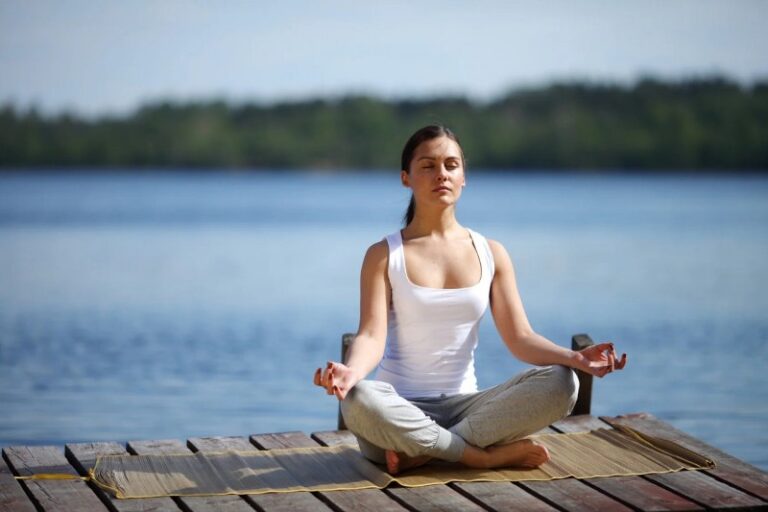
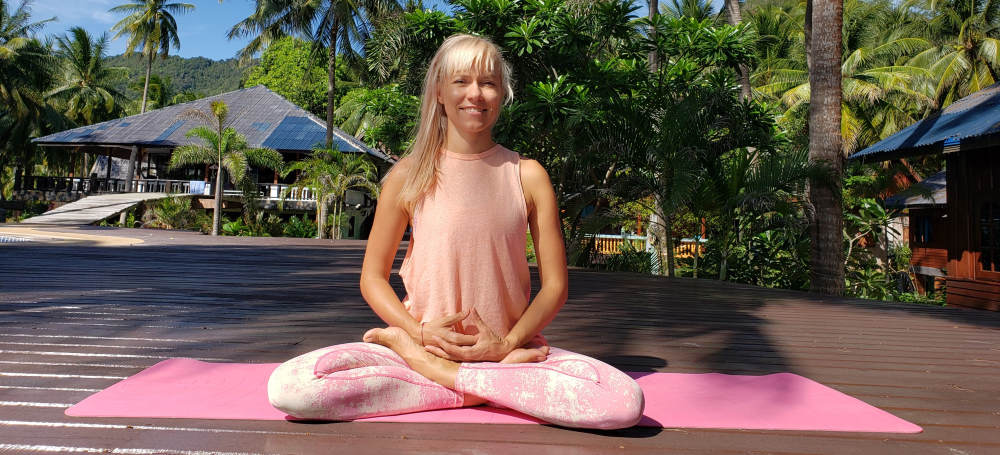
 Sit on a slightly elevated soft pillow or cushion so that your knees are below the level of the iliac bones. If you can, cross your legs and sit in the lotus position – padmasana. If you cannot do this, then take the half-lotus position – ardha padmasana. If this position is also uncomfortable for you, you can simply cross your legs “Turkish style” – sukhasana pose. You can also sit in a siddhasana pose – when the feet are squeezed between the thigh and shin of the opposite leg.
If none of the poses described above are comfortable for you, you can sit comfortably in a chair or chair with your feet flat on the floor. From a point of view
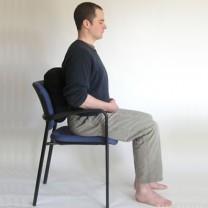
working with energies in the body is, of course, not the best option. The fact is that crossed legs do not give
opportunities for the energy of fear, resentment, dissatisfaction, jealousy, and anger (apana vayu) to spread and nourish your mind by forming corresponding thoughts. However, if you sit in an uncomfortable position and try to meditate, you will not succeed – you will be distracted by physical discomfort. For this reason, it is better to meditate while sitting on a chair than not to meditate at all.
2. HANDS
To prevent drowsiness, point your elbows slightly to the sides so that they do not touch your body. Keep your shoulders straight and relaxed. The chest should be open so that you can breathe freely.
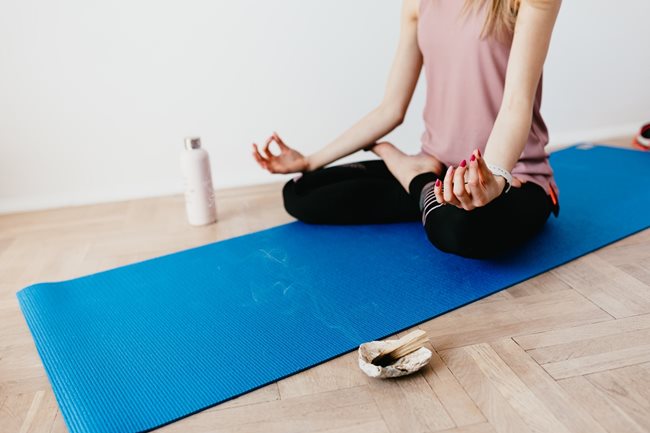
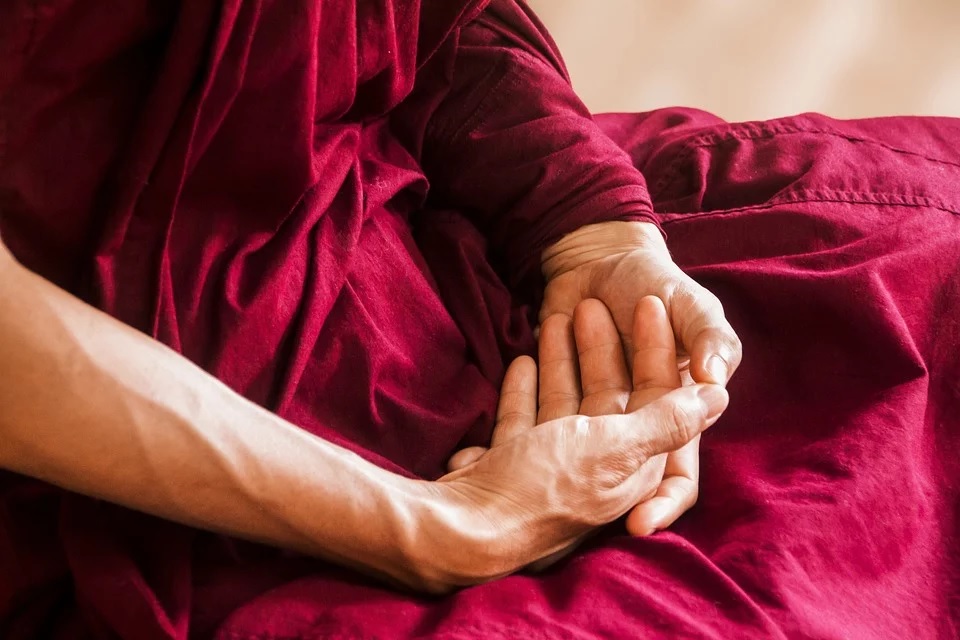 Place your hands under your stomach, just below your navel. Your right palm should rest on top of your left. To prevent energy from being lost in the body, the thumbs should touch each other. The right hand here symbolizes kindness, compassion, love, bodhicitta. The left hand symbolizes wisdom – understanding the absolute nature of everything that happens. The joining of hands signifies the unity of bodhicitta and wisdom. When we acquire these two things, bodhicitta becomes the cause of happiness, and wisdom discards the causes of suffering. By realizing their unity, you are completely freed from suffering and achieve perfect happiness.
During meditation, you can accept any mudra with your hands. The main thing is to know what this or that mudra means and how it can affect you. You can learn more about mudras in one of our lectures.
3. BACK
Keep your spine as straight as possible. Keeping your back straight will make it much easier for you to concentrate. The six yogas of Naropa say that in our body there are three main energy channels (nadis) through which wind energies circulate. They are located along the spine and rise to the top of the head. If they are direct, then the circulation of energy occurs much better, eliminating anger.
It is also important to find the right balance here. If you try to sit too straight, your body will lean in one direction:
– if the body leans to the right during meditation, then the energies of hatred and anger begin to circulate more actively;
– if the body leans to the left, then during meditation a feeling of pleasure arises, but the circulation of the winds of desire and attachment increases;
– if the body leans forward, and it seems to us that there are practically no thoughts, wind energies associated with ignorance begin to circulate more actively, and you fall asleep very quickly;
– when the body leans back, it seems to us that we are meditating on emptiness, but the energies associated with pride intensify.
A straight spine is one of the most important aspects of proper posture during meditation!
4. HEAD
Try to evenly distribute the weight of your head on your neck so that there is no discomfort in the cervical spine. The head should be slightly tilted forward. Leaning your head too far forward causes drowsiness, while tilting your head too far back is stimulating, causing your mind to wander. With the correct position, you will notice that your chin is tilted towards your throat a little more than usual.
5. LOWER JAW
The mouth and chin should be relaxed and in a natural position. Open your mouth slightly so that air can pass through it. Lips and teeth should not be clenched, they can be slightly open.
6. LANGUAGE
The tip of the tongue gently touches the roof of the mouth just behind the upper teeth to control salivation. If your tongue does not touch the roof of your mouth, your mouth will quickly dry out. If your tongue is too long to touch the roof of your mouth without straining, don’t worry. The main thing is to allow the tongue to be in a natural and relaxed position.
When your neck is slightly tilted down and you touch the tip of your tongue to the roof of your mouth, then the wind energy associated with fire overcomes your desires.
7. EYES
 Leave your eyes slightly closed and relaxed, directing your gaze to the tip of your nose. With your eyes open, there will be many objects in your field of vision, which will greatly distract your attention. When your eyes are closed, you may have a strong desire to fall asleep.
When starting to meditate, you can keep your eyes closed to make it easier to calm your mind and experience a sense of peace. However, after some time of practice, after a few days or even weeks, try to start keeping your eyes open to remain alert, clear, and alert. This doesn’t mean you have to stare ahead without blinking. Leave your eyes slightly open and move your pupils up behind your eyelids, or look at the tip of your nose. Then the wind energy associated with Space will help get rid of selfish pride.
You should have your own place for meditation at home. This is a special place where you will train your mind. If your seat is comfortable, you will be tempted to sit and meditate. Whenever you feel unhappy, you will have the urge to sit in your meditation seat and meditate. Over time, unhealthy negative thoughts will recede simply by even arriving at your meditation space. Your mind will calm down and all thoughts of Samsara will cease. Also, when a drop of cold water immediately subsides, boiling milk calms down.
When you practice for a long time in the correct seven-fold posture of Vairocana, your energy centers (chakras) will begin to open naturally. It is believed that staying in this position contributes to the entry of wind energies into the central channel (Sushumna), through which Kundalini rises. In some areas of yoga, awakening and raising the Kundalini energy is considered the main goal of yoga! The quality of meditation, as well as the effects that you can get, directly depend on the posture in which you meditate…