This article is for informational purposes only. Some techniques require the guidance of an experienced practitioner — and we highlight this in every section. Before starting any of these practices, consult a doctor, especially if you have chronic health conditions.
Introduction
In the first article, we talked about the five primordial elements — Pancha Bhuta — and the fact that they carry karmic memory. That the earth, water, fire, air, and ether within you are not a “blank slate,” but an archive of everything you have lived through.
So a logical question arises: how exactly do you cleanse these elements?
Pancha Bhuta Kriya is one technique — powerful and precise. But it is not the only one.
Yoga offers an entire system for this: six cleansing techniques known as the Shatkarmas. Each kriya works with a specific element and cleanses its layer — physical, energetic, or both at once.
If Pancha Bhuta Kriya is work with the memory recorded in the elements, then the Shatkarmas prepare the “vessel” itself. They cleanse the physical and energetic channels through which this memory can finally be released.
That is why, in serious traditions, these practices are taught together.
What Are the Shatkarmas?
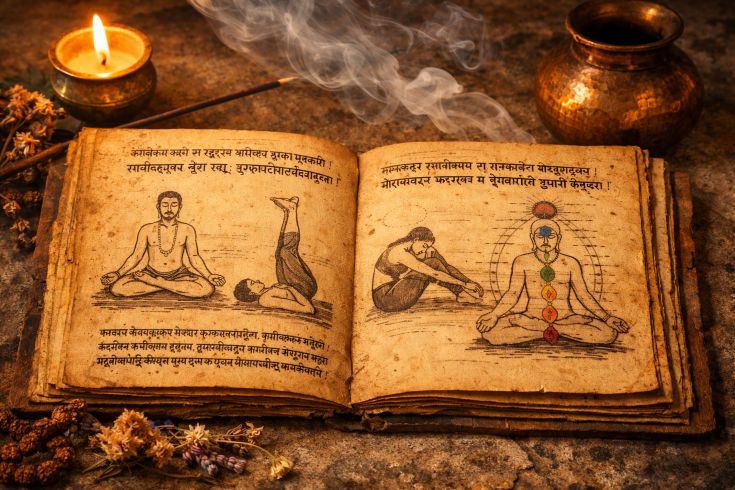
“Shat” means six. “Karma” means action, practice. Six cleansing practices.
They are described in the Hatha Yoga Pradipika, one of the key texts of hatha yoga, written in the 15th century. But the practices themselves are much older.
Here they are: Neti — cleansing the nasal passages. Dhauti — cleansing the digestive tract. Basti — cleansing the large intestine. Nauli — abdominal massage. Trataka — gaze concentration. Kapalabhati — “skull shining,” a breathing technique.
At first glance, it looks like a set of hygiene procedures. But that is a superficial reading.
Each of the six kriyas affects a specific element. Each one cleanses a particular channel — not only physical, but energetic as well. Together, they form a system that prepares the body and mind for deeper work with the elements.
Six Kriyas and Their Link to the Elements
Neti — The Elements of Air and Water

Neti is the cleansing of the nasal passages. There are two types: jala neti (rinsing with warm salted water) and sutra neti (cleansing with a thin cord or catheter). For beginners, jala neti is recommended.
What you need: a special ceramic or metal pot called a neti pot (neti lota). It looks like a small teapot with a long spout. You can buy it in yoga stores or on marketplaces, and it’s usually inexpensive.
How to do it — step by step:
- Pour warm water (body temperature) into the neti pot and dissolve ½ tsp of sea salt — the water should taste as salty as tears, otherwise it will sting.
- Lean over a sink and tilt your head sideways at about 45°.
- Insert the spout into the upper nostril — the water will flow out through the lower nostril.
- Breathe through your mouth — calmly and evenly.
- Pour out half the water through one nostril, then repeat on the other side.
- Afterwards, blow your nose well and do several forward bends to drain any remaining water.
The nose is not merely an entry point for air. In yogic anatomy, the left and right nostrils are directly connected to the two main energetic channels: Ida nadi (lunar, watery) and Pingala nadi (solar, fiery). When the nasal passages are blocked, the flow of prana is disrupted throughout the body — not just breathing.
Regular Neti — once a day in the morning or as needed — restores this balance, reduces chronic congestion, and opens the channels for subtler perception.
Important: do not practice Neti during acute sinus inflammation (acute-phase sinusitis) or if you have a nosebleed.
Dhauti — The Element of Fire
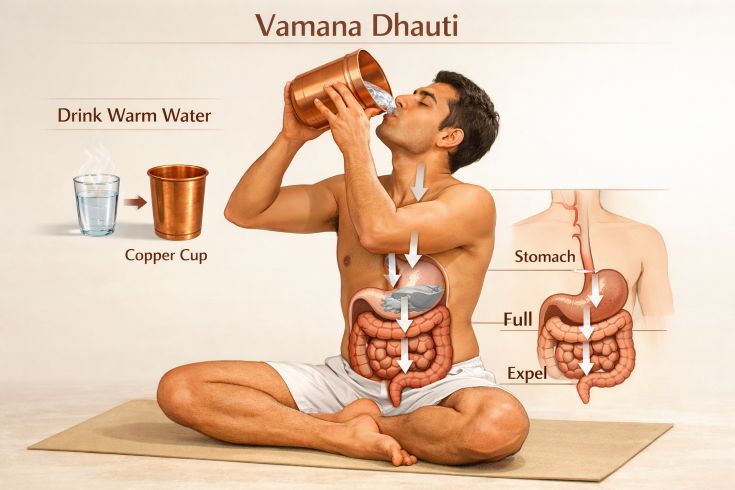
Dhauti is cleansing of the digestive tract. There are several forms; the most accessible for beginners is vamana dhauti (also called kunjal kriya): cleansing the stomach with warm salted water.
What you need: 1.5–2 liters of warm water, sea salt, and an empty stomach.
How to do it — step by step:
- Practice strictly on an empty stomach, early in the morning — your stomach must be completely empty.
- Dissolve 1 tsp of salt in 1.5–2 liters of warm water.
- Drink all the water quickly while standing — as much as you can take in.
- Bend forward, gently press your abdomen with your palm or trigger the gag reflex with two fingers — the water will come out along with the stomach contents.
- Repeat 2–3 times until the water runs clear.
- After practice, rest for 15–20 minutes; eat your first meal after 30–40 minutes.
Agni — fire — in the yogic system is not only about digestion. It is the capacity to “digest” any experience: physical, emotional, informational.
When fire is polluted, unprocessed resentment accumulates, anger appears without a clear reason, and reactions become disproportionate to the situation. Vamana dhauti directly cleanses the Agni zone and creates space for emotional imprints “stuck” there to be released.
Important: do not practice if you have stomach ulcers, acute gastritis, a hiatal/esophageal hernia, or high blood pressure. Your first time should ideally be under the guidance of an experienced practitioner.
Basti — The Elements of Earth and Water
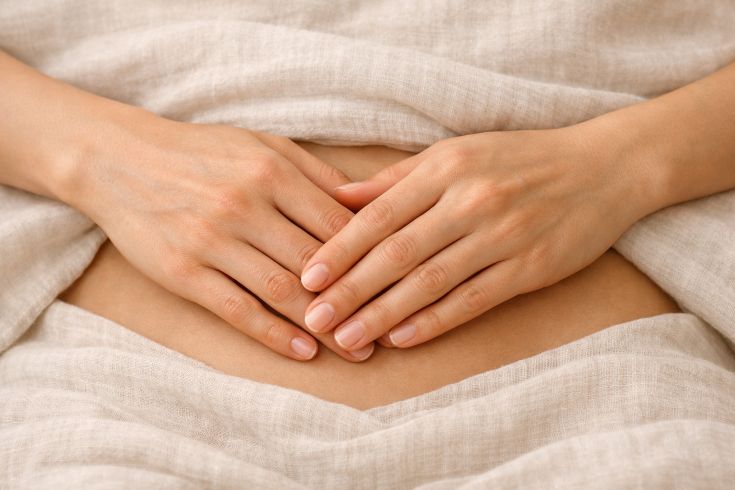
Basti is yogic cleansing of the large intestine. Essentially, it resembles an enema, but the traditional form (jala basti) is performed in water using abdominal muscle contractions — without external devices. Beginners can use a simplified version called sthala basti, using a small enema with warm water.
What you need: an Esmarch mug or a small bulb syringe (200–300 ml), warm water, and a little oil for lubrication. How to do it — step by step (sthala basti):
- Practice in the morning on an empty stomach, after using the toilet.
- Fill the syringe with warm water (37°C).
- Lie on your left side and introduce the water.
- Hold for 1–2 minutes, gently massaging the abdomen clockwise.
- Empty the bowels.
- Afterwards, rest and drink a glass of warm water.
Earth — Prithvi — relates to structure, density, and accumulation. In Ayurveda, the intestines are considered the seat of Apana Vayu, the downward-moving energy responsible for elimination.
There is a direct link between gut health and the sense of safety, groundedness, and trust in life — something neuroscience is now reflecting through the idea of the “second brain.” Basti cleanses this level and frees the earth element from accumulated heaviness.
Important: do not practice during acute inflammatory bowel conditions, hemorrhoids with bleeding, or after abdominal surgery.
Nauli — The Elements of Fire and Water
Nauli is a wave-like movement of the rectus abdominis muscles that creates a deep internal massage of all abdominal organs. It is one of the most challenging Shatkarma techniques — but it is learned gradually, step by step.
You should not start with full Nauli right away. Begin with preparation.
What you need: only your body. No tools.
Step 1 — learn to feel the central “cord”
Most people experience the abs as one muscle. In reality, there is a central “cord” and the side oblique muscles — and for Nauli you must learn to distinguish them.
Two ways to feel the central cord:
- Lying on your back: lie down, place your feet on the mat, and put your hands behind your head. On the exhale, draw the abdomen in (uddiyana), pull the navel toward the spine, and slightly lift the head without lifting the shoulder blades. You will see your navel, and the central cord will stand out naturally.
- Using arm support: press your hands into a windowsill, railing, or chair back. Exhale, draw the abdomen in, engage the root lock (mula bandha), and gently push into the support — the muscle chain of arms and chest activates, and the cord becomes easy to feel.
Give your body time to get familiar with this sensation. Once the neural connection is established, your body will start doing it automatically.
Step 2 — uddiyana bandha
Stand with feet hip-width apart, knees slightly bent, hands on thighs. Exhale fully and hold the breath out.
Pull the abdomen up and in under the ribs as strongly as possible. Hold for 5–10 seconds, then inhale. This is the foundation of Nauli.
Step 3 — isolation and movement
After you master uddiyana, learn to push the central cord forward into a vertical roll while keeping the abdomen drawn in. Then learn to roll it to the right and left.
The final stage is rotation clockwise and counterclockwise.
Morning practice for beginners
Wake up, take a shower, drink a glass of warm water. A couple of minutes later, stand up, exhale, draw the abdomen in, isolate the cord, and hold the breath out for roughly six heartbeats.
Then, with an extra effort, push everything outward and only then inhale. Don’t simply release — push out consciously. Repeat 2–3 times.
Do this for one month and your digestive system will thank you.
This is not an ab exercise. It is a deep massage of the gastrointestinal tract and pelvic organs, improving circulation and the mobility of internal organs. Nauli concentrates and pushes out stagnant energy — which is why hatha yoga masters called it the “pearl” among the six kriyas.
Important: practice only on an empty stomach. Do not practice during pregnancy, menstruation, with hypertension, hernia, or after abdominal surgery.
Trataka — The Elements of Ether and Fire
Trataka is an uninterrupted, unblinking gaze at a candle flame. It is the most accessible of the six kriyas — you can start as early as tonight.
It works on two levels: physically cleansing the visual channels and energetically clearing the nadis — subtle channels in the eyes.
What you need: a candle (preferably beeswax), a dark room, and a quiet place.
Step 1 — preparation: a physical exercise for the eyes
Before Trataka, do a simple exercise to activate energy inside the eyeballs and absorb accumulated fatigue:
- Sit with a straight back — this matters: energy moves through the main channel (sushumna), and posture directly affects the nourishment of the eyes.
- Make 12 wide circular eye rotations to the left.
- Squeeze your eyes shut tightly and open them sharply — find a distant object, then switch to a close one.
- Then 12 rotations to the right — again squeeze shut, distant object, close object.
Step 2 — Trataka
- Place the candle at eye level, 60–90 cm from your face.
- Sit with a straight back, close your eyes for a minute, and settle down.
- Open your eyes and fix your gaze at the center of the flame — do not blink.
- Recite a mantra — traditionally, the mantra of Ashwini Kumaras (divine healers, sons of the Sun, which is associated with vision) or any prayer from your own tradition.
- When tears appear, keep going through them. This is normal — and even beneficial.
- Minimum time: 5 minutes or one mala round (108 repetitions).
- Afterwards, close your eyes and hold the inner image of the flame for 1–2 minutes.
Practice cycle
Practice morning and evening for 21 days. Then take a 7-day break. Then another 21 days.
After two such cycles, you will feel that your eyes are clearer, sharper, and less fatigued.
The eyes are the only sense organ directly connected to the brain. In yogic anatomy, they form a direct channel to the Ajna chakra and the element Akasha (ether). Trataka trains full presence and breaks scattered attention: when the mind is overloaded, the clear space of consciousness becomes a cluttered attic — and Trataka literally “airs it out.”
There is also another layer rarely mentioned: in yogic tradition, the eyes are linked to the liver. Chronic anger, refusal to accept, and unwillingness to “see” something in your life can directly affect the quality of vision. Trataka practice works with this layer as well.
Important: do not practice with glaucoma, cataracts, or inflammatory eye conditions.
Kapalabhati — The Element of Air
“Kapala” means skull; “bhati” means shining. A shining skull. Kapalabhati clears the respiratory passages of accumulated mucus, warms up internal organs, and fills the body with fresh energy.
This is not just a breathing exercise — it is a cleansing kriya.
What you need: only your breath. No tools.
How to do it — step by step
- Sit in lotus, half-lotus, or simply on a chair — keep your back straight and lengthen through the crown of the head.
- Place your hands on your knees and close your eyes.
- Take a deep inhale through the nose.
- Do a sharp, short exhale through the nose by contracting the abdominal muscles — the chest does not move; only the belly works.
- When you release the abdominal muscles, the inhale happens by itself, spontaneously. You should not hear it — that is a sign of correct technique.
- Beginners: 15–20 exhales per round, no more than two rounds per session.
- After the round, take a deep inhale, hold for 4–6 counts, then exhale deeply and hold at the bottom for 4–6 counts. Return to calm breathing.
Three key rules for beginners:
- Keep the first exhales light and calm, without harsh force. Increase intensity gradually.
- Keep the intervals between exhales even, like a pendulum.
- Work at 70% of your capacity — don’t push.
Vayu — air — is the element of movement. When it is polluted, a person gets “stuck”: in the body, emotions, and decisions. Kapalabhati literally blows through all channels — like opening the windows in a house that hasn’t had fresh air in a long time.
If you feel dizzy, stop immediately, take a deep inhale and exhale, lie on your back, and return to normal breathing.
Important: do not practice with increased intracranial pressure, retinal detachment, cervical osteochondrosis, hypertension, respiratory diseases, pregnancy, or during menstruation. If in doubt, consult a doctor before starting.
Why This Matters in the Context of Karmic Memory
Karmic memory is stored not only in subtle bodies. It is literally embedded in physiology: in mucous membranes, intestinal tissue, diaphragm tension, and chronic vascular constriction.
The body is not merely “transport” for consciousness. It is an archive. And while the archive is packed with old records, the new cannot enter.
Shatkarmas cleanse physical and energetic channels — removing what has accumulated at the bodily level: mucus, toxins, stagnation, chronic tension. This is preparation of the “vessel.”
Pancha Bhuta Kriya works with memory in the elements — cleansing a deeper layer: karmic imprints, patterns, inherited recordings. One without the other still works, but less effectively. Together, they form a complete system of transformation.
Imagine you want to pour clean water into a pitcher. You can improve the water quality as much as you want — but if the pitcher is dirty inside, the result will be limited. Shatkarmas cleanse the pitcher itself.
Important Warning
Shatkarmas are not a set of exercises you can find on YouTube and start doing in the morning. Some of them — especially Dhauti, Basti, and advanced Nauli variations — require personal transmission and supervision by an experienced practitioner.
Done incorrectly, they are not just ineffective — they can be harmful.
Trataka and Kapalabhati in their basic forms are more accessible — those are the best places to begin. Neti is the next step once you have a neti pot. You don’t need to master everything at once — you just need to start and let your body feel the difference.
Conclusion
Shatkarmas are not exotic tricks or yogic “hardcore” for advanced practitioners. They are simple, honest work with the body as an instrument.
If Pancha Bhuta says, “What are you made of?” then Shatkarmas answer the question: “How do you make that ‘what’ clean?”
And when both answers come together in living practice, something changes — not in the head, but in the body: how you wake up in the morning, how easily you breathe, how much space you have inside.
Each of our retreats has its own format of working with the body and the elements. But the principle is the same: first prepare the “vessel,” clear the channels — and only then work with deeper layers. This combination produces results people notice not as ideas, but as lived change.
You can view all our tours and retreats — with programs, dates, and locations — here.