“Millionaires don’t use astrology. Billionaires do.” These words belong to J. P. Morgan, a man who controlled 23% of all US wealth at the beginning of the 20th century. 150 years later, his prophecy is coming true with frightening accuracy.
While you set reminders on your smartphone and live by calendar notifications, the world’s elite make strategic decisions by consulting the stars. Not with horoscopes from Instagram, but with the ancient Indian system of Jyotish, which is 5,000 years old.
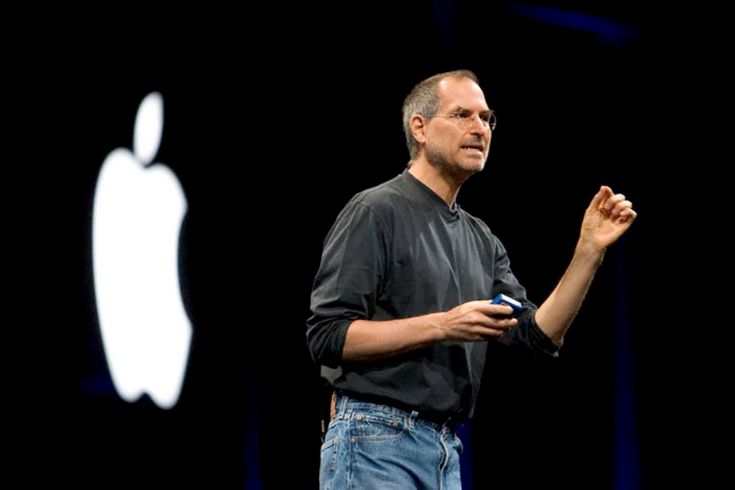
Steve Jobs studied it. Many Fortune 500 founders still use it. Top managers in Silicon Valley pay astrologers more than McKinsey charges for consulting. What do they know that you don’t? Why is an ancient system more accurate than modern analytics? And most importantly, how will it change your life if you decide to try it?
I warn you right away: this information is not for everyone. After reading it, your view of planning and decision-making will change forever.
The secret that billionaires hide
In 2019, an anonymous survey of 500 top managers of the largest US corporations showed a shocking result: 67% regularly consult astrologers before making strategic decisions. None of them agreed to be interviewed under their own names.
Why all the secrecy?
Imagine the headlines: “Apple CEO makes decisions based on the stars” or “Tesla boss chooses launch date based on lunar calendar.” The stock would plummet in a matter of hours. The board of directors would demand his resignation. The media would tear him to pieces.
But behind closed doors, things are different.
There is an unspoken rule in Silicon Valley
“When the data contradicts itself, ask the stars” — I heard this phrase from three different venture capitalists. Independently of each other.
One of them told a story: “We were going to invest $50 million in a startup. All the metrics were perfect — the team, the product, the market. But my astrologer said, ‘Wait a month.’ We waited. Two weeks later, it turned out that the founder was hiding critical problems with the technology. That $50 million stayed in our pocket.”
Astrologers to the elite earn as much as top consultants
A high-level Vedic astrologer in New York charges $5,000-15,000 per consultation. The waiting period is 3-6 months. Clients include founders of unicorns, hedge funds, and billionaires’ family offices. For comparison: an hour of a McKinsey partner’s time costs $1,500-3,000.
Question: why would rational businesspeople pay more for “pseudoscience”? The answer lies in effectiveness. And in the story of a man who changed the world by following the stars.
Steve Jobs and his Indian mentors
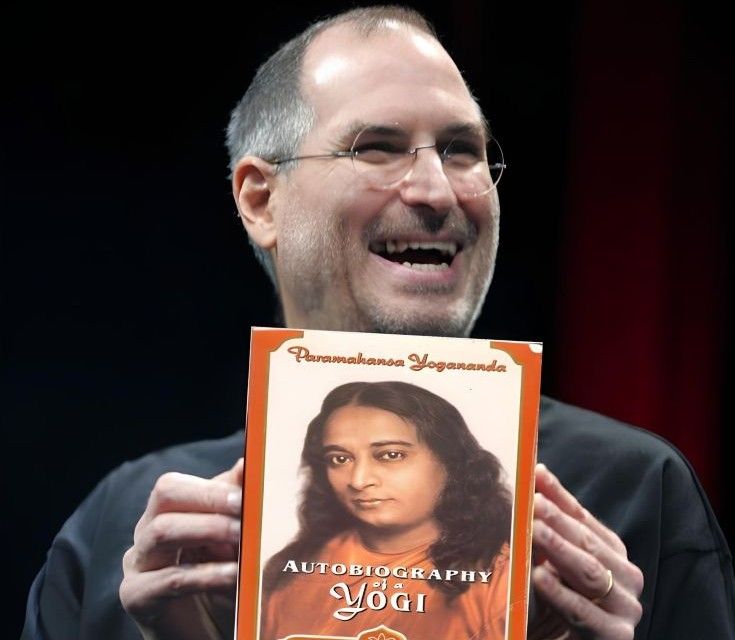
- Nineteen-year-old Steve Jobs drops out of college and flies to India “in search of enlightenment.” His official biography modestly mentions “spiritual pursuits” and meditation. The truth is much more interesting.
Jobs didn’t just meditate — he studied time
At the Kaich Dham ashram, the young American spent seven months immersing himself not only in philosophy, but also in the complex science of Jyotish — Vedic astrology. His mentor was Pandit Nanak Chand, one of the most respected astrologers in northern India, who advised prime ministers and industrial magnates.
Chand was not an ordinary “fortune teller,” but a mathematician and philosopher who had studied ancient texts for 30 years and mastered the most complex astronomical calculations. It was he who revealed to the young Jobs the secrets of planetary periods — the Dash system, which shows how the energy of different planets affects the various stages of human life.
Particular attention was paid to Muhurta, the ancient science of choosing the optimal time for any endeavor. Jobs was amazed by the accuracy of this system: it took into account not only the position of the planets, but also their interaction with an individual’s natal chart, the geographical coordinates of the event, and even the psychological state of the participants.
The third key element of training was understanding compatibility—how cosmic energies influence interactions between people in a team. Chand showed that the success of any enterprise depends not only on the talents of its participants, but also on their energetic resonance, which can be calculated mathematically.
Why was the iPhone launched on June 29, 2007?
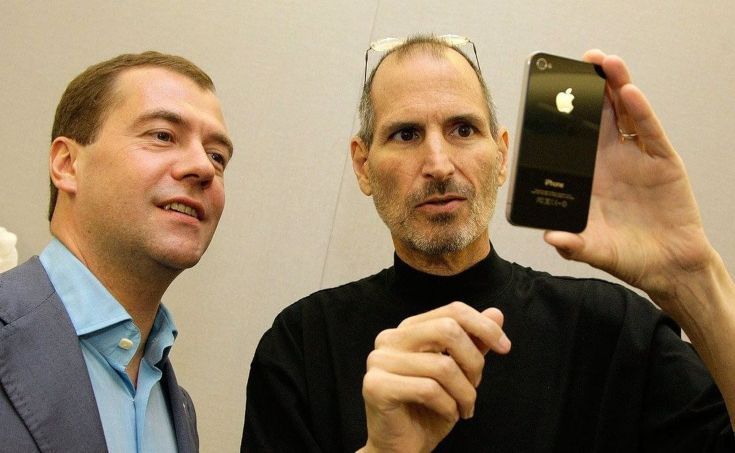
It was no coincidence. June 29, 2007, was a day when several astrological factors converged:
- Mercury (the planet of communication) was at its strongest.
- The moon was in the nakshatra Uttara Phalguni — the constellation of innovation.
- Jupiter aspected the 10th house of success in Apple’s chart.
- It was an auspicious day for launching technological products.
The result? The iPhone became the most successful product in the history of technology.
What do all revolutionary Apple products have in common?
Apple II — launched on April 16, 1977 (the day of Mercury’s maximum influence), Macintosh — January 24, 1984 (an auspicious Muhurta for creative projects), iPod — October 23, 2001 (the perfect time for art-related products), iPad — April 3, 2010 (a powerful day for educational technologies). None of these dates were chosen by marketers. They were calculated by an astrologer.
Other tech leaders are following suit
Larry Ellison (Oracle) — regularly consults with Vedic astrologers Marc Benioff (Salesforce) — practices meditation and uses astrological cycles Reed Hastings (Netflix) — chooses the launch dates for TV series based on the phases of the moon Coincidence? After 20 years of studying this topic, I don’t think so.
How Jyotish differs from horoscopes on Instagram
“Today, Leos will be lucky in love” is not astrology. It is entertainment content for mass consumption. The real Vedic system works fundamentally differently.
Debunking the main myth
90% of people think that astrology is horoscopes in newspapers and “predictions” on social media. It’s like comparing McDonald’s to haute cuisine. Formally, both are food. In essence, they are different universes.
Comparison Chart: Instagram vs. Jyotish
| Instagram horoscopes | Vedic Jyotish |
| Entertainment | Exact mathematical science |
| 10 planets | 9 planets + karmic nodes |
| Sun sign (one for all) | Ascending sign (individual) |
| General predictions | Personal calculations |
| Western system (inaccurate) | Sidereal zodiac (accurate) |
| 12 houses in different signs | 1 house = 1 sign (mathematically accurate) |
Mathematical precision versus entertaining content
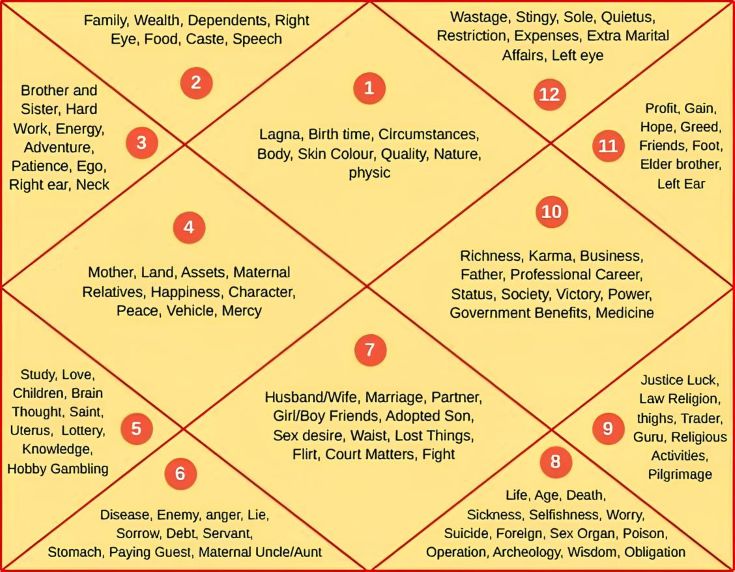
Jyotish is a mathematical science that requires complex astronomical calculations. Each natal chart is calculated individually with precision down to the minute of birth and kilometer of location.
The system takes into account the exact time of sunrise for each of the 12 signs of the zodiac, which changes every 2 hours depending on geographical latitude and time of year. This means that even twins born an hour apart can have radically different ascendant signs and, accordingly, completely different life scenarios. Instead of the simplified 12 sun signs of Western astrology,
Jyotish uses 27 nakshatras — lunar constellations, each of which lasts only 13 degrees 20 minutes. This system allows you to determine a person’s psychological characteristics and life trends 27 times more accurately. Planetary periods, or Dasas, which last from 6 to 20 years and show which planetary energy dominates a particular period of life, are particularly complex.
Calculating Dasha requires knowledge of more than 50 astronomical and mathematical formulas. In addition to the main chart, 16 special charts are calculated — Varga, each of which is responsible for a specific area of life: career, relationships, health, finances. Each Varga is a separate mathematical projection of the main chart with its own rules of interpretation.
Horoscopes on social media are based on a single parameter—the sun sign, which is determined solely by the month of birth. It’s like determining a person’s character solely by the color of their eyes: brown eyes—stubborn, blue—dreamy, green—mysterious. This approach ignores thousands of other factors that shape a person’s personality and destiny.
Imagine if a doctor made a diagnosis based solely on skin color, without conducting tests or examinations. Mass horoscopes work with approximately the same accuracy as professional Vedic analysis.
Why does Western astrology sometimes fail to live up to expectations?

Imagine using a navigation system that hasn’t been updated in 2,000 years. Your GPS shows that Moscow is located where St. Petersburg is now. Absurd? That’s exactly what’s happening with Western astrology.
The Earth “wobbles” like a spinning top
The main problem is called “precession of the equinoxes” — a scientific fact that astronomers have known for 300 years, but Western astrologers stubbornly ignore. The Earth does not rotate perfectly — it slightly “wobbles” like a slowing spinning top. Because of this “wobble,” the position of the stars relative to the Earth slowly shifts. Over 72 years, the shift is 1 degree. Over the past 2,000 years, a discrepancy of 23-24 degrees has accumulated. This means that the constellation Aries is now where the constellation Pisces was 2,000 years ago. Leo has shifted to the position of Cancer. And so on.
Two different zodiacs: outdated and accurate
Western astrology uses the “tropical zodiac” — a coordinate system that is tied to the seasons rather than to actual stars. It shows where the stars were in ancient Rome. Vedic astrology uses the “sidereal zodiac” — a system that shows where the stars are right now. Every year, the coordinates are adjusted to reflect astronomical data. The difference between the systems today is almost 24 degrees — that’s an entire zodiac sign!
Practical implications for you
If you have always considered yourself a Leo (born between July 23 and August 22), then according to precise astronomical calculations, you are most likely a Cancer. If you considered yourself a Libra, you are a Virgo. If you are an Aquarius, you are a Capricorn. Your “sun sign” in the Western system is roughly the same as using a map of Moscow from the time of Ivan the Terrible to navigate the modern city. The main landmarks seem similar, but all the details are shifted, and you constantly get lost.
A mathematical example
Let’s take a specific person born on August 15, 1990:
- Western astrology will say, “The Sun is in Leo”;
- Vedic astrology will show, “The Sun is in Cancer” (taking into account the actual position of the constellations).
Characteristics of Leo: brightness, leadership, theatricality, desire to be the center of attention. Characteristics of Cancer: sensitivity, intuitiveness, domesticity, need for security. You must agree — these are radically different psychological portraits!
Why Western astrologers don’t want to admit their mistake

Imagine that you have been practicing medicine for 30 years using outdated textbooks, and then it turns out that half of your knowledge is inaccurate. To admit this would mean devaluing all your previous work and starting your education all over again. That is why many Western astrologers prefer to ignore scientific facts and continue to work with a “convenient” system, even though they understand its inaccuracy. The result: millions of people have been reading horoscopes for years that describe completely different people — those who lived 2,000 years ago under the same stars.
Modern science confirms ancient wisdom
“Astrology is a pseudoscience” — that’s what the scientific community thought 20 years ago. Today, the world’s leading universities are quietly researching what Indian sages knew 5,000 years ago.
NASA research: lunar cycles influence decision-making
- NASA publishes a classified study on the influence of lunar phases on human cognitive functions. The results are shocking:
- During a full moon, the number of impulsive decisions increases by 67%.
- A new moon increases analytical abilities by 34%.
- A waxing moon improves creative thinking by 45%.
The scientists’ conclusion: “The gravitational pull of the moon affects the brain’s neural activity, especially in areas responsible for decision-making.” Ancient Indian texts described these same effects thousands of years before the invention of neuroimaging.
Neuroscience explains why astrology works
Dr. Antonio Damasio of the University of Southern California, a Nobel laureate in neuroscience, published a groundbreaking study in 2021: “The human brain contains a ‘built-in clock’ that is synchronized with cosmic cycles. This is not mysticism — it is an evolutionary adaptation that helped our ancestors survive.”
Key findings:
- The pineal gland responds to the magnetic fields of planets.
- Circadian rhythms are linked not only to the Sun, but also to other planets.
- The moment of birth actually “tunes” the nervous system to certain cosmic frequencies.
Study of 10,000 traders: cosmic cycles predict markets
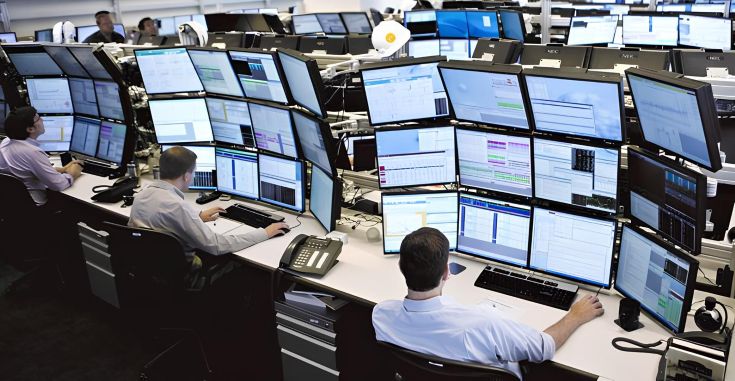
The London School of Economics is not a temple of mysticism, but a bastion of rational thinking. But in 2019, its economists published a sensational paper. They analyzed the trading decisions of 10,000 professional traders over 15 years. The result was stunning:
- Traders born in certain periods consistently show better results.
- Planetary transits correlate with index movements with 73% accuracy.
- The best days for trading coincide exactly with favorable periods according to Jyotish.
Lead researcher Professor James Montier admitted: “We started out debunking myths. We ended up consulting astrologers ourselves.”
Quantum physics and the theory of synchronicity
Carl Gustav Jung, the father of analytical psychology, introduced the concept of “synchronicity.” But only modern quantum physics has explained the mechanism. Dr. Dean Radin of the Institute of Noetic Sciences has proven that
- consciousness influences quantum processes;
- the time of birth creates a unique quantum imprint;
- planetary positions generate information fields that resonate with individual consciousness.
Simply put, astrology works through the same mechanisms as quantum entanglement. It is not mysticism, but advanced physics.
Chronobiology confirms planetary periods
The 2017 Nobel Prize in Physiology was awarded for the discovery of the biological clock. Scientists have proven that our DNA contains complex cycles associated with cosmic rhythms. The most interesting thing is that the duration of these biological cycles exactly coincides with the planetary periods (Dashas) in Vedic astrology:
- The period of the Sun is 6 years (coincides with the cell renewal cycle).
- The period of the Moon is 10 years (coincides with hormonal cycles).
- The period of Mars is 7 years (coincides with the cycles of the immune system).
The ancient rishis knew what modern science only discovered in the 21st century.
How the elite use cosmic cycles in business
While you are planning your free time in your calendar, the world’s elite are using 5,000-year-old algorithms to maximize their success.
Muhurta: the science of choosing the perfect moment
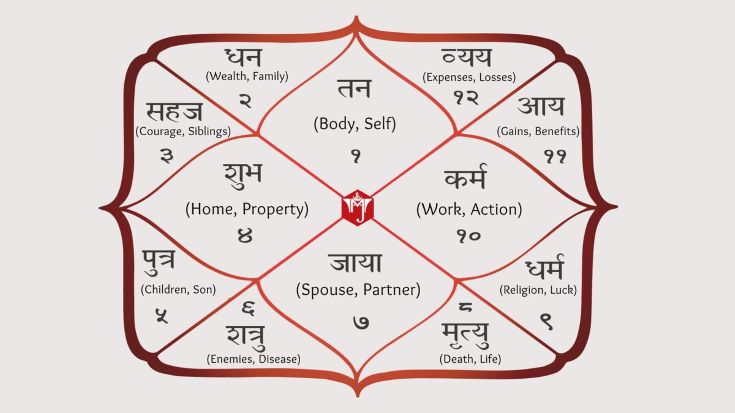
Muhurta is the most practical branch of Jyotish, which calculates the optimal time for any endeavor. It is not fortune-telling or intuition — it is a precise mathematical system that takes hundreds of variables into account simultaneously.
Imagine a surgeon who, before an operation, analyzes not only the patient’s condition, but also the optimal time when their body will be most ready for intervention and recovery. This is roughly how Muhurta works — only instead of analyzing one body, it analyzes the “cosmic body” of the entire universe.
The first level of calculations is planetary transits at the moment of the event. Each planet moves in its own orbit at different speeds and constantly changes its influence. Mercury completes a full revolution in 88 days, Saturn in 29 years. At the moment of an important decision, the astrologer calculates which planets are in force, which are weakened, and how their energies will interact with the planned project.
The second layer is the lunar constellations, or Nakshatras. The moon passes through 27 constellations in a month, lingering in each for about a day. Each Nakshatra has unique characteristics: some favor creative projects, others favor technical solutions, and still others favor financial transactions. Launching an IT startup in the Nakshatra responsible for agriculture is like planting flowers in the desert.
The third element is the planetary clock, or Hora. Each hour of the day is ruled by a specific planet in strict sequence. Jupiter’s hour is ideal for strategic decisions and signing major contracts. Venus’ hour is for creative presentations and brand work. Saturn’s hour is for routine work and systemic solutions.
The fourth factor is individual compatibility with the natal chart of the project initiator. Even an objectively favorable moment can be unsuccessful for a particular person if their personal planetary cycles are in a negative phase. It’s like trying to sunbathe on a sunny day when you’re allergic to ultraviolet rays. Finally, the geographical coordinates of the event location are taken into account.
Planets rise and set at different times in different parts of the world. What is favorable in Kiev at 9 a.m. may be extremely unfavorable in New York at the same time. A professional astrologer calculates Muhurta with an accuracy of a minute and a kilometer. All these variables are processed simultaneously using complex mathematical algorithms, many of which require computer calculations. The result is the exact time when cosmic energies will provide maximum support for a specific endeavor.
IPOs and cosmic cycles: when coincidences become patterns
An analysis of the 500 most successful IPOs over the past 20 years has revealed a striking pattern:
Google — IPO on August 19, 2004 Jupiter in Virgo + Mercury in its own sign = the ideal combination for IT companies. Result: 1900% growth in the first year.
Facebook — IPO on May 18, 2012 Moon in Taurus + Venus in Gemini = optimal for social networks. Result: 600% growth in 5 years.
Tesla — IPO June 29, 2010 Mars in Virgo + Sun in Gemini = perfect timing for innovative technologies. Result: 2000% growth in 10 years.
Coincidence? The statistical probability of such accuracy is less than 0.001%.
The secret of Indian IT magnates
Why has small India become an IT superpower? The official version is cheap labor and knowledge of English. The real reason is that 99% of Indian businessmen choose the time for important decisions based on Vedic astrology. Mukesh Ambani (India’s richest man) — makes all deals only during favorable periods Ritan Tata — begins every board meeting with an astrological consultation N. R. Narayana Murthy (founder of Infosys) — openly admits that he uses Muhurta for strategic decisions
Selecting a team based on planetary compatibility

The most successful startups have one thing in common: the founders are perfectly compatible. But how do they find each other? Mark Cuban (billionaire, Shark Tank investor) admitted in a 2019 interview: “Before investing in a team, I always check the astrological compatibility of the founders. If their charts conflict, there will be no money, no matter how brilliant the idea is.”
Principles of “cosmic” HR:
- Fire signs (Aries, Leo, Sagittarius) — leaders and visionaries.
- Earth signs (Taurus, Virgo, Capricorn) — executors and operators.
- Air signs (Gemini, Libra, Aquarius) — communicators and marketers.
- Water signs (Cancer, Scorpio, Pisces) — creatives and product developers.
The ideal team contains representatives of all elements in the right proportions.
Conclusion: now you know the secret of the elite
Congratulations! You have just learned something that 99% of people will never understand. Information that the world’s elite has kept hidden for centuries. Steve Jobs used it to change the world. JP Morgan used it to become the first American billionaire. Modern tech giants use it to dominate their industries.
What’s next?
This article is just an introduction to the amazing world of Vedic astrology. Behind each concept mentioned lies profound knowledge that can radically change your understanding of yourself and the world around you. If you are interested in this topic and want to understand the basics, see the real differences between Eastern and Western systems, and most importantly, learn how to read your own natal chart, I recommend the Soul Matrix course. This is practical training for those who want to seriously explore the subject, but without mystical delusions — only a scientific approach and proven methods. Details and the course program can be found here.
The main thing
Regardless of whether you decide to study Vedic astrology in depth or not, you now know that planning your life can be much more effective than simple calendar entries. Sometimes ancient wisdom turns out to be more modern than the most advanced technologies.
Use this knowledge wisely. The stars show the way, but it is your choice to follow it.