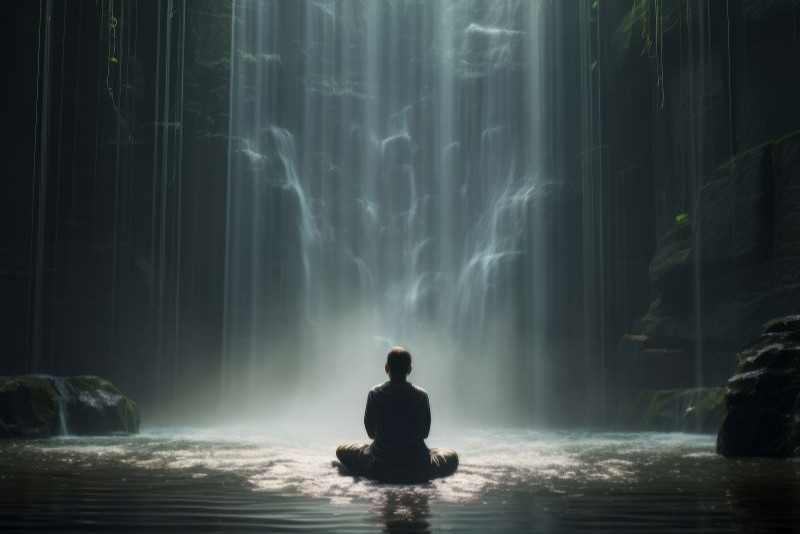
Takigyo (滝行) is one of Japan’s most impressive spiritual practices, where monks meditate under icy waterfalls. This practice, rooted in ancient times, combines elements of Buddhism and Shintoism, offering a unique path to enlightenment through extreme physical challenge.
In Japanese tradition, waterfalls are considered sacred places where the boundary between the physical and spiritual worlds becomes particularly thin. Here, under powerful streams of water, practitioners seek to achieve a state of absolute concentration and unity with nature.
History of the Practice
The origins of Takigyo go back centuries, when mountain ascetics called Yamabushi considered waterfalls to be the dwelling place of powerful kami (神) – Shinto deities. These hermits were the first to practice meditation under waterfalls, believing that cold water not only purifies the body but also provides access to special spiritual powers.
By the 12th century, Takigyo practice had become an integral part of training in Buddhist monasteries of the Shugendo school, where it was viewed as one of the methods of achieving enlightenment through overcoming physical limitations.
Spiritual Significance
In Japanese spiritual tradition, water has always symbolized purification and renewal. But Takigyo is more than just a ritual ablution. It is a practice of:
Overcoming the duality between body and mind. At the moment of contact with icy water, practitioners learn to transcend physical sensations, achieving a special state of unity between body and consciousness.
Achieving mushin (無心) – “no-mind” state. Under powerful streams of water, it becomes impossible to maintain the usual flow of thoughts. The practitioner naturally enters a state of “empty mind” – the highest state of meditation in Zen Buddhism.
Direct realization of unity with nature. While under the waterfall, one physically feels the power of natural elements, leading to a deep understanding of their connection with the surrounding world and dissolution of ego boundaries.
Purification of karma and negative energies. According to Japanese spiritual teachings, powerful streams of water not only cleanse the physical body but also wash away karmic impurities. It is believed that during practice, a deep energetic transformation occurs: negative impressions and karmic knots dissolve in the flow of water, leaving consciousness pure and renewed. This process is compared to alchemical transformation, where “gross” energies are transformed into “subtle” ones.
The Process of Takigyo Practice
In its traditional form, Takigyo requires careful preparation and adherence to specific rules. The practice usually takes place at dawn, when air and water temperatures reach their lowest points. This moment is not chosen randomly – it is believed that during pre-dawn hours, the boundary between material and spiritual worlds becomes particularly thin.
Preparation for the practice begins long before the actual immersion under the waterfall. For several days, practitioners observe strict fasting, abstain from worldly pleasures, and spend time in meditation. Body and mind must be purified and prepared for the upcoming trial. Just before the practice, monks don traditional white cotton clothing – fundoshi, symbolizing purity of intention.
The practice itself begins with a special ritual of entering the waterfall space. The practitioner assumes a specific posture that allows the water flow to most effectively impact certain energetic centers of the body. Breathing becomes deep and measured, hands form special mudras that enhance concentration and promote proper energy flow.
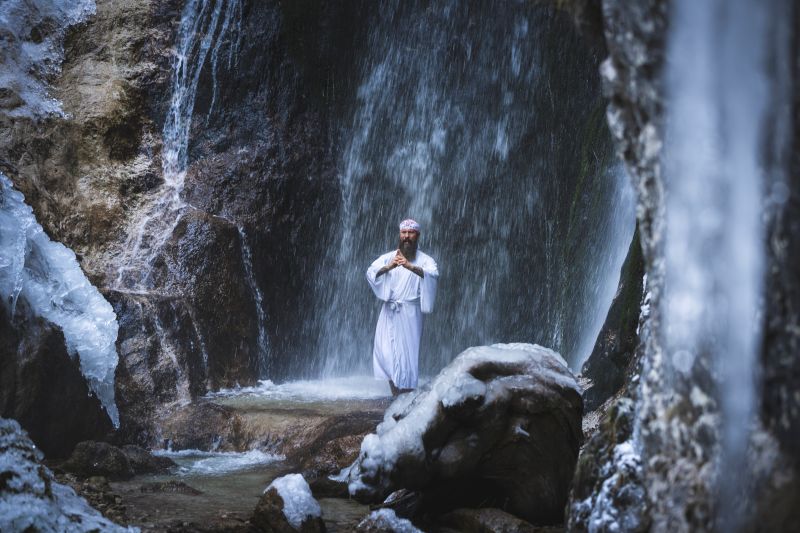
For beginners, the practice may last only a few minutes – this is sufficient to experience deep consciousness transformation. Experienced monks remain under the icy water streams for up to half an hour or more. There are documented accounts of masters capable of maintaining meditation under the waterfall for several hours, even in wintertime.
Physiological effects of the practice
Immersion in ice water causes a whole cascade of unique reactions in the human body. In the first seconds, the body experiences powerful stress – blood vessels sharply constrict, breathing is short, the heart begins to beat faster. But it is at this moment that ancient survival mechanisms are activated, and the body begins to produce special hormones and neurotransmitters that not only help to cope with the cold, but also cause a state of altered consciousness.
Regular practice of takigyo leads to a significant boost in immunity, improved blood circulation, and increased stress resistance. Japanese researchers note that practicing monks have increased activity in the areas of the brain responsible for awareness and emotional stability.
Takigyo as a Path to Zen Understanding
For those seriously interested in Zen Buddhism, Takigyo represents a unique form of direct realization practice. Unlike classical Zazen meditation, where you simply sit and observe the mind, Takigyo literally pulls the ground from under all your concepts and perceptions.
When icy water crashes onto your body, all philosophical contemplations about the nature of reality instantly evaporate. Only the pure experience of the present moment remains. This is the “direct realization” that Zen masters speak about. No theory – only direct experience here and now.
In Zen, there is a concept of “great doubt” – a state when the mind reaches the limit of its understanding capabilities. Takigyo creates this state naturally. Under the waterfall, it’s impossible to hold onto familiar thinking patterns. You either remain fully present in the moment or cannot endure the practice. There is no third option. This makes Takigyo particularly attractive for modern seekers who are tired of intellectual speculations and thirst for authentic experience.
Moreover, Takigyo clearly demonstrates one of the key principles of Zen: the unity of body and mind. When you stand under the waterfall, it becomes crystal clear that the division between “physical” and “spiritual” exists only in our mind.
Interesting Facts About Takigyo
In the Japanese city of Okutsu, there is the Fudo waterfall, where Takigyo practice has continued uninterrupted for over 1,300 years. Every morning, regardless of weather, monks come here to meditate. Even in the harshest winters, when temperatures drop significantly below zero, the practice continues.
There is an amazing tradition: when a young monk prepares for Takigyo for the first time, senior practitioners create a special atmosphere around the waterfall. They light fires, chant ancient mantras, and the air fills with the aroma of incense. This is not just a ritual – it’s a way to create a protected space for a deep transformational experience.
There are known cases where samurai used Takigyo practice as part of their preparation for battles. They believed that the waterfall could “wash away” the fear of death and grant the special clarity of mind necessary for a warrior. In some martial arts schools, elements of Takigyo are preserved to this day.
Interestingly, modern neurobiologists have discovered that prolonged exposure to cold water triggers the production of special proteins in the brain that promote the formation of new neural connections. Perhaps this partially explains the deep insights that Takigyo practitioners receive.
Seasonality and Health in Takigyo Practice
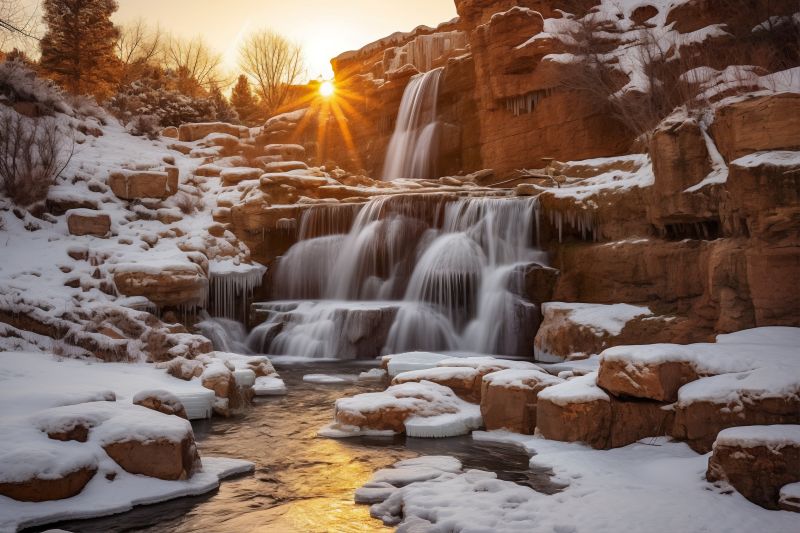
Takigyo practice is indeed conducted year-round, but the winter period is considered especially significant. There are several reasons for this:
- Firstly, cold water creates maximum contrast with body temperature, which enhances the effect of the practice. In summer, the waterfall is also cold, but the temperature difference is not as dramatic. In Japanese tradition, it is believed that the stronger the physical challenge, the deeper the spiritual transformation.
- Regarding health – this is one of the most intriguing aspects of Takigyo. Monks not only don’t get sick but also demonstrate exceptional resilience. The secret lies in several factors:
- Gradual adaptation of the organism. No one starts immediately with prolonged standing under an icy waterfall. Preparation can take months and even years.
Special breathing technique that monks master over years. It allows maintaining internal heat even in extreme conditions. This technique resembles the Tibetan tummo practice, where monks can dry wet sheets with their body heat.
Regular practice triggers hormesis in the body – a phenomenon where moderate stress strengthens the immune system. Modern research shows that regular exposure to cold water stimulates leukocyte production and increases body resistance.
In summer months, the practice becomes less intensive but doesn’t cease. Summer Takigyo focuses more on the meditative aspect, where cool water creates a pleasant refreshing effect that helps achieve deep concentration.
Conclusion
Takigyo is a remarkable reminder that true transformation occurs not in comfortable conditions, but at the edge of our capabilities. This ancient practice teaches us that every moment can become a door to deep self-knowledge if we are ready to be fully present in it.
For those who have become interested in the depth of Zen Buddhism and would like to touch this tradition not only through books and articles, there is an opportunity to experience it personally. This July, we are organizing a special journey to Japan, which includes an ascent to the ancient Mitake Jinja temple on the sacred Mount Mitake. Here, surrounded by ancient cryptomeria trees, under the guidance of experienced mentors, you will be able to familiarize yourself with Takigyo practice, try meiso breathing meditations, and immerse yourself in the atmosphere of traditional Japan while staying overnight in a mountain village of priests.
Sometimes one day spent in such a place can change our perception of life more than years of reading and reflection. After all, Zen is primarily a practice of direct experience.