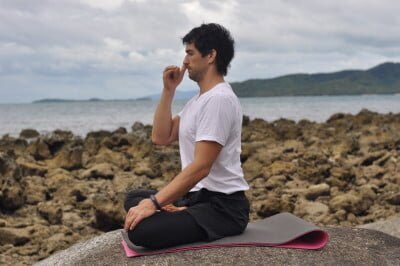
More than 85% of people experience back pain. However, the problem starts when they become almost constant. In this article, let’s look at their causes and how yoga classes can help.
Why back pain occurs?
The causes of back pain are varied:
- injuries to the spine and back;
- improper sitting posture;
- various diseases: osteochondrosis; herniated disc.
In addition, pain can appear after stress, and lack of physical activity only aggravates the condition.
How yoga helps with back pain?
If your back is bothering you, you should immediately see a doctor and undergo an examination to find out the cause of the pain. The doctor will prescribe treatment, in conjunction with which you can use yoga for the back. It will help to cope more effectively with pain. Regularly practicing asanas that stretch and strengthen back muscles enhances spinal flexibility and alleviates tension. Over time, this routine can unload intervertebral discs and fortify overall body muscle strength.
Who should not perform the exercises?
Similar to any physical activity, back-oriented yoga has contraindications, including injuries and the subsequent recovery period
- injuries and the recovery period after them;
- exacerbation of diseases of the spine, it is necessary, at least a couple of days to rest;
- infectious diseases;
- acute respiratory diseases;
- malignant tumors;
- mental illness.
Even if you don’t have any such problems, it is worth seeking the advice of a doctor to determine if yoga exercises for the back will be beneficial.
Recommendations for beginners
If you are a beginner, it is best to seek the advice of a trainer. In case you decide to practice on your own, then consider these tips:
- Buy a comfortable non-slip mat for classes, taking into account your height;
- Choose comfortable clothes, they should not be very loose or too tight.
- Prepare a towel, you will need it as a roller.
- Allocate a convenient time for you to exercise. You can exercise in the morning and evening when it is convenient for you. It is better to exercise an hour after waking up or an hour before going to bed.
- Allocate at least half an hour to exercise, and do a small warm-up to avoid injury.
- Begin to perform those asanas that seem the easiest to you.
- Perform the exercise until you feel slight discomfort, at which point you can stop until the next time you do it
Performing asanas for the back from simple to complex, you will gradually not only learn these exercises, but the pain will go away.
Complex yoga exercises for the back and spine
Let us present some of the most simple yoga exercises for beginners for the back.
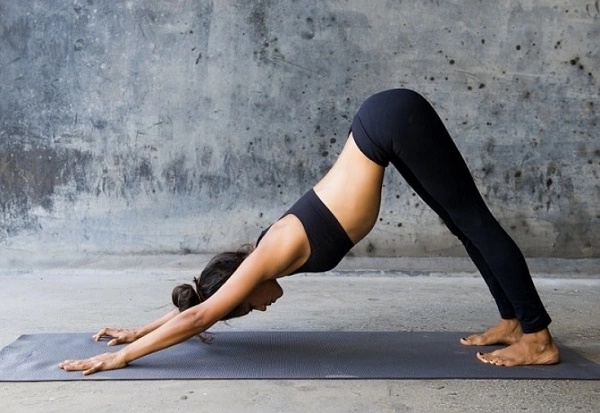
Downward-facing dog pose (Adho Mukha Shvanasana)
Stretches the spine, strengthens muscles, and improves flexibility. The asana promotes relaxation and blood circulation. There are several ways to do this asana. Start on all fours, lift your pelvis, and straighten your legs and arms, creating a triangle shape. You can also take this position from a standing pose: bend down and about a meter from your feet rest your hands on the floor, keeping your feet flat.
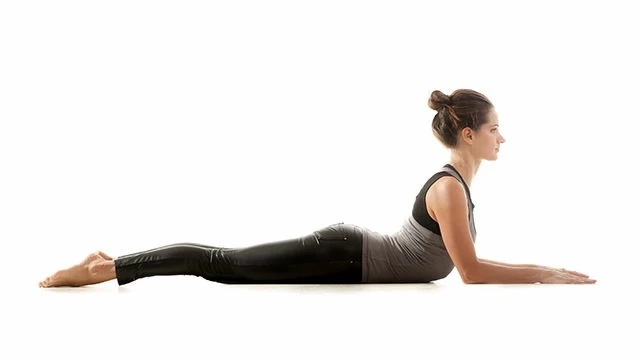
Sphinx pose (Ardha Bhujangasana)
Increases energy and flexibility. Avoid if you are pregnant or have spinal problems. Lying on your stomach, resting on your forearms, raise your upper torso as high as possible.
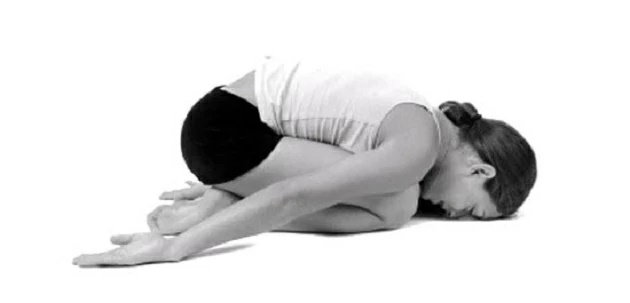
Child’s Pose (Balasana)
This asana relaxes the back, neck, and shoulders, reduces stress, and improves flexibility. It helps in calming the mind and eliminating fatigue. Kneel on your knees, then slowly sit back on your heels, leaning forward. Rest your head on the floor and stretch your arms back.
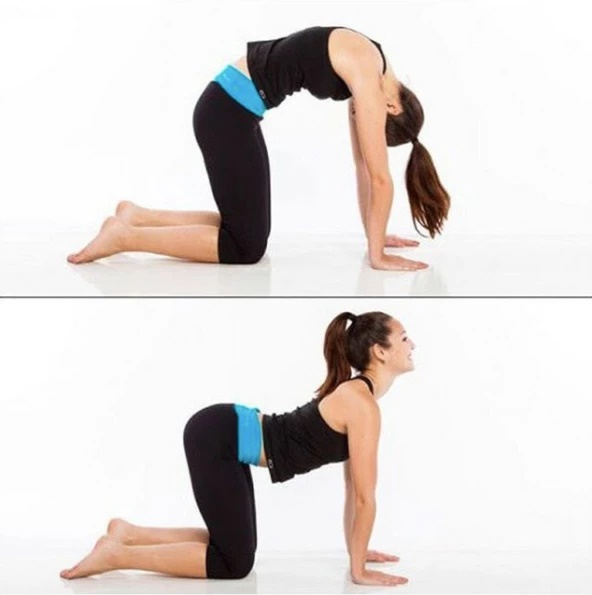
Cat Pose (Bidalasana) or Marjariasana
One of the simplest and most basic asanas for the back. It improves blood circulation, and flexibility of the spine, and strengthens the muscles and abdomen.
Stand on all fours. On the inhale, arch your back by lowering your abdomen down and lifting your head. As you exhale, round your spine, lifting your head and pelvis upward.
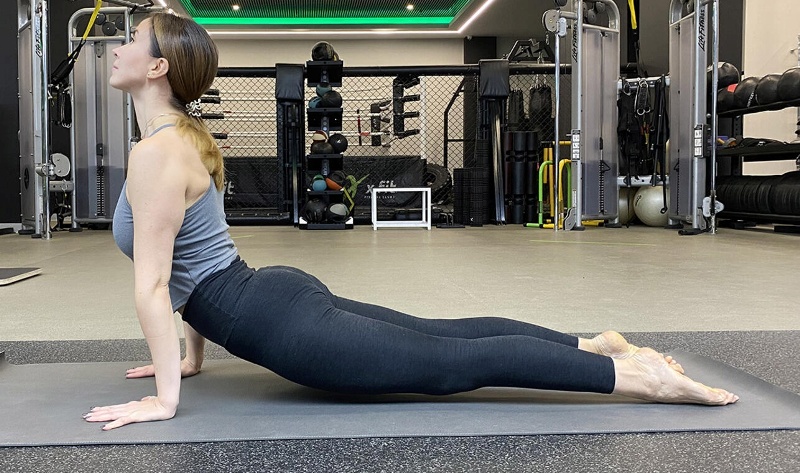
Upward-facing Dog (Urdhva Mukha Shvanasana)
This asana strengthens arms, shoulders, and back, develops flexibility, and improves breathing. Lie on your stomach, hands next to your shoulders, bent at the elbows, palms on the floor. On an inhale, lift your upper body, straightening your arms, lift your chest and head up, and bend backward. On exhalation raise the torso on straight legs, and stay in this pose for 30 sec.
Locust Pose (Shalabhasana).
This asana strengthens the muscles of the back, buttocks, and lower torso. It improves blood circulation in the pelvis and abdomen and stimulates the digestive organs. It also helps with lower back problems and improves posture.
Do it like this: lie on your stomach, forehead on the floor, arms along your body. As you inhale, lift your straight legs and upper body, hands remain on the floor. Try to do it gradually, concentrating on your breathing and avoiding sudden movements.
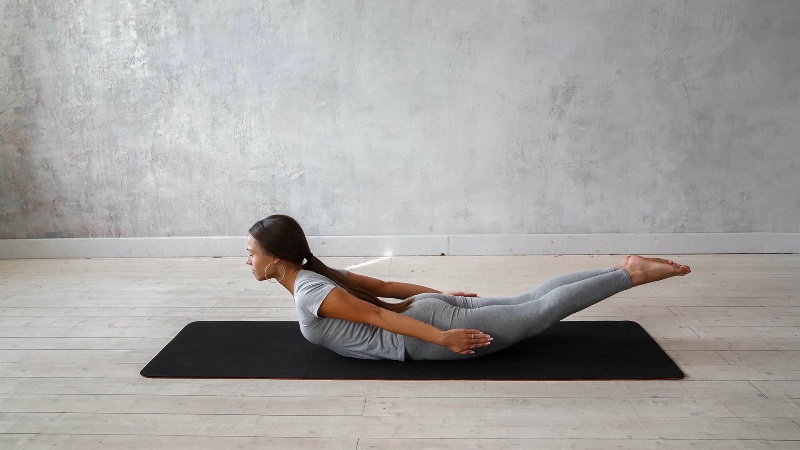
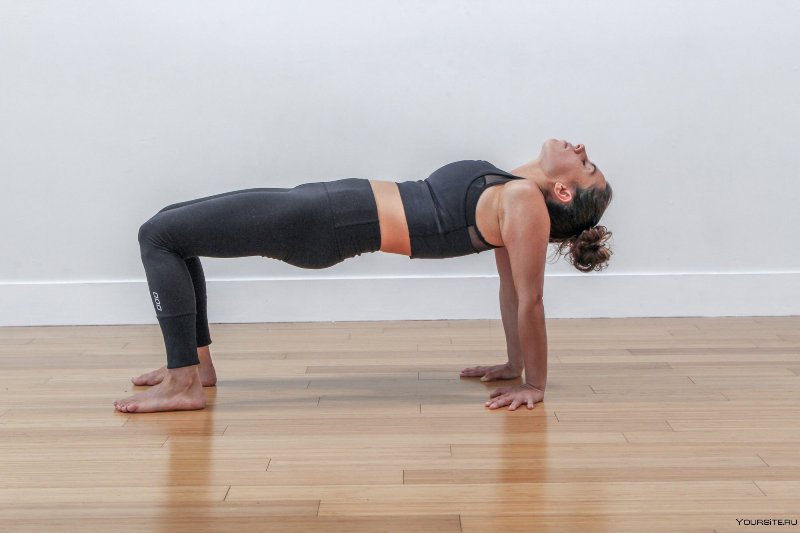
Table pose (Sahaja Purvottanasana)
This exercise strengthens the muscles of the arms, shoulders, back, and legs, develops flexibility, and improves posture. It stretches the spine well and strengthens the gluteal muscles. Stola asana also stimulates the organs of the abdominal cavity and normalizes digestion. Sit on the floor, hands behind your back, palms resting, fingers pointing forward. As you inhale, lift your pelvis, straightening your arms, creating a line from head to feet. Do gradually and focus on proper body alignment.
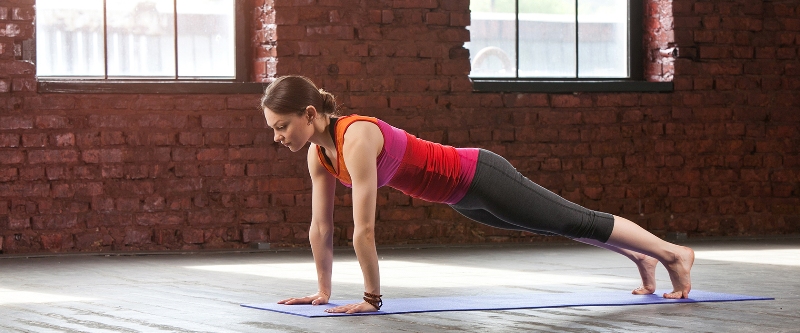
Plank pose (Chaturanga Dandasana)
Lie on the floor on your stomach, arms bent at the elbows at shoulder level. As you exhale, lift the body on the arms and legs. Breathe evenly, stay in this position for 30 seconds, then lower yourself to the starting position. Plank asana activates and strengthens various muscle groups, including arms, shoulders, body, and legs.
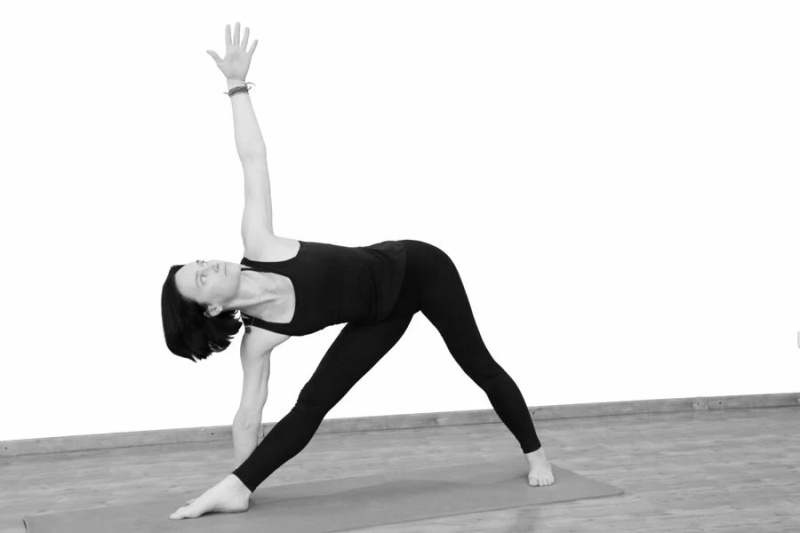
Stretched Triangle Pose (Uttthita Trikonasana)
This asana stretches the side muscles, strengthens the legs and back, and improves balance. Stand wide with one leg in front of you. Lean forward, touching the floor or shin with your hand. With the other hand up, gaze upward.
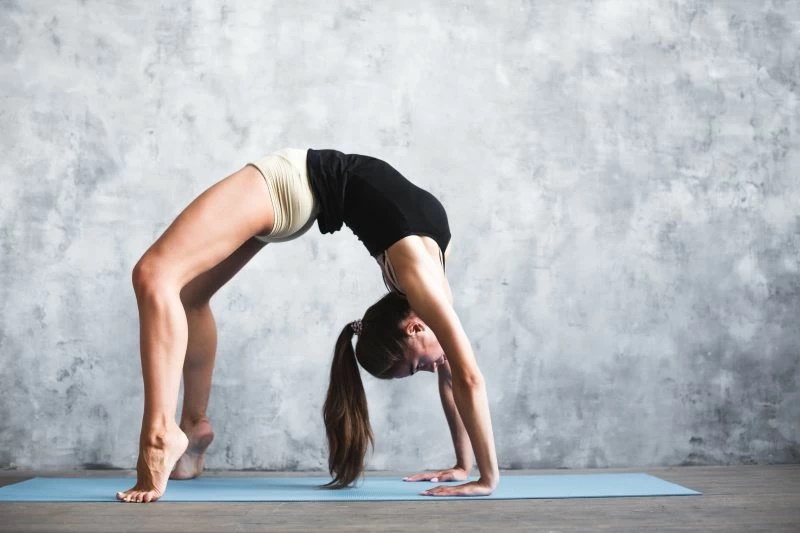
Bridge pose (Urdhva Dhanurasana)
Develops flexibility of the spine, and strengthens the arms and legs. This exercise also normalizes the pelvic organs and stimulates the digestive system. Lie on your back with your arms along your body. Bend your legs at the knees and lift your pelvis, and palms near your ears.
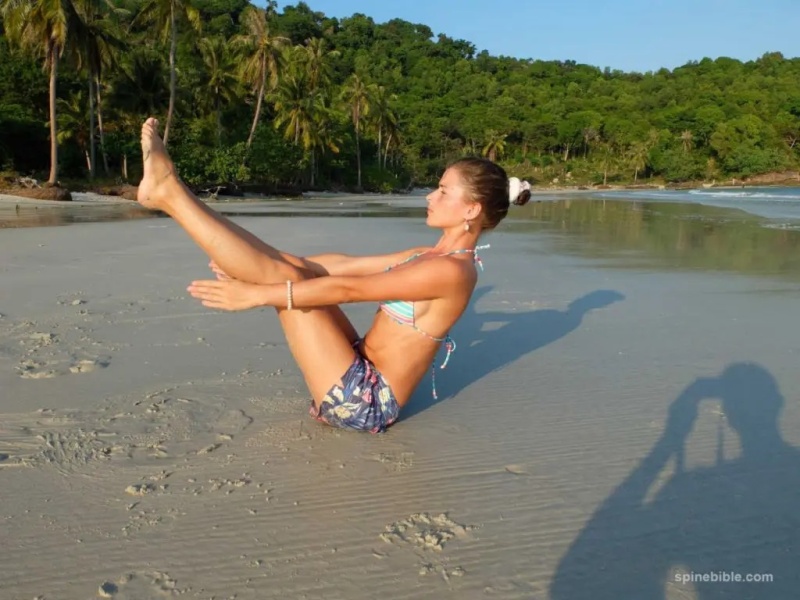
Boat pose (Navasana)
Strengthens abdominal, back, and leg muscles and improves balance. It should not be done if you are pregnant or have lower back problems. Sitting on the floor, raise your legs and upper body, creating a boat shape.
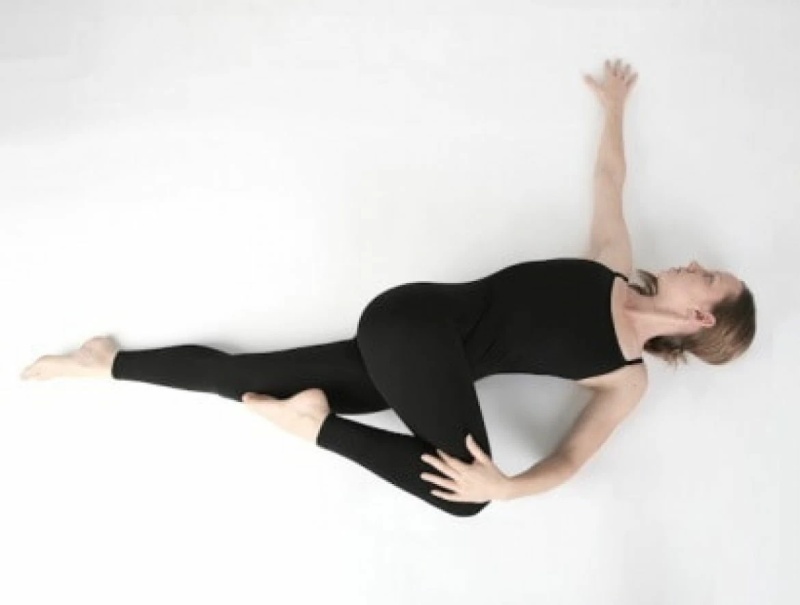
Lying down twisting (Supta Matsyendrasana)
Develops flexibility, and strengthens the side muscles and back. Lying on your back, twist your body to the side while holding your legs.
Therapeutic yoga for scoliosis for beginners
For beginners with scoliosis, exercises such as Triangle Pose, Child’s Pose, and Cobra Pose are beneficial. These asanas improve flexibility, strengthen the back, and relax the muscles. It is recommended to start under the guidance of an experienced instructor and consult a doctor.
Complex with osteochondrosis
Exercises for osteochondrosis: slow tilts of the head and torso, circular movements of the shoulders and pelvis, cobra pose, leg extension, and bending. It is necessary to start gradually and avoid sudden movements. It is recommended to consult a doctor before starting the practice