Due to the disruption of hormonal balance in a woman’s body, not the best changes take place. Numerous approaches exist to normalize hormones, including medical interventions and exercise. Hormonal yoga stands out as a potent, side-effect-free method to enhance health, distinguishing itself from conventional medical practices.
Benefits of yoga for the hormonal system
There is a special yoga for women’s health, which helps to prevent many serious diseases. It takes into account female physiology and helps to cope with such problems that appear with age:
- mood swings;
- memory and cognitive decline;
- decreased activity;
- sleepiness;
- decreased libido and early menopause;
- menstrual irregularities;
- problems with conception.
Only constant practice will help to keep the hormonal balance of the female body normal.
Yoga exercises for the hormonal system
The following are the most common and time-tested asanas.
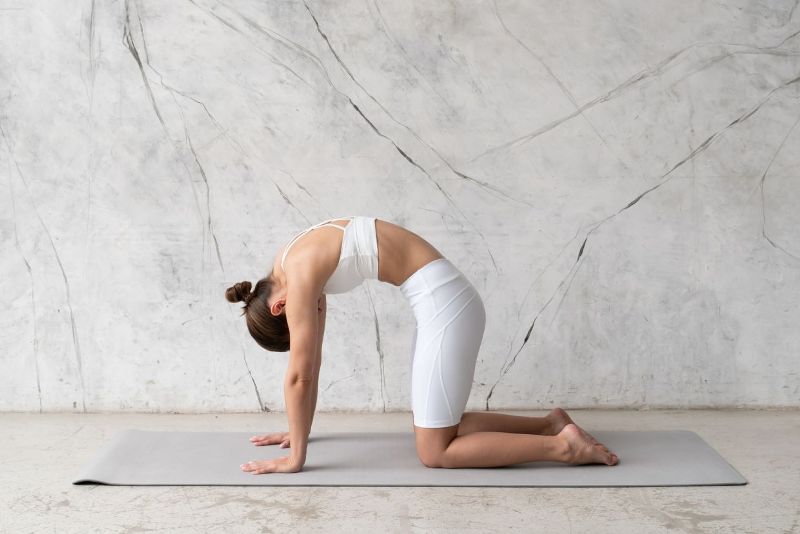
Cat-cow — marjariasana
This exercise improves blood supply to the body, trains the muscles of the abs, shoulders, and back, normalizes the work of the sex glands and thyroid gland, and makes the spine more flexible.
Assume a tabletop position on the mat, inhaling as you arch your back downward, and exhale as you round it. Note that wrist or spinal injuries are contraindications for this exercise.
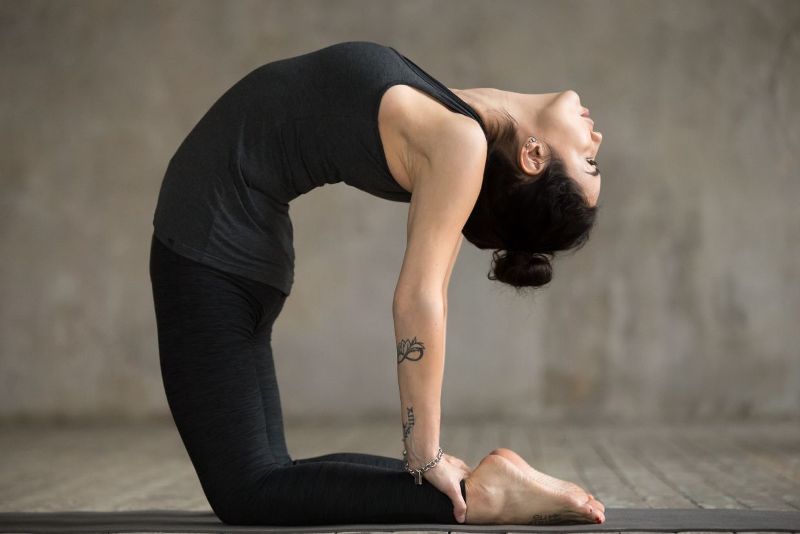
Camel pose — Ushtrasana
The benefits of this exercise are the same as the previous one: improving the thyroid gland and genitals, training the pelvic muscles, developing flexibility in the spine, and increasing blood circulation throughout the body.
Perform it as follows. Stand with arms raised, hinge forward from the hips, placing hands on the floor. Extend the spine, intending to lengthen the body forward. To make it more difficult, you can put your hands on your heels. On exhalation, return to the starting position.
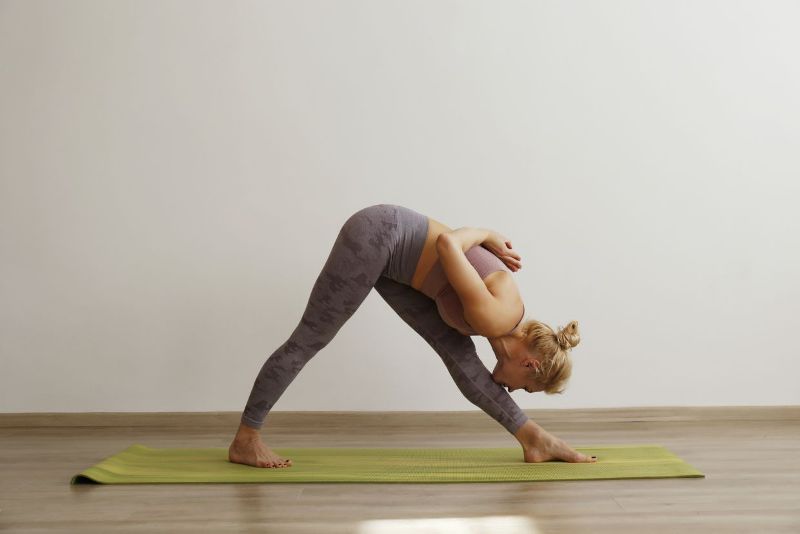
Pyramid pose — parshvottanasana
This exercise fortifies leg and pelvic muscles, elongates tendons, and promotes the functioning of the spleen and kidneys.
Performed as follows. Stand, hands up, bend forward from the hips, hands on the floor. Stretch the spine, aiming to pull the body forward. Linger in this pose for several deep inhalations and exhalations. Conclude the posture by inhaling and gradually ascending to a standing position.
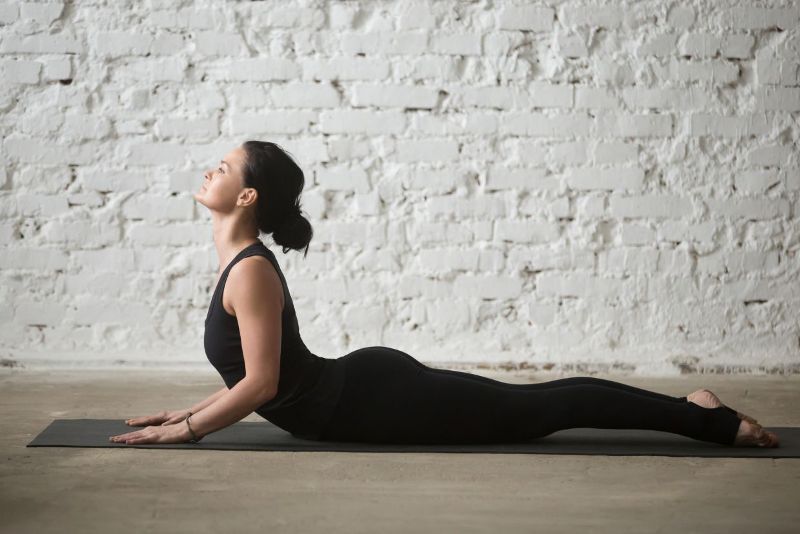
Cobra Pose —Bhujangasana
This asana normalizes the functioning of the kidneys and endocrine glands, but is contraindicated during pregnancy, peptic ulcers and spinal hernias. Do it like this:
- Lie face down on the mat, hands at shoulder level. Inhale, push with your hands,
- lift your body up and bend back.
- Take 5 breaths and exhale and return to the starting position.
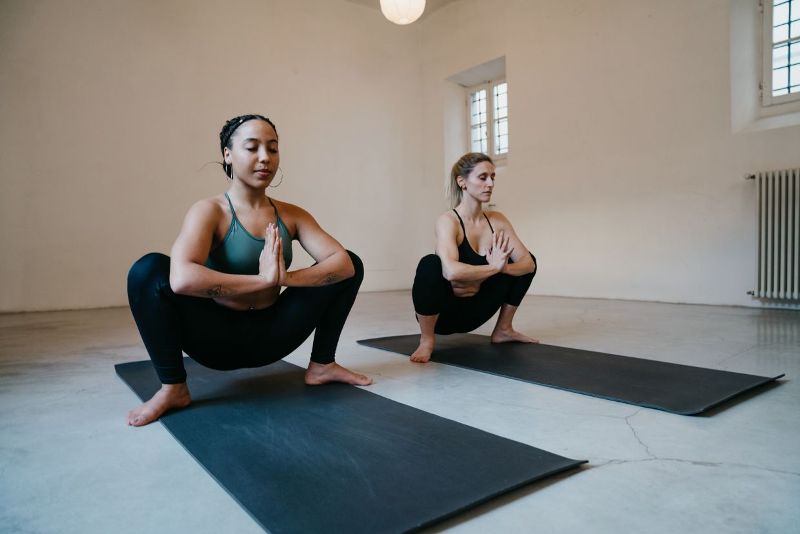
Malasana
The exercise helps to normalize the menstrual cycle and reduces pain during menses. It should not be performed by those who have an injury in the knees.
For Malasana, stand wide, lower your pelvis between your raised heels, and spread your knees apart. Arms are either stretched forward or joined in a prayer gesture. Maintain a straight back as you lower your pelvis, stretching your hips downward. Hold the pose while breathing evenly. This strengthens the legs and back and improves hip flexibility.
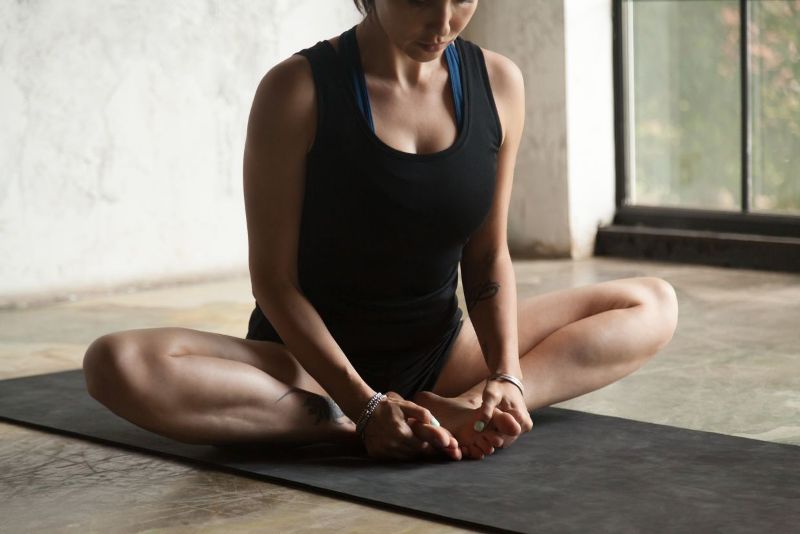
Butterfly pose — baddha konasana
Performing asana helps to reduce menstrual pain, strengthens the genitourinary system, and trains the hip muscles. To perform it, you need to net on the mat as in the lotus pose, but only the heels are pressed together. The body is straight, knees apart, and strives to press against the floor. In this position hold for 5 inhalations and exhalations.
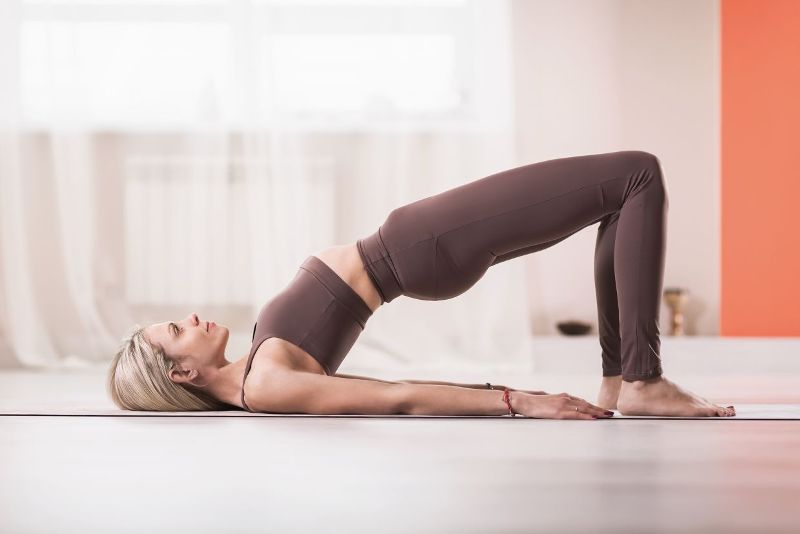
Half bridge — setu badhasan
Asana improves blood circulation and strengthens the muscles of the pelvis, thighs, and abdomen. It should not be performed by pregnant women, during menstruation, or after spinal injury.
Lie on your back with arms beside you, palms down. Bend your legs, placing your feet close to your buttocks. Exhale, raise your pelvis, holding for 8-10 breaths, then return to the starting position.
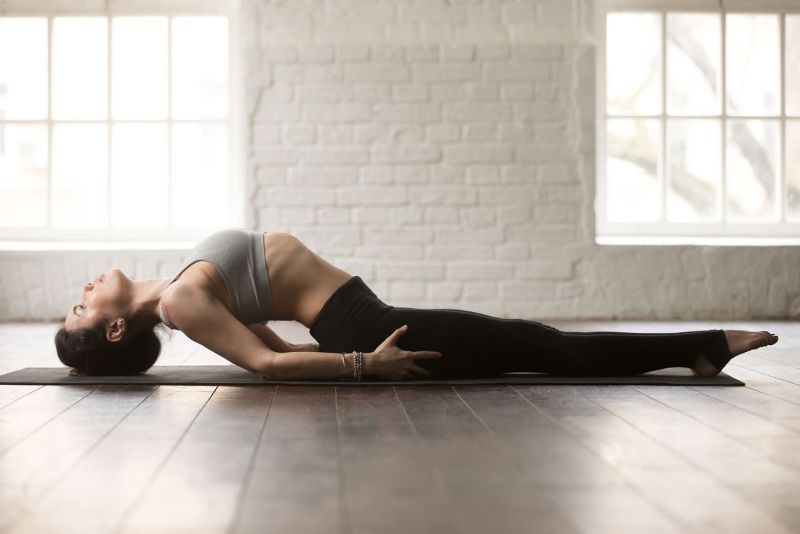
Fish pose — matsyasana
Employed for respiratory and thyroid health, this exercise fortifies spine-supporting muscles and enhances overall blood circulation. Lie on your back on a mat. Bend your arms along your torso at the elbows. Then on an exhalation, lift the upper body, bare, and rest your elbows on the floor. Pushing your chest upward, hold for 5 breathing cycles. Subsequently, revert to the initial stance..
Yoga asanas for the hormonal system for beginners
For those who have not yet practiced yoga, there are other asanas, that more simple. For example, a dynamic yogic complex, Surya Namaskar (“Greetings to the Sun”) includes 12 asanas. It improves flexibility, strength, balance, and breathing. Repeat the sequence to energize and strengthen the body.
Frequent questions about hormonal women’s yoga
Those thinking of taking up yoga for women’s health have many questions. Here are answers to the most common ones.
Why is the practice considered rejuvenating?
When performing asanas improves blood circulation in the pelvis, stimulates the ovaries, and intensifies the production of female hormones. It also has a positive effect on the thyroid and pituitary gland.
Can I start practicing at the age of 50 or 60?
You can start practicing at any age, yoga has no restrictions. But if there are serious chronic diseases or traumas, it is better to consult a doctor.
Is yoga suitable for normalizing the hormonal background of men?
Yes, yoga is useful for normalizing the hormonal background in men. It helps manage stress, improves blood circulation, and stimulates the endocrine system. Reducing stress levels can in turn have a positive effect on hormonal balance.
What are the contraindications to exercise?
Contraindications to practicing yoga include spinal injuries, pregnancy, heart problems, high blood pressure, acute illnesses, glaucoma, and weakness in the joints. A consultation with a doctor and instructor is recommended before beginning the practice to customize the class to meet individual needs and limitations.
How does the practice affect women’s health?
Hormonal yoga affects specifically the lower torso, where the pelvic organs are located. Therefore, performing these exercises is beneficial for women.