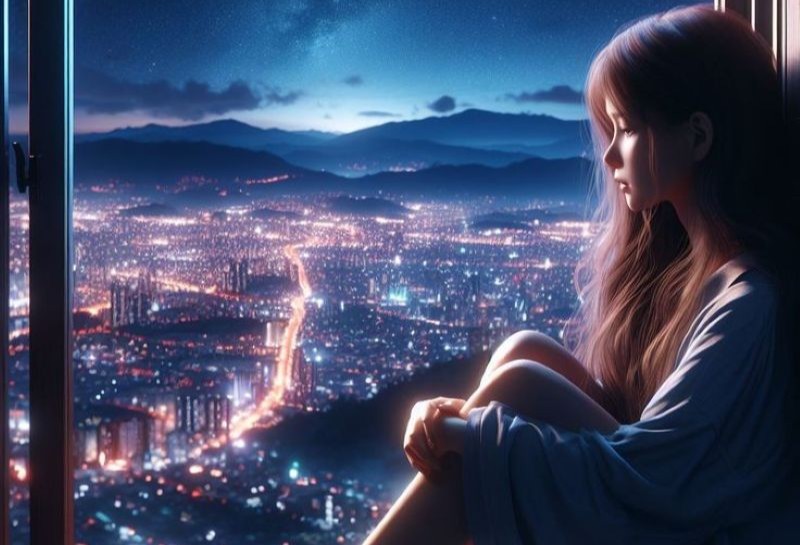
Friends, we know what a person who has lost their dearest looks like. They sit by the window and stare into nothingness. Don’t eat or sleep, don’t answer calls. It feels as if the whole world has stopped, and life has lost all meaning. “Why should I live if my loved one is gone?”— This question echoes endlessly in the mind.
Over the years of holding Vipassana retreats in the most beautiful parts of Europe, we have welcomed people in all kinds of states. But those who come with a broken heart are most dear to us. Today, we want to share how the ancient practice of silence and contemplation can become a bridge from darkness to light, from despair to acceptance, from pain to gratitude.
What happens to us in grief
Losing a loved one is not just an emotional trauma. It is a complex destruction of our entire being. The body literally refuses to function: appetite disappears, sleep is disturbed, and physical pains appear. The mind is locked in an endless loop of memories and regrets. The soul seems to go numb, losing the ability to feel anything but emptiness.
You may have seen how such people live on autopilot for months, doing only the most necessary actions. They stop taking care of themselves, avoid contact, and lose interest in everything that once brought joy.
But the scariest thing is the feeling of utter hopelessness. When it seems the pain will never stop, and life has forever lost its color. In such moments, a person doesn’t need advice or consolation, but a space where they can safely meet their pain and allow it to transform.
What is Vipassana, and why does it heal
Many people ask: “What exactly is Vipassana?” It is a very ancient practice, created in the time of Buddha, more than two and a half thousand years ago. The Buddha taught people a special way of seeing their life—not through rose-colored glasses or dark lenses, but just seeing everything as it is.
Vipassana translates as “clear seeing.” Imagine you’ve been looking at the world through fogged-up glass your whole life, and then suddenly it was wiped clean. That’s approximately what happens to our perception.
The Buddha understood that suffering is part of human life. But he also knew there was a way not to drown in this suffering, but to pass through it to wisdom. This is why Vipassana helps people so well in crisis — it wasn’t created to escape pain, but to meet it face to face and transform it.
Over these millennia, millions of people have walked this path. And now even scientists confirm: meditation really changes the brain, calms the nervous system, and helps cope with depression and anxiety.
Vipassana: a quiet revolution within
For a person in grief, Vipassana becomes a healing revelation. When we first meet retreat participants who have lost loved ones, we see people who are afraid to be alone with themselves. They fill every minute with work, entertainment, alcohol—anything to help them not think. But at Vipassana, there’s nowhere to run from yourself. And this becomes the beginning of healing.
In the silence of the retreat, surrounded by beautiful nature and understanding people, something amazing happens. The pain doesn’t disappear immediately — it transforms. A person learns to observe their emotions without resisting them or drowning in them. Anger, despair, guilt, longing — all these feelings get the right to exist and gradually make space for something new.
How we gently bring people back to life
There’s no coercion at our retreats. We understand that for someone in grief, even getting out of bed can be an achievement. So we create the most caring space possible for healing.
Structure and care. When the inner world is destroyed, external structure becomes a lifeline. We gently but persistently invite people to practices, provide quality nutrition, and create a daily rhythm. Many participants say they started eating and sleeping normally for the first time in months.
Yoga for body and soul. Grief always “gets stuck” in the body—tension in the shoulders, chest pain, heaviness in the stomach. Gentle yoga practices help unlock these blocks. We often see people allow themselves to cry during practice for the first time in a long while—not from hopelessness, but from relief.
Moving meditation. One of our participants’ favorite practices is meditative walking. When you walk a forest path focused only on steps and breathing, the mind naturally calms down. Many say that during such walks, they feel peace for the first time in ages.
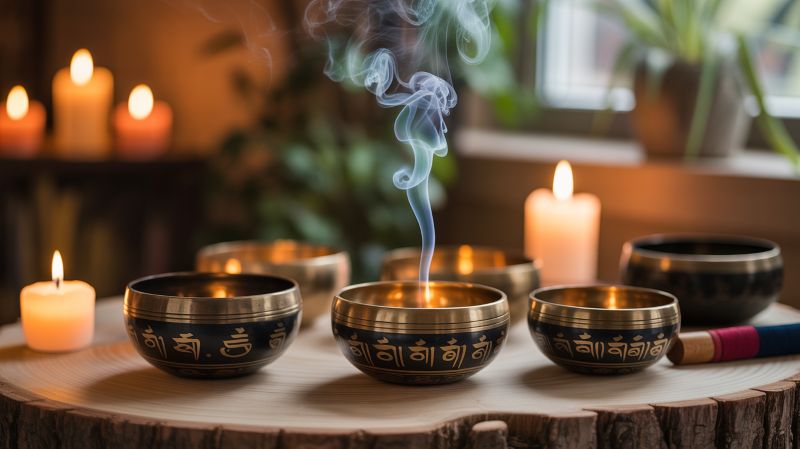
Sound practices. Particularly magical are the moments of sound therapy with Tibetan bowls and gongs. These ancient instruments create vibrations that penetrate the deepest corners of the soul. The frequencies literally “dissolve” emotional blocks, and their sound creates amazing images in consciousness.
Soul conversations: a new view on loss
One of the most important parts of our retreat is the evening conversations about the nature of the soul and the meaning of human existence. For people in grief, these talks become revelations.
We speak about how the soul is immortal, how physical death is merely a transition to another state of being. How the connection with a beloved person doesn’t break with the death of the body, but continues at a subtler level. Our task is not to forget the departed, but to learn to love them in a new format.
These conversations have nothing to do with religious dogma. We draw on ancient texts, modern consciousness research, personal experience, and simple human wisdom. The main thing is to give people a new perspective, help them see death not as an end, but as a transformation.
The role of loved ones: how to give the gift of healing
We often hear from relatives: “I don’t know how to help them. They don’t respond to anything, push away any support.” And here, a gift certificate for a retreat can become salvation.
Don’t pressure, offer. “Dear, I’ve signed you up for a week of rest. There’s silence, nature, and no one will bother you. Just be alone with yourself.” This is how you can present a retreat to someone who resists any activity.
Emphasize safety and acceptance. Many fear group practices, thinking they’ll be forced to talk about their feelings. Explain that with us, everyone participates as much as they’re ready. No one is forced into openness or activity.
Show love through care. “I want to give you the opportunity to rest, to be in silence surrounded by beautiful nature.” Sometimes a person in grief agrees not to “treatment,” but simply to rest.
What Vipassana gives to a person in grief
Space for pain. Not to run from it, not to suppress it, but to allow it to be. And then it naturally begins to transform.
New understanding of loss. Death as transition, not an end. Love as energy that doesn’t disappear with the death of the body.
Return to the body. Grief often disconnects us from bodily sensations. Yoga and meditation gently restore the connection with the body.
Tools for life. Meditation techniques, breathing exercises, and ways to work with emotions — all this stays with a person forever.
Search for meaning. Not “why did this happen,” but “how can I live my life so that it has new meaning.”
Vipassana — for everyone seeking real life
We’ve told you a lot about how Vipassana helps in grief and crisis. But we want you to know — our retreats are open to everyone who feels a need for something more than daily routine.
Different people come to us. There are those who are simply tired of routine — they leave with a new view of life, the ability to notice beauty in small things, to rejoice in simple matters.
Many are looking for real rest — not just for the body, but for the soul. Instead of noisy resorts, nature’s silence and deep practices. They say a week of Vipassana gives more strength than a month of regular vacation.
Those tired of constant noise come — both external and internal: the city, work, social networks, endless chatter in the head. At the retreat, they hear silence for the first time in years—and fall in love with it.
And of course, people walking the path of spiritual development — from beginners just starting to be interested in meditation, to experienced practitioners seeking deeper immersion.
Vipassana is not about suffering. It’s about how to live life truly: consciously, deeply, with an open heart.
Conclusion: the path through pain to love
We don’t promise that the pain will disappear completely. Love for the departed person will remain, and therefore longing too. But we can learn to live with this pain differently—not as a sentence, but as a reality that makes us wiser and more compassionate.
At our retreats, people learn not to “forget” the departed but to love them in a new format. Not to “let go,” but to transform relationships. Not to “live on” as if nothing happened, but to integrate the experience of loss into their life so it becomes a source of strength, not destruction.
If you’re reading this article for yourself, know that your pain has meaning, and it’s temporary; it’s possible to pass through it to a new quality of life.
If you’re reading it, thinking about a loved one in grief, perhaps a gift certificate for a retreat will become the most important gift for them. Not a cure, but an opportunity. Not coercion, but an invitation to healing.
Join us!
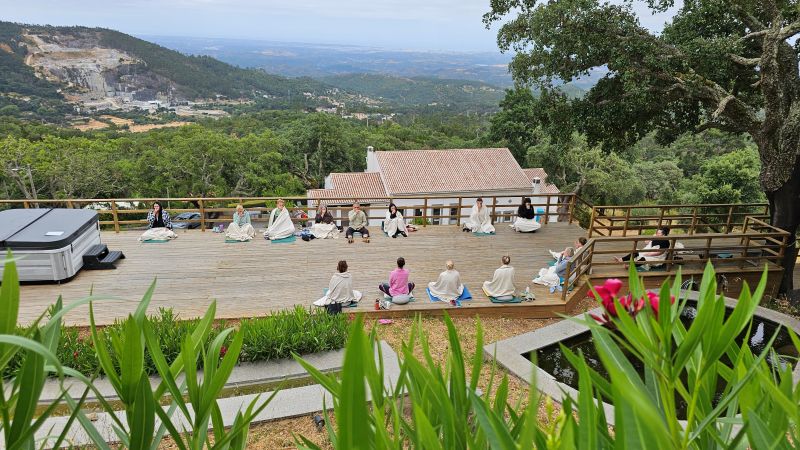
Our retreats take place in ecologically clean places in Europe, surrounded by nature, in an atmosphere of complete acceptance and understanding. We simply create a space where healing happens naturally.
Upcoming retreat dates and detailed information can be found on our website.
Want to gift a retreat to a loved one? Gift certificates can be arranged anytime. They are valid for a year and allow you to choose a convenient date.
Remember: there is a path from darkness to light. And we are ready to walk it with you.