Scientists have been warning about global warming for decades. From 2005 to 2019 alone, the Earth’s energy imbalance increased — the difference between absorbed and emitted energy. This means that the Earth is warming up.
Hot periods become more “aggressive” and longer. They have a negative impact on human health. A person loses a lot of fluid and mineral salts. This provokes heart attacks, hypertension, ischemic heart disease, strokes and other diseases.
In extreme heat, air conditioners help us a lot, but it is not always possible to be near them. Our ancestors did not have such devices, but they knew a lot about body thermoregulation and the features of the surrounding landscape to maintain coolness. There are special techniques that help cool the body and bring it to a normal state.
We can also turn to ancient practices such as pranayama to learn how to effectively cool the body and maintain internal thermoregulation in the face of increasing heat.
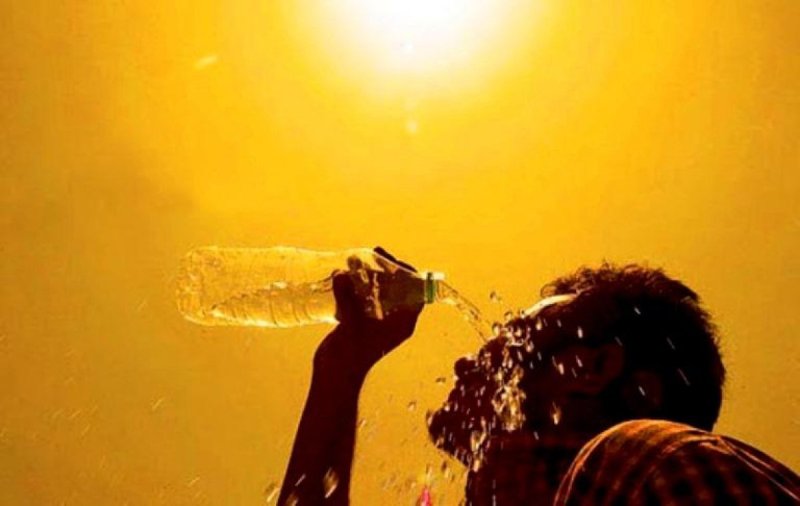
Types of heat according to the Vedas
The Vedas describe several types of heat, each of which affects the body in its way:
- Heat from the Sun or Fire. This type of heat comes from external sources, affects the body directly, and can cause overheating, so cooling is necessary.
- The heat from emotions. Strong emotions such as anger, anxiety, and worry cause the metabolism to speed up, which is felt as internal tension and heat. This condition requires attention, as it can negatively affect health and emotional state.
- Fire of Tapas, or “heat of asceticism”. This is the name given to the “burning” from intense physical and/or spiritual exercises. For example, this is why some advanced yogis who practice Tapas look very thin. This type of heat must be used with caution so as not to harm the body.
- Fire of vision. According to Ayurveda, vision is accomplished through the element of Fire (Agni) in the body, and to a certain extent, vision is a “burning.” After working at a computer or reading for a long time, the eyes feel like they are “burning.” This type of heat is directly related to the use of the senses and can lead to fatigue and stress.
Each of the listed types of heat or “fire” can be extinguished with the help of cooling pranayamas.
Why do we need cooling pranayamas?
Pranayama is a breathing technique that comes from ancient yogic traditions that can help regulate body temperature, regardless of external conditions.
When the ambient temperature becomes too high, the body begins to overheat. This condition often leads to heat stroke or dehydration. Let’s look at cooling pranayamas, which can help lower body temperature and maintain normal thermoregulation.
Shitali Pranayama
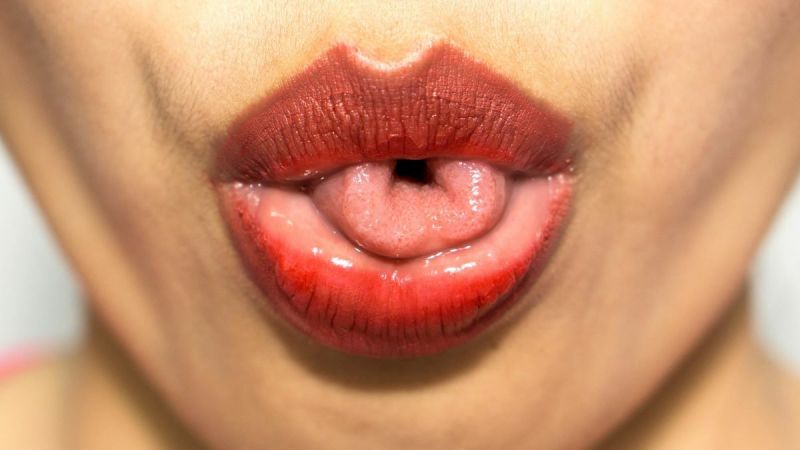
Shitali Pranayama is a cooling breathing technique used in yoga to lower body temperature, calm the mind and purify the body.
Technique of execution:
- Sit in a comfortable meditative position with a straight back and relax your body.
- Close your eyes and take a few deep breaths to get into the mood for the practice.
- Open your mouth and stick out your tongue, curling it into a tube so that the edges of the tongue touch. If you have difficulty curling your tongue, you can simply stick it out.
- Inhale slowly and deeply through your curled tongue, filling your lungs with cool air.
- Close your mouth and return your tongue to its original position, exhale through your nose.
Repeat the exercise 10-15 times. In hot conditions, you can increase the number of repetitions to 60.
To enhance the effect, you can add a short breath hold (kumbhaka) after inhalation for a few seconds. This will increase the cooling effect, but you should not hold your breath for too long, so as not to overheat the body. At a more advanced level, after holding your breath, you can use the throat lock (Jalandhara bandha), which will deepen the practice and increase its effect.
Sitkari pranayama
To perform this pranayama, sit in a meditation posture, with your back straight and your body relaxed. Close your eyes and relax your facial muscles. Close your teeth, slightly opening your lips so that your teeth are visible. Place the tip of your tongue on the roof of your mouth or leave it relaxed in your mouth.
Inhale slowly and deeply through clenched teeth, you will feel cool air passing through them. The inhalation should be accompanied by a whistling sound. After a full inhalation, close your mouth and exhale through your nose, using the technique of full yogic breathing. Repeat the exercise 10-15 times. In hot weather, it can be done up to 60 times.

Let’s compare Sitkari pranayama with Shitali pranayama:
| Sitkari pranayama | Shitali Pranayama |
| Inhalation is performed through clenched teeth | Air passes through the tongue, which is curled into a tube. |
| Accompanied by a whistling sound that helps you focus on your breathing | There is no sound and attention is focused on the feeling of coolness |
| Coolness is felt in the mouth, throat and respiratory tract | The coolness is felt immediately on the tongue |
When you inhale through your teeth in Sitkari Pranayama, the air passes through saliva, which cools it. The cool air then passes through your mouth, throat, and lungs, cooling the blood vessels that pass through these organs. The cooled blood circulates throughout the body, lowering its temperature.
Cool air also reduces mental stress, so Sitkari Pranayama is useful for stress and high blood pressure. This technique also improves digestion and purifies the blood, which is good for overall health.
Chandra Bhedana Pranayama
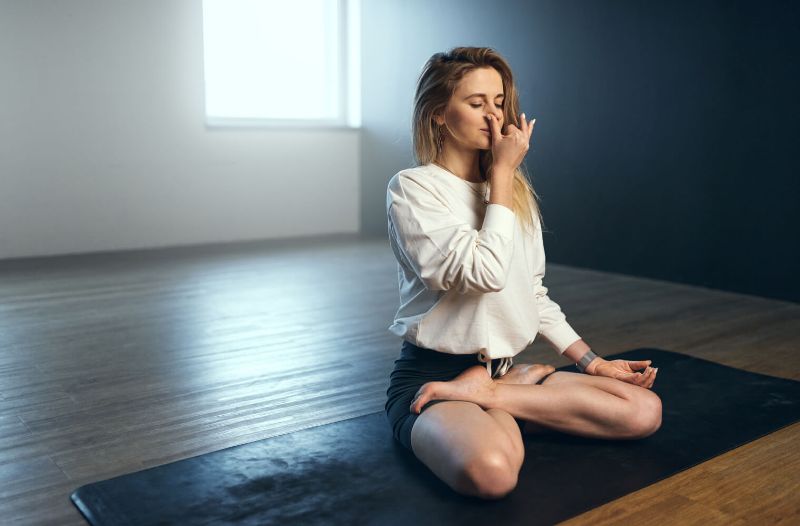
To do this, choose a comfortable meditation pose. For example, the Lotus pose or Padmasana will do. Close your eyes, relax and focus on your breathing. Place your left hand on your knee in Jnana Mudra (the index finger and thumb are connected, the other fingers are straight). With your right hand, perform Nasikagra Mudra: the thumb of your right hand will close the right nostril, and the ring finger and little finger will be used to close the left nostril:
- Close your right nostril with your right thumb. Inhale slowly and deeply through your left nostril, filling your lungs with air.
- Close your left nostril and open your right. Exhale slowly through your right nostril.
Repeat the exercise 7-10 times, and try to maintain even breathing.
Chandra Bhedana Pranayama activates the Ida Nadi energy channel, which runs along the left side of the body. It is responsible for the parasympathetic nervous system, which helps slow down the body’s processes, promoting relaxation, recovery, and energy conservation. This pranayama helps reduce heat, keep the body cool, and the mind calm.
Recommendations and precautions for the use of cooling techniques
Thus, pranayama is an effective way to escape from the heat without using modern technical means. However, there are limitations to their use in extreme conditions:
- You cannot perform practices in a bathhouse or sauna. The air temperature in these rooms is so high that it produces a warming effect rather than a cooling effect, which becomes dangerous to health.
- Cooling pranayamas should not be used in cold weather.
It is also recommended to perform pranayama where the air is clean – in nature, away from roads and factories, in a ventilated, clean room. For more information on how to survive the heat and perform pranayama correctly, watch our video