The concept of the five elements (primary elements) is one of the fundamental principles of Chinese qigong. It is also used in other areas of life in ancient China, such as medicine, feng shui or geomancy, astrology, philosophy and religion. This is one of the most important things you need to understand if you want to understand the wisdom described in ancient Chinese texts.
Why does this concept work so well? What did the ancient Chinese do to stay healthy until they were 90 or even 100 years old?
Answers to these and many other questions that may arise will be given in this and many subsequent articles.
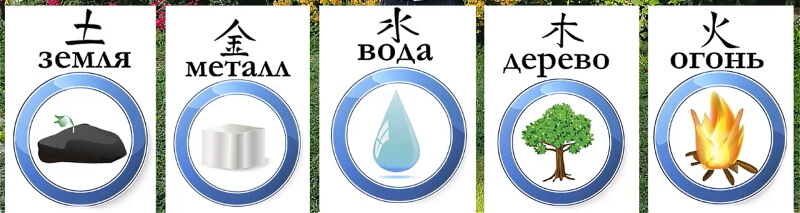
Origin of the Five Elements
Yin and Yang are present in everything, and from these two, or better said, from the pair of one, come the five elements, which are simply one and the same. So, Yin – Yang, but with a different quality, density, temperature, flexibility, fluidity, activity, regenerative ability, color, sound, vibration, electrical conductivity and charge, more or less alive, etc.
As we know, the nature of everything is in This world consists of five elements. She harmoniously intertwines all their qualities. Thanks to the power of the five elements, she restores herself, heals, gives birth and dies. Because everything is influenced by this principle, including people.
Cycles of movement of the five elements in Qigong
Now we know from the above that the five elements come from Yin-Yang. Two opposing forces that cyclically rotate all five elements in a circle. At some point in time, the Yang energy is in a superior position, but after a while the Yin force rises. Sometimes Yin and Yang are in balance or horizontal. We can easily describe this using annual cycles. In winter, Yin is at its peak, in summer, Yang is at its peak, in spring and autumn, Yin Yang is supposed to be in balance, but be careful!
In autumn there is still more Yin in the primary elements, and in spring there is more Yang energy. Not everything that we see and consider to be harmony is such. To do this, we do exercises, eat a certain way, etc.
Nature of the Five Elements
To better understand how the power and influence of the energy of the five elements changes our body and Spirit. This change of Qi occurs by the Yin-Yang cycle. Just as the seasons change, the peaks of the elements change, and so do the seasons of their strength and their weakness.
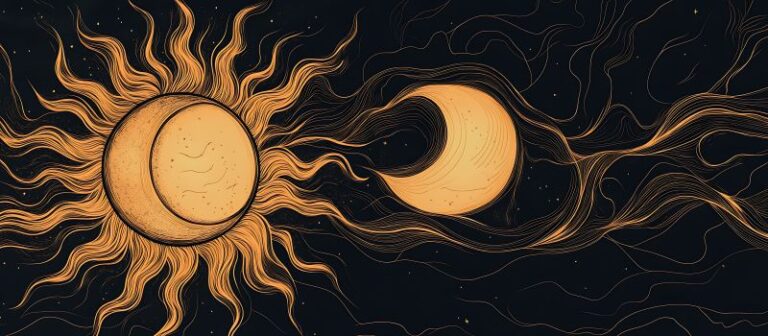
The image shows the seasonal cycle according to which there is a change in the balance between Yin and Yang. Each season is also represented by its element: spring – Wood, summer – Fire, autumn – Metal, and winter – Water. How to apply this in practice? In summer there is a lot of Yang energy, so you need to balance it. How? The Chinese do this with green tea. This drink carries Yin energy. In winter, the opposite is true; people drink more dark oolongs and Shu Pu-erh.
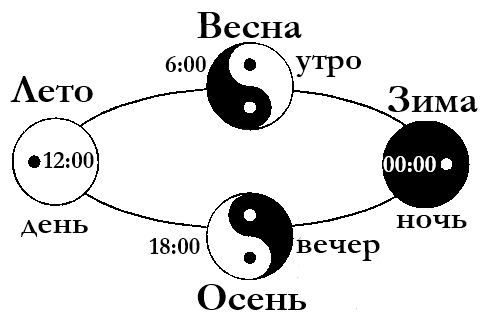
There is no season for the first tree. This is because this element represents the central element, which balances between the others. The element of Earth, in traditional Chinese texts, is represented by Indian summer or as the last part of each season.
The earth also represents the middle of the entire cycle or the torque on which the wheel of cycles turns. Each time a cycle ends, the energy moves into the middle to be revived and regenerated. The Earth element is the foundation of all, and everything originates from it and returns to it. She nourishes us. We are one with nature, and we cannot escape from it, no matter how hard we try to live artificially.

These five elements have many characteristics in nature, but let’s continue to explore how they function in humans, as it is easier to understand.
Five elements in man
All five elements in the human body are represented by organs, tissues, emotions, sounds, body parts, etc. They are best classified in Traditional Chinese Medicine (TCM), which uses this knowledge to treat, diagnose, and classify the human body. This unique system has similarities with other Asian traditional systems. But if the researcher is serious, it is obvious that there are two main traditions – Chinese and Indian.
There are many similarities and differences between the two traditions. Don’t get me wrong, I respect other local traditions and recognize their uniqueness! But the main role in the healing art or medicine is played by these two cultural heritages. These two systems are local, consistent, and complex. Both are well documented in chronicles and the writings of their ancestors, which allows them to be studied in depth.
Both traditions use a system based on knowledge of the five elements. Indians love Ether or Akasha and the Chinese love nature, so they decided to stay in the world of tangible nature without going into the immaterial world. But those who are familiar with Chinese traditions know that this is far from the truth. The Chinese tradition goes far into the realm of the intangible; to begin with, the main concern of this tradition is the energy of Qi. This substance is immaterial!
The Chinese decided to name their Five Elements according to the obvious characteristics of natural phenomena and thus explained the transmutation of Qi energy.
The cycle of the Five Elements in Qigong
There is a cycle of five elements in which one form is transmuted into another according to the laws of nature. This is how energy flows in our body, this is how the day begins and ends, and years and eras pass. There is a system behind it that can be described by numbers (numerology), geometric patterns, etc.
In the diagram below you can see how the five elements are arranged and interact in qigong. Arrows of different colors indicate the type of relationship between them.

The maintenance cycle has a nourishing and healing effect on us. According to the maintenance cycle, each primary element generates the next one and stimulates its development, the Yang function:
- Fire, when it stops burning, becomes ash or Earth, that is, Fire can nourish the stomach and spleen (organs of the Earth element);
- The Earth is capable of producing Metal, and therefore supports its organs (lungs and large intestine);
- Metal supports the element of Water (condenses water on itself), which means it can nourish the function of the kidneys and bladder (organs of the Water Element);
- Water can nourish the Wood element, thus stimulating the functioning of the liver and gall bladder;
- The tree supports Fire, therefore it can actively influence the functioning of the heart and small intestines.
The control cycle is when extremes in energy concentration or lack thereof begin to arise. Destructive connections or the controlling cycle (indicated by dotted arrows on the pentagram) represent the energy of inhibition or oppression, the Yin function:
- Fire is capable of melting Metal, which means it suppresses energy in the lungs and large intestine;
- Metal can cut down Wood, that is, it inhibits the functioning of the liver and gall bladder;
- The roots of the Tree deplete the Earth, which means they can destroy the functioning of the spleen and stomach;
- The Earth absorbs Water and therefore drains the energy in the kidneys and bladder;
- Water extinguishes Fire, which means that in excess, it has a depressing effect on the heart and small intestine.
Control of the Five Elements in Qigong
When we live according to natural cycles in humility and harmony, we live in a productive cycle. The elements support each other, just as a mother or parents support their child.
If we fall out of this primal harmony, one of our elemental energies may be depleted or stuck in a frozen state (water, metal). Or it can be excessive (fire, wood), or simply weak and non-nutritious (earth). Or it may be that one or more of them have stopped flowing naturally. Then we use the principle of Control. We redistribute energy from the hyperstrong element, which takes energy from the weak one, and directs it to the element that can nourish the weak element. By monitoring our condition and using timely corrective measures: exercise, nutrition, and precious stones, we can significantly extend our life.
Five elements in Qigong, a summary table of properties
| Earth | Metal | Water | Tree | Fire | |
| Organs | Liver, stomach | Lungs, large intestine | Kidneys, bladder | Liver, gall bladder | Heart, small intestine |
| Organ of feeling | Mouth | Nose | Ears | Eyes | Language |
| Tissues in the body | Tendons | Skin | Bones | Muscles | Blood |
| Taste | Sweet | Spicy | Salty | Sour | Gorky |
| Color | Yellow | White | Black | Green | Red |
| Emotion | Alarm | Sorrow | Fear | Anger | Joy |
| Planet | Saturn | Venus | Mercury | Jupiter | Mars |
| Energy | Humidity | Dryness | Cold | Wind | Warm |
Using these markers, we can learn to regulate our health. If you feel the emotion of sadness coming over you, do exercises to strengthen the element of Metal and let it go. If the stomach is not working well, then you need to strengthen the element of Fire in the body, and this can be done by adding a little bitter taste to some dishes.
Life can only exist with the constant change and flow of Qi energy. It transforms from one element to another, from density to fluidity, from weak vibration to exaltation, which animates us at every moment of our existence.