 “My life is filled with terrible tragedies and events……most of which will never happen…”
Are you sitting at home and thinking about what could happen tomorrow, in a week/month/year, developing in your mind different options and ways to solve them? And of course, during all these thoughts, the level of internal anxiety grows, and the mechanism of emotional intensification of oneself and those around them is triggered? Surely, nothing has happened yet! Yes, most likely most of the experience scenarios will never happen! How much of this is about you?
It is believed that what is supposed to happen will happen anyway, one way or another, whether we worry about it or not. And we also cannot influence most situations. We can only observe what is happening and follow our dharma (life purpose, what we should do). It doesn’t matter whether we accept it or not, it doesn’t matter whether we like it or not. This is a law that always works regardless of our personal preferences and desires.
For example, now there is a difficult situation all over the world – the lives of all people have been turned upside down in one month. Many are left without work, many are “stuck” in another country, some are re-learning and spending time with their families (because they have never been home for so long), and others are forced to look for new hobbies because… can no longer, for example, run in the park in the morning. In general, it’s not easy for EVERYONE right now, EVERYONE is going through their own experience. The question is: can you influence the current circumstances?
Question – if you worry, will something change? And the most important question is – if you worry “out loud”, while “twisting” the people around you, what result will you get? Most likely just irritation and anger.
 In principle, this is exactly what is happening among the masses now – people read information that changes every hour, come up with mostly negative scenarios, and deceive others with their “ideas.” As a result, what we have is an ever-growing negative information field that covers more and more people who fall into a state of constant emotional stress.
Unfortunately, it is not easy to get out of this state and many cannot cope with such emotional stress on their own. I will not be original if I say that there is an effective solution to cope with stress, but I am ready to write and talk about it again and again, because… I know that this method works and can help many!
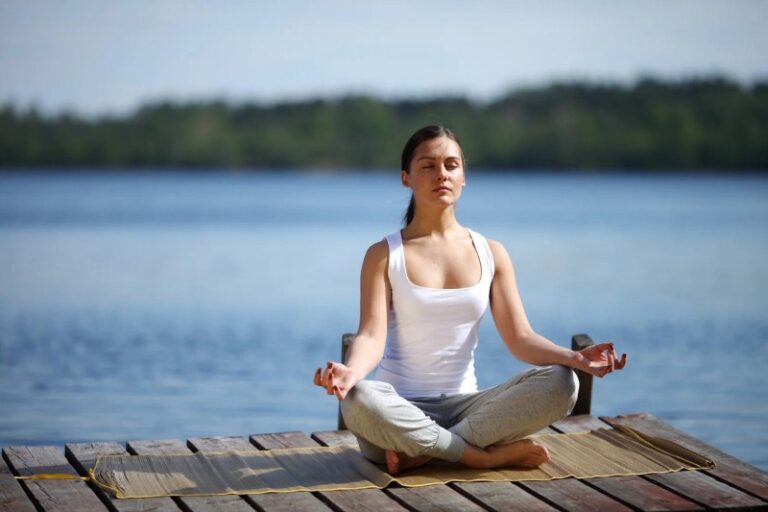
It all starts with where your thoughts are – do you live in the past or the future? What do you think about living in the present, “here and now”, in this specific moment? If you have already asked this question and tried it, then you know that this task is not easy, but this is where meditation begins, this is the whole essence of meditation.
Meditation is not something transcendental and mystical; in fact, it is the practice of concentrating on the current moment. It sounds simple, but there is an important nuance – our mind!
The mind produces a huge array of thoughts in a split second. The mind can be compared to a fast-flowing river, in which the water is our thoughts, and the flow is their speed. Stopping the flow of a river is difficult or even practically impossible. It’s the same with thoughts: if you want to stop their flow, then you need a dam – decades of regular practice to learn to stop your thoughts at least for a couple of seconds. This is the nature of the mind.

In ancient times, the human mind was compared to an uncontrollable elephant, and meditation was compared to a way to tame/control it.
When we stop or even slow down the mind, the original wisdom of life is revealed to us – many things open up in a new way, we begin to live a more conscious and happy life, we have the opportunity to more fully discover ourselves and the world around us in all its beauty and harmony.
Based on our experience, we recommend starting small, gradually increasing your meditation time, and practicing different techniques. In our classes, we begin to meditate for 10 minutes, gradually increasing the duration. Also, in our experience, we have seen many examples of how people, even with regular 10-minute meditation practice, acquire a more stable psyche and become more balanced and emotionally stable.
Gurus say that you need to meditate at least 20 minutes a day to start the process of internal change. With the right approach and minimal effort, you can achieve this duration in 2-3 months of regular practice. Of course, this is an average figure, because everything is individual.

The practice of meditation is influenced by many factors – physical (healthy back and abdominal muscles), physiological (flexibility and degree of opening of the hip joints), and “mental” nature (the situation in your personal life or at work, emotional stress, and much more). Based on this, the degree of effort and time it will take to learn to keep your mind calm still will vary from person to person.
In terms of physical and physiological aspects, yoga exercises and pranayama can help. In terms of the “spiritual” – an integrated approach to yoga, pranayama, and meditation.
Practicing all these practices together or separately is an important step in your spiritual development. If you’re serious, find your teachers and get going!
We invite you to take one of the meditation classes with a Yoga Hub club teacher and feel the power and influence of this practice on your inner world and the world around you: