The scientific and spiritual significance of fasting on the 11th lunar day (Ekadashi)
Fasting on Ekadashi is a cleansing of our soul and preparation for achieving moksha (spiritual liberation). This ritual practice helps people get rid of harmful planetary influences and find happiness.
Ekadashi is a Sanskrit word that means “eleventh”. And refers to the eleventh day of two weeks of the lunar month. There are two halves of the lunar month – Purnima and Amavasya. So, Ekadashi occurs twice a month. A feature of Ekadashi, in the understanding of most people, is fasting and abstinence from food. According to scientific research, it is known that the air pressure on Earth fluctuates to extreme limits on both the new moon day (Amavasya) and the full moon day (Purnima). This is due to the combination of the orbital path of the Sun, Moon, and Earth.

This can be observed by the changes like tidal waves on new and full moon days. The waves are very high and rough, but from the next day, the waves become calm, indicating that the pressure has also decreased. Now, based on this fact, the meaning of fasting on Ekadashi can be explained in two ways:
1) It will take about 3-4 days for the food we eat today to reach our brain. If we eat lightly/fast on Ekadashi days, the effect will reach the brain by the new moon/full moon. On both of these days, the earth’s pressure is at its maximum, which leads to an imbalance in everything, including the thought process.
2) Another explanation for fasting on Ekadashi is that compared to any other day of the lunar cycle, on Ekadashi days the atmospheric pressure is lowest. Thus, this is the best time to fast and cleanse the intestines. If we fast on any other day, high blood pressure/tension can cause harm to our body.
The Science of Fasting
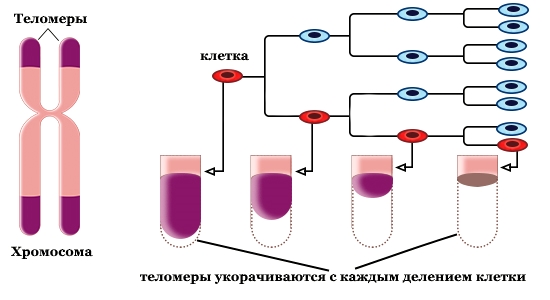
DNA carries all the information for the growth and maintenance of our human system. We all have strands of DNA, sections of genes within our cellular structure, and when we link the entire strand of DNA together, we get chromosomes. Here we need to understand one special strand of DNA called a telomere.
A telomere is one specific strand of DNA that has no information. It is an empty strand within our DNA structure without any data, so little attention has been paid to the study of these telomeres. For a long time, scientists and researchers did not attach importance to this particular thread and even thought that it was an extra thing that did not have any special function. They called this strand junk DNA. But in their recent research, they have identified the significance of these telomeres, or junk DNA, which is remarkable.
Telomeres are the protective part of DNA
They can be compared to the end of a shoelace (the plastic guard) which protects the shoelace at both ends. These telomeres protect the entire DNA structure so that we can function as human beings.
An interesting fact is that scientists were awarded the Nobel Prize for the discovery of telomeres and its functions in 2009.
Our contemporary Dr. Christopher Tompkins. He studied Vedic religion and Buddhism at Harvard and the Berkeley Institute. He is now a proCell, when cells divide in a process called mitosis, DNA and all the other information within the chromosomal structure, including telomeres, also divide and duplicate. Each time this duplication occurs, a small fragment of telomere (junk DNA) is lost. These telomeres at the ends of the chromosomes shorten with each cell division, protecting the core DNA information from being lost. He is studying and translating ancient Tantric scripts from the period 350-1350 A.D. More information about his work can be found on his website.
What does all this add up to?
Studies have shown that people with short telomeres are more susceptible to various diseases and have shorter life expectancy. Simply put, the length of the telomere chain in our DNA determines our lifespan. Once this telomere chain is completely used up in cell divisions, we reach the end of our life.
Two criteria determine our life expectancy:
- Number of cell divisions;
- Telomere length
Increased life expectancy with fasting
So, to live longer, we need to reduce the rate of cell division within our body. But “cell division” is common within our body for the growth and repair of various organs and tissues. What to do?
Further research into telomeres has led to interesting findings about the relationship between “telomere length” and “calorie intake”.
The more we eat, the faster cell division occurs and large chunks of telomeres are lost, leading to rapid aging. On the other hand, when we reduce our caloric intake, the rate of cell division also decreases.
So, scientists have been talking a lot lately about intermittent fasting (every 2 weeks for 36 hours) and how it increases longevity.
There are actually 2 ways to fast depending on your lifestyle. If you are a meat eater and your diet is dominated by heavy proteins and fats, you need to fast for 1 month and break the fast after sunset. But if you lead a “sattvic” lifestyle and follow a vegetarian diet, you need to fast for 36 hours: from sunset before the day of ekadashi and come out of fasting with dawn on the day after ekadashi. Interestingly, this aligns perfectly with religious traditions around the world.
Ekadashi Calendar
An up-to-date ekadashi calendar for each year can be found here: Ekadashi Calendar
The spiritual and yogic significance of Ekadashi
On this special day, all temples open the “Vaikuntha Dvaram” or “gate to heaven”, a gate that is normally closed on other days. This is the passage surrounding the innermost sanctum sanctorum of the Lord. Dozens of devotees gather to pass through this gate in the temples.
Let us understand the deeper meaning of this tradition.
According to the Vedic concept of yoga, the human body has 9 apparent openings and 2 hidden openings (11 openings in total). The nine openings are two eyes, two ears, two nostrils, one mouth, one anus, one vagina or penis. In Sanskrit, these 9 orifices are called “Nava Dvara”.
But there are 2 more gates that are not so obvious. The 10th hole is the umbilical cord that connects the fetus to the mother so that nutrients are transferred from mother to baby inside the uterus. It is cut off immediately after birth and closed.
The 11th hole is called “Bramha Randra” or the hole at the top of the head. This opening is similar to “Vaikuntha Dwaram”, the opening to access higher knowledge. In all yogic traditions, the main goal of any practice is to focus and direct the subtle life force energy to reach this opening in the “crown chakra” – the crown of the head.
On this special day of Vaikunta Ekadashi, the “Sushumna Nadi” is active. This promotes the emergence of spiritual knowledge, and one can easily experience deep meditation by paying attention to the Brahma Randra – the northern door of the human body (located at the crown). And to access this higher knowledge, we need to detoxify our bodies and keep our channels open (unclogged without any toxic buildup).
You can find out the exact day of Ekadashi for your city by writing to our astrologer: Roman
This is a free consultation!