
Every night, millions of people toss and turn in bed, count sheep, and stare at clocks showing 3:47 AM. Sound familiar? The modern world has given us incredible technologies but taken away something important — the ability to fall asleep naturally. We live in an era of eternal light, constant notifications, and chronic stress that throw our internal clocks out of rhythm.
But what if the secret to healthy sleep lies not in another melatonin pill, but in an ancient yoga practice? Chandra Namaskar, or “Moon Salutation,” could be the bridge that helps your body remember how to properly prepare for sleep. Let’s explore how this works from the perspective of modern science.
What are circadian rhythms, and why are they so important
Imagine you have an invisible conductor inside you, managing an orchestra of trillions of cells. This conductor is called circadian rhythms — internal biological clocks that work on approximately a 24-hour cycle.
Circadian rhythms control not only when you want to sleep, but also when your body produces hormones, when body temperature rises or falls, and even when your immunity is most active. This is an incredibly complex system that has evolved over millions of years, synchronizing with the day-night cycle.

Scientific fact: The master biological clock is located in the suprachiasmatic nucleus of the hypothalamus — a tiny brain region smaller than a grain of rice. This area contains about 20,000 neurons that receive light information through the eyes and coordinate the entire body’s functions.
When circadian rhythms work properly, you naturally feel alert in the morning and sleepy in the evening. But modern life constantly disrupts these clocks: artificial lighting, poor nutrition, stress, and irregular daily routines turn our internal orchestra into a cacophony.
Melatonin and stress: how they affect your sleep
Melatonin isn’t just the “sleep hormone” as it’s often called. It’s more like the “darkness hormone” that signals to the entire body: “Time to prepare for rest.” When the sun sets and light decreases, the pineal gland in the brain begins producing melatonin, essentially switching the entire body to “night mode.”
But here’s the problem: melatonin is very sensitive to light. Even a small amount of blue light from a phone or TV can suppress its production for several hours. That’s exactly why we often can’t fall asleep after browsing social media before bed — our brain thinks it’s still daytime.
Stress — enemy number one for healthy sleep
When we’re stressed, the adrenal glands produce cortisol, a hormone that should keep us alert during danger. The problem is that modern stressors (deadlines, traffic jams, conflicts) are perceived by the body as constant threats, and cortisol remains elevated even in the evening, blocking melatonin production.
This creates a vicious cycle: stress interferes with sleep, poor sleep increases stress, which further disrupts sleep. Breaking this chain requires practices that activate the parasympathetic nervous system — the “rest and recovery” system. And here’s where Chandra Namaskar enters the scene.
How Chandra Namaskar affects biological rhythms
Chandra Namaskar isn’t just a set of beautiful poses. From a neurophysiological perspective, it’s a comprehensive practice that affects the body in multiple ways, helping restore natural circadian rhythms.
Activation of the parasympathetic nervous system
Slow, flowing movements combined with deep breathing send a clear signal to the brain: “No danger here, it’s safe to relax.” This activates the vagus nerve — the main “highway” of the parasympathetic nervous system, which lowers heart rate, normalizes blood pressure, and prepares the body for sleep.
Reducing cortisol levels
Research shows that yoga significantly reduces blood cortisol levels. When stress hormone levels drop, the body gets the opportunity to switch to recovery mode and begin producing melatonin at the right time.
Improving flexibility and relieving physical tension
Physical muscle tension is also a form of stress for the body. The gentle stretches and asanas of Chandra Namaskar help release tension, especially in the neck, shoulders, and lower back areas where stress from sedentary work often accumulates.
What scientific research says
Modern science confirms what yogis have known for thousands of years: regular yoga practice genuinely improves sleep quality and helps restore circadian rhythms.
A 2019 study published in the Journal of Clinical Medicine showed that participants who practiced evening yoga for 12 weeks fell asleep 37% faster on average and slept 42% longer compared to the control group.
Another study conducted at Harvard Medical School found that people practicing yoga before bed showed significant improvement in melatonin production. They also showed decreased sympathetic nervous system activity during evening hours.
Particularly interesting are the results of research on breathing practices on circadian rhythms. Deep, slow breathing, which is an integral part of Chandra Namaskar, helps synchronize the work of various body systems and restores the natural hormone production rhythm.
Interestingly, the effect accumulates: the longer people practice evening yoga, the more stable their circadian rhythms become. The body seems to “relearn” how to properly respond to the time of day.
Practical tips for maximum effect
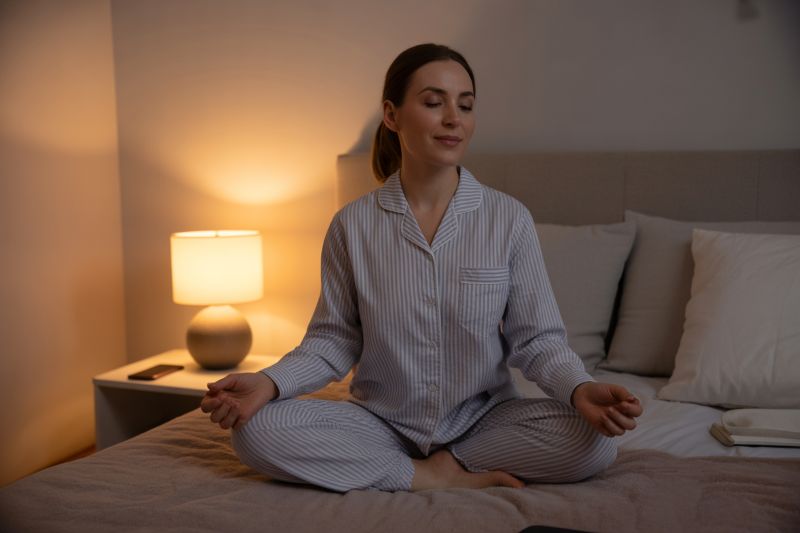
For Chandra Namaskar to truly help tune your biological clock, it’s important to follow several simple principles based on understanding circadian rhythms.
Timing matters
The ideal time for practice is 1-2 hours before sleep. This gives the body time to switch to rest mode, but not too early, so the effect doesn’t wear off by bedtime. Avoid intense practices right before sleep — they can have the opposite effect.
Create a ritual
Circadian rhythms love predictability. Try to practice at the same time every day. This will help the body “remember” the new routine and start preparing for sleep in advance.
Manage lighting
During practice, use soft, warm lighting. After finishing, gradually decrease the light intensity in the room. This helps the brain understand that sleep time is approaching and begins melatonin production.
Key elements for successful practice:
- Regularity — practice daily at the same time.
- Gentleness — avoid sharp movements and overexertion.
- Mindfulness — focus on breathing and body sensations.
- Gradual progression — start with simple variations and gradually deepen the practice.
Additional recommendations for better sleep:
- Ventilate the room before sleep — cool air promotes falling asleep;
- Eliminate caffeine 6 hours before sleep;
- Create a “digital sunset” — avoid screens one hour before practice;
- Keep a sleep diary to track progress.
Conclusion
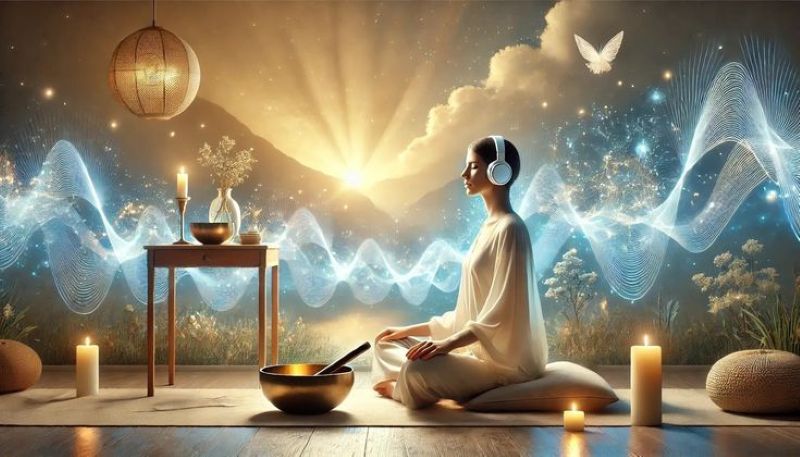
In a world where we constantly battle with time, Chandra Namaskar offers us a chance to befriend our body’s natural rhythms. This ancient practice, supported by modern scientific research, can become the key to restoring healthy sleep and improving overall quality of life.
Remember: changes don’t happen overnight. Circadian rhythms formed over millions of years, and their restoration may require several weeks or months of regular practice. But every evening when you roll out your mat and greet the moon, you’re making an investment in your health and well-being.
Ready to start your practice?
Study the detailed guide: Chandra Namaskar: 12 poses of moon salutation for relaxation and sleep.
Give your body a chance to remember how to fall asleep properly. Perhaps the answer to insomnia problems lies not in the medicine cabinet, but on the yoga mat.