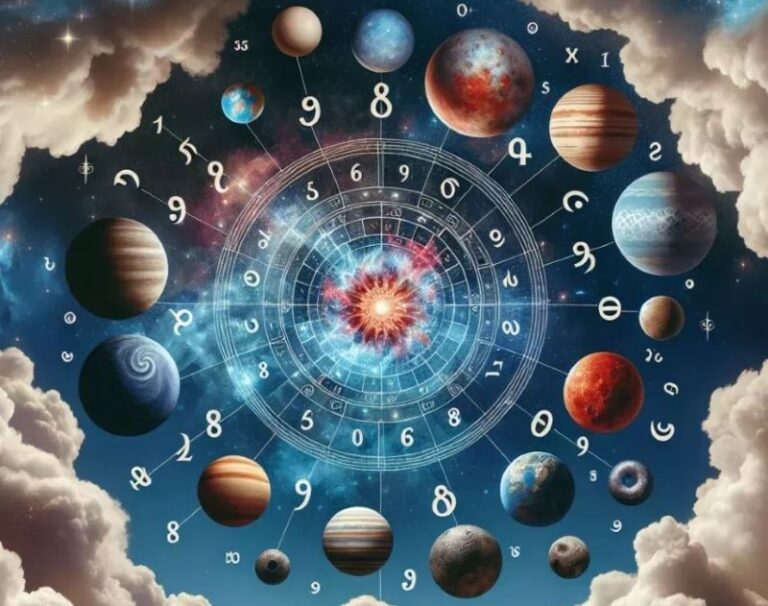
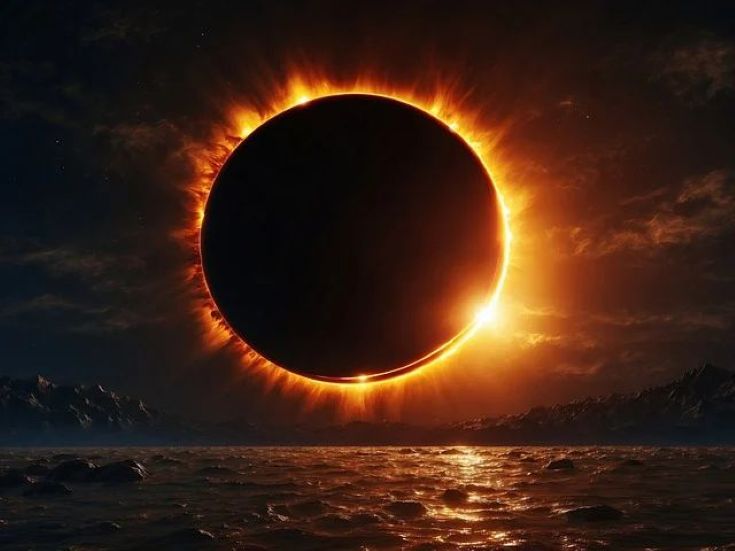
Friends, I want to share with you information about an event that is already drawing serious attention among Jyotish experts worldwide. On August 2, 2027, the longest total solar eclipse in a hundred years will occur — over six minutes of absolute darkness in the middle of a bright summer day. But for those of us who study Vedic astrology, this event holds a much deeper significance than simply a beautiful astronomical phenomenon.
An Ancient Story: When a Demon Stole Immortality
Before we discuss the eclipse itself, let me tell you an ancient Vedic story that explains the nature of eclipses. Long, long ago, gods and demons churned the cosmic ocean together to obtain amrita — the nectar of immortality. When the amrita finally appeared, the gods decided not to share it with the demons. But one cunning demon named Rahu disguised himself as a god and managed to infiltrate their ranks. He had already begun drinking the nectar when the Sun and Moon noticed the deception and pointed him out to Vishnu.
Vishnu instantly severed the demon’s head with his chakra disc. But it was too late — the nectar had already touched Rahu’s throat, and the head gained immortality. The demon’s body also became immortal and received the name Ketu. Since then, the demon’s head Rahu, filled with eternal rage at those who exposed him, constantly chases the Sun and Moon across the sky. And when he manages to catch them — an eclipse occurs. Rahu swallows the luminary, but it immediately exits through his severed throat, and the light returns.
This story is not merely a beautiful metaphor. In Vedic astrology, Rahu and Ketu are mathematical points where the Moon’s orbit intersects the ecliptic (the Sun’s path). We call them shadow planets or lunar nodes. And an eclipse occurs precisely when the Sun or Moon comes very close to these points. Literally — when the luminary falls “into the jaws” of Rahu or Ketu.
Why in Jyotish Eclipses Are Not Just Beautiful
In Western astrology, eclipses are often perceived as powerful but generally positive moments of transformation and new beginnings. In the Vedic tradition, we look at this differently, and understanding this difference is very important. Rahu and Ketu in Jyotish are considered malefics — unfavorable planets. Not because they are “bad,” but because they carry the energy of illusions, confusion, karmic knots that need to be untied.
When Rahu “swallows” the Sun during an eclipse, it temporarily hides our main luminary — the source of life, consciousness, clarity. The Sun in Vedic astrology is Atma, our soul, our true Self. It is the king among planets, giving light to all others. And when this light temporarily fades, it creates a moment of deep uncertainty on an energetic level.
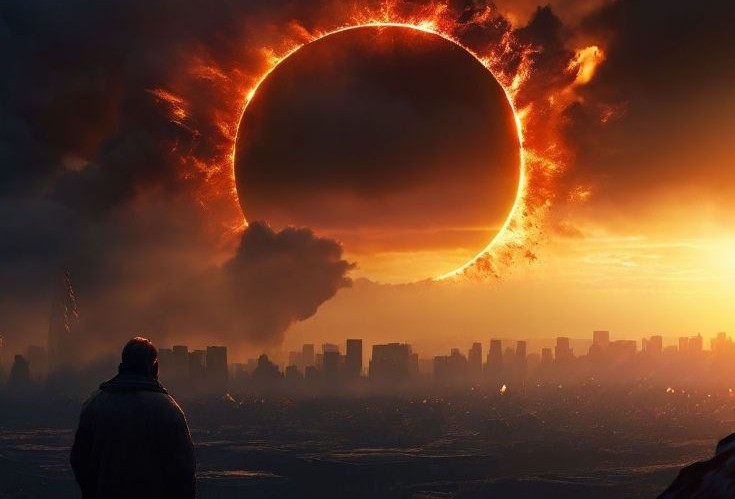
Imagine: you’re walking a familiar path in bright sunshine, and suddenly for six minutes darkness falls. You know the light will return, but in these minutes you’re disoriented, unable to clearly see the way. This is exactly how an eclipse affects us on the subtle plane — it creates a period when familiar landmarks temporarily disappear, when Rahu’s illusions can show us what isn’t there or hide what is.
The Uniqueness of the 2027 Eclipse: Six Minutes Under the Shadow Planet’s Power
Now about what makes the August 2, 2027 eclipse exceptional. From an astronomical perspective, this is a perfect alignment: the Moon will be close to Earth and appear larger, while Earth will be slightly farther from the Sun, making the Sun appear smaller. This geometry will allow the Moon to completely cover the solar disc for a record 6 minutes and 23 seconds. No other total solar eclipse visible from land in this century will last this long.
From a Jyotish perspective, the duration of an eclipse is of enormous significance. The longer the luminary remains “in Rahu’s jaws,” the deeper and longer-lasting its influence will be. Six minutes of darkness is not an instantaneous karmic flash, it’s a thorough immersion in shadow energies. The effects of such an eclipse can unfold over six months following the event, affecting those areas of life it touches in your personal natal chart.
Geography of the Eclipse: Where Rahu Will Show His Power
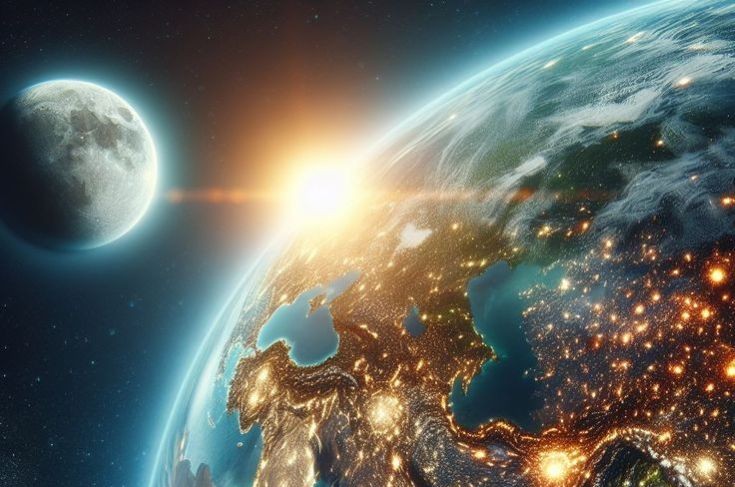
The path of the eclipse will begin over the Atlantic Ocean, touch the southern shores of Spain, then pass through North Africa — Morocco, Algeria, Tunisia, Libya, Egypt — and end in the Middle East, affecting Saudi Arabia and Yemen. It is in these regions that people will see the total phase of the eclipse, when day turns into night.
In the Vedic tradition, it is believed that an eclipse most strongly affects those places where it is visible. Countries and regions falling within the eclipse path can expect significant events on a collective level — political changes, natural phenomena, significant historical moments. History shows that eclipses often coincide with turning points for entire nations and states.
For those of us outside the visibility zone — in Ukraine, CIS countries, most of Asia — the eclipse will either not be visible at all or observed as partial. But this doesn’t mean we won’t feel its influence. The energetic impact of an eclipse is global, especially when dealing with such a powerful event. It will simply be more subtle, not as direct and obvious.
The Nakshatra of the Eclipse: Where Exactly the Event Will Occur
For me, as a Jyotish specialist, it’s very important to know not only the zodiac sign in which the eclipse occurs, but also the nakshatra — the lunar mansion. Nakshatras are the 27 constellations through which the Moon passes, and each has its unique energy, its own ruler, its own qualities.
The peak of the eclipse on August 2, 2027 — the moment of maximum phase and exact conjunction of the Sun and Moon — will occur when the luminaries are located in the nakshatra of Pushya. This is the eighth nakshatra of the zodiac, located in the sign of Cancer. Immediately after the completion of the active phase of the eclipse, the Moon will move into the next nakshatra — Ashlesha (this will happen closer to evening).
Pushya is ruled by Saturn and is considered one of the most auspicious nakshatras. Its symbol is a cow’s udder or a lotus flower, indicating nourishment, care, spiritual cultivation. The word “Pushya” itself means “the nourisher.” This nakshatra is associated with maternal energy, protection, spiritual growth, and piety.
The deity of Pushya is Brihaspati (Jupiter), the teacher of the gods, a symbol of higher wisdom and spiritual knowledge. This creates an interesting contrast: an eclipse — an event connected with the shadow planets Rahu and Ketu — occurs in a nakshatra patronized by the very embodiment of light and knowledge.
Saturn in Debilitation: The Weakened Ruler of the Nakshatra
Here we encounter a very important astrological detail that significantly changes the picture. At the moment of the eclipse, Saturn — the ruler of Pushya — will be located in the sign of Aries, where it is in neecha (fall, debilitation). Aries — a fiery, impulsive, warlike sign of Mars — is the complete opposite of Saturn’s cold, slow, disciplined nature. In this sign, Saturn feels extremely uncomfortable and cannot manifest its best qualities.
What does this mean for the eclipse? When the ruler of a nakshatra is debilitated, the favorable qualities of that nakshatra don’t work at full strength. Imagine a ship with an experienced captain who suddenly falls ill. The ship can still sail, but its management is difficult, navigation is imprecise, decisions are made more slowly or with errors.
Pushya in its pure manifestation grants nourishment, protection, stability, spiritual growth. But when its ruler Saturn is in fall, these qualities can become distorted:
Nourishment can turn into excess or deficiency — problems with food, imbalance in caring for oneself and others
- Protection can become control and restriction — excessive caution, fear, rigidity instead of wise discipline
- Spiritual growth may encounter obstacles — disappointment in teachers, crisis of faith, the need to reconsider one’s spiritual path
- Structures and systems may crack — what seemed reliable and stable can suddenly show its fragility
Debilitated Saturn in Aries also amplifies impulsiveness, impatience, tendency toward hasty actions — which is especially dangerous during an eclipse, when it’s already recommended to refrain from important decisions. This is a time when patience and endurance (Saturn’s qualities) are especially needed but come with great difficulty.
The Multi-Layered Nature of the Influence
Thus, the eclipse of August 2, 2027 carries complex, multi-layered energy. On one hand, Pushya is a nakshatra of spiritual growth and protection. On the other hand, its ruler is debilitated, creating tension and the need to work with these qualities more consciously.
This eclipse may bring to the surface questions of the spiritual path, relationships with teachers and mentors, the need to reassess one’s beliefs and value system. It can also touch on themes of care and nourishment — both in the literal sense (food, health) and figuratively (emotional support, caring for loved ones). But all of this will occur through the prism of testing, trial, the need to separate the genuine from the false, the reliable from the illusory.
What Happens on the Subtle Plane: Six Minutes of Karmic Vortex
Let’s now discuss what happens energetically during an eclipse. In normal times, the Sun constantly radiates prana — life force that nourishes all living things on Earth. This energy supports not only physical life but also clarity of consciousness, the ability to distinguish truth from illusion, to understand one’s purpose.
When Rahu covers the Sun, the flow of prana is temporarily disrupted. This doesn’t mean that life force disappears completely, but its quality changes. For these few minutes, reality becomes shaky, boundaries blur. What was hidden in the depths of the subconscious — both personal and collective — can burst outward. Rahu is known for creating illusions, but paradoxically, he can also destroy the illusions we live in without realizing it.
Ancient texts say that during an eclipse, the gates between worlds open. The boundary between the manifested and unmanifested, between this world and subtle planes, becomes permeable. This is why in the Vedic tradition, eclipses have always been a time of special caution, a time when it’s recommended to refrain from important beginnings and active pursuits.
Imagine you’re crossing a river. In normal times, the water is clear, and you can see the stones on the bottom that you can safely step on. But an eclipse is as if the water suddenly became murky. The stones are still there, but you can’t see them. One careless step — and you might stumble. Therefore, ancestral wisdom advises: during an eclipse, it’s better to stop on the shore and wait until the water becomes clear again.
Traditional Jyotish Recommendations: What to Do and What to Avoid
The Vedic tradition has accumulated millennia of observations on the influence of eclipses and developed clear recommendations for this period. Let me help break them down in detail so you understand not only “what” but also “why.”
The sutak period is the time before the eclipse when its influence already begins to be felt. For a solar eclipse, it’s traditionally recommended to begin observances 12 hours beforehand. This means that from the evening of August 1, you should already be entering a special regime. What does this include?
First, abstaining from food or at least limiting food intake. The idea is that during an eclipse, the energy of food is absorbed incorrectly and can create toxins in the body. If a complete fast is difficult for you, at least avoid heavy food, meat, stale products. It’s better to limit yourself to light fruits or drink only water.
Second, during the eclipse period, it’s not recommended to start anything new and important. Don’t sign contracts, don’t start business projects, don’t propose marriage, don’t make fateful decisions. Eclipse energy creates distortions in the perception of reality, and what seems like a brilliant idea at this moment may turn out to be Rahu’s illusion. Wait at least a few days after the eclipse, when the energies settle, and then return to important matters.
It’s also not recommended to travel during an eclipse, especially to begin a long journey. If you’re already on the road — that’s one thing, but planning a departure exactly at the time of the eclipse is not advisable. Rahu is associated with surprises, obstacles, loss of orientation — not the best companions for travel.
Pregnant women in the Vedic tradition are especially recommended to be careful. It’s advisable to stay home, not look at the eclipse, and better to spend this time in prayer or meditation. It’s believed that eclipse energy can affect the being forming in the womb.
Observing the Eclipse
Regarding observation of the eclipse itself — in the Vedic tradition, there is a recommendation not to look at the eclipse directly. This concerns not only the physical danger to the eyes (which is, of course, also important) but also the energetic impact. It’s believed that a direct gaze at the moment when Rahu swallows the luminary opens a person to the influence of shadow energies. If you still want to observe this phenomenon, it’s better to do so through special protective filters and briefly. And even better — spend this time in meditation with closed eyes, turning attention inward rather than outward.
What Should Be Done: Turning Challenge into Opportunity
But an eclipse is not only about restrictions. It’s also a powerful time for spiritual practices if approached correctly. Rahu and Ketu are not just troublemakers; they are our karmic teachers. Rahu shows us our attachments, desires, illusions. Ketu points to what we need to let go of, what to free ourselves from.
The time of an eclipse is ideal for meditation and mantras. The energy during these hours is so concentrated that spiritual practices bring manifold enhanced effects. If you practice mantras for Rahu or Ketu, an eclipse is the best time for this. Even a simple mantra like “Om” or “Om Namah Shivaya” repeated during an eclipse has special power.
Specific Mantras for the Eclipse
If you practice mantras, here are some of the most effective ones for the time of an eclipse:
- For Rahu: “Om Raam Rahave Namaha” or “Om Bhram Bhreem Bhraum Saha Rahave Namaha”
- For Ketu: “Om Ketave Namaha” or “Om Sram Sreem Sraum Saha Ketave Namaha”
- For Saturn (especially relevant considering its role as ruler of Pushya): “Om Sham Shanaishcharaya Namaha” or “Om Neelanjana Samabhasam”
Universal protective mantras:
- “Om Namah Shivaya” — Shiva’s mantra, destroyer of illusions
- “Om Gam Ganapataye Namaha” — Ganesha’s mantra, remover of obstacles
- Mahamrityunjaya mantra — powerful protective mantra
Even if you’re not accustomed to mantra practice, simple repetition of “Om” with concentration and sincerity during the eclipse time will bring benefit.
It’s very favorable to spend the eclipse time contemplating the nature of illusion and reality, reflecting on the impermanence of all that is manifested. An eclipse literally shows us that even the Sun itself — a symbol of eternity and constancy — can be temporarily hidden. This is a profound lesson in anitya — impermanence.
It’s traditionally recommended to perform ablutions after the eclipse ends — take a shower or, if possible, immerse yourself in a sacred river. This is a symbolic act of purification from the influence of shadow planets. It’s also favorable after the eclipse to give charity, help those in need, feed the hungry — this creates good karma and neutralizes possible negative effects.
If in your natal chart Rahu or Ketu are in difficult positions, the period around the eclipse is a good time to perform upayas — Vedic remedial measures. These can be donations of certain items, wearing protective gemstones, repetition of special mantras. But it’s better, of course, to consult with me — I’ll look at your chart and give personalized recommendations.
Special Recommendations for the Eclipse in Pushya with Debilitated Saturn
Considering that the eclipse occurs in the nakshatra of Pushya, ruled by Saturn who is at this moment in fall, there are specific practices that can be especially beneficial:
Honoring ancestors (Pitris): Pushya is closely connected with ancestral lines and forefathers. During and after the eclipse, it’s favorable to perform tarpana (ritual offering of water to ancestors), pray for the souls of deceased relatives, make donations in their name. This helps heal ancestral patterns and receive the blessings of ancestors.
Working with nourishment and care: Since Pushya means “the nourisher,” pay attention to how you nourish yourself and others — not only physically but emotionally. After the eclipse, it’s good to feed the hungry, especially children and the elderly, donate food to shelters or temples. This harmonizes Pushya’s energy.
Strengthening Saturn: Since the ruler of the nakshatra is debilitated, it’s useful to perform upayas for Saturn:
- Donate black sesame seeds, black lentils (urad dal), black cloth, or iron items to the needy
- Feed crows (they are connected with Saturn and ancestors)
- Light an oil lamp with sesame oil before an image of Shani-dev
- Wear blue sapphire or amethyst (only after consultation with an astrologer!)
Discipline and structure: Saturn is the planet of discipline. In the period after the eclipse, it’s especially important to establish healthy routines, structure your life, take responsibility for those areas you’ve neglected. This supports the weakened Saturn and helps constructively use the eclipse energy.
How the Eclipse Will Affect You Personally: The Question of Your Chart
You see, general predictions are good, but Vedic astrology is always about a personalized approach. The 2027 eclipse will touch everyone differently, depending on where Cancer is located in your natal chart, what your ascendant is, where Rahu and Ketu are positioned in your birth chart, which dasha period you’re entering.
For example, if the eclipse occurs in your first house (house of personality and body), its influence will be very direct and personal — significant changes may occur in your self-perception, appearance, life direction. If the eclipse is in the seventh house (house of partnership), it may bring transformations in relationships — both challenges and opportunities for deepening connection or, conversely, awareness of the need to separate.
An eclipse in the tenth house can mean serious shifts in career, in public status. In the fourth house — changes related to home, family, inner emotional state. And so on — each house has its themes, and the eclipse activates precisely that sphere of life.
It’s also important whether Cancer (the sign in which the eclipse occurs) rules any houses in your chart. If so — those areas of life will be especially sensitive to the eclipse’s influence.
Another important factor is the current planetary dasha period. Jyotish uses a unique system of planetary periods that shows which planet’s energy dominates in your life at a given time. If during the eclipse you’re in the dasha of Rahu, Ketu, or the Sun — the influence will be especially strong and noticeable.
This is why I always recommend obtaining a personal consultation before such significant astrological events. Understanding exactly how the eclipse will touch your chart allows you to prepare, use favorable opportunities, and minimize possible difficulties.
Six Months After: How the Influence Unfolds
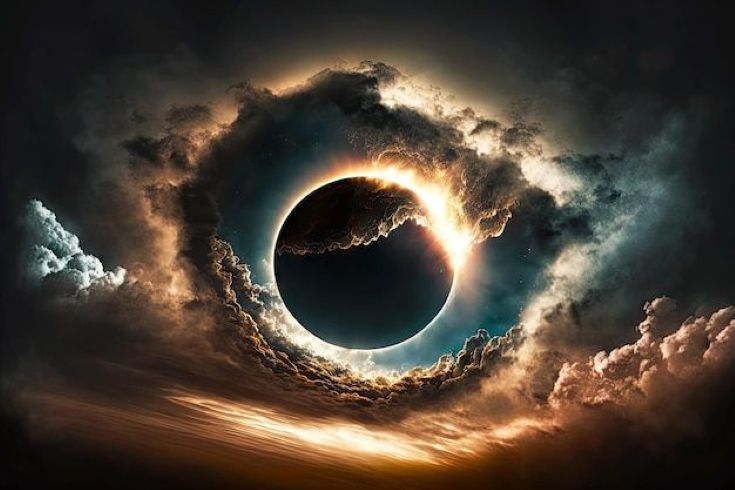
It’s important to understand that an eclipse is not a one-time event that happens and ends on the same day. Ancient Jyotish texts say that the influence of an eclipse lasts as many months as minutes the total phase lasted. The 2027 eclipse lasts over six minutes, which means its effects will unfold over six months — until February 2028.
Imagine an eclipse as a stone thrown into calm water. The moment of impact is the day of the eclipse. But from it ripples spread, waves that reach the shores much later. The first weeks after the eclipse are the strongest waves. Then the influence gradually weakens, but is still felt.
It often happens that on the day of the eclipse itself, nothing special occurs. But in a week, in a month, in three months, an event happens that is directly connected to the karmic theme activated by the eclipse. This could be meeting a significant person, a job offer, sudden realization, the need to make an important decision.
Therefore, in the period from August 2027 to February 2028, be especially attentive to signs, synchronicities, themes that repeat in your life. Keep a journal — write down what happens, what thoughts and feelings arise. Often only retrospectively, looking back, do we see how everything was connected to the eclipse.
Conclusion: Ancestral Wisdom and Our Choice
On August 2, 2027, the sky will give us a rare lesson. Rahu will swallow the Sun for a full six minutes, reminding us of the power of shadow energies, the depth of karma, that even the brightest can be temporarily hidden. But this lesson is not punishment, but opportunity. An opportunity to see what is usually hidden by the glare of everyday life. An opportunity to release illusions. An opportunity to take the next step on the path of soul evolution.
Use the wisdom accumulated over millennia of Vedic tradition. Follow the recommended practices. Be cautious with important undertakings. But at the same time, don’t live in fear of the eclipse — live in respect for its power.
And if you have the opportunity — reach out to me to understand exactly how this eclipse will touch your personal chart. Personal knowledge is power that allows us not to be victims of planetary influences, but to cooperate with cosmic energies on the path to liberation.
May this eclipse bring you wisdom, freedom from illusions, and the next step on your spiritual journey.