

When I first decided to try a three-day water fast, no one warned me that on the second day, my head would spin so much that I’d want to lie down right on the office floor. No one told me that my tongue would be covered with a white coating and my mouth would have an unpleasant smell. And certainly no one explained that this was normal and meant that the cleansing process was in full swing.
Today, I want to tell you the whole truth about water detox – not only about its scientifically proven benefits, but also about what you will actually feel, why these sensations occur, and when such practice can be dangerous.
The Physiology of Fasting: What Happens Inside
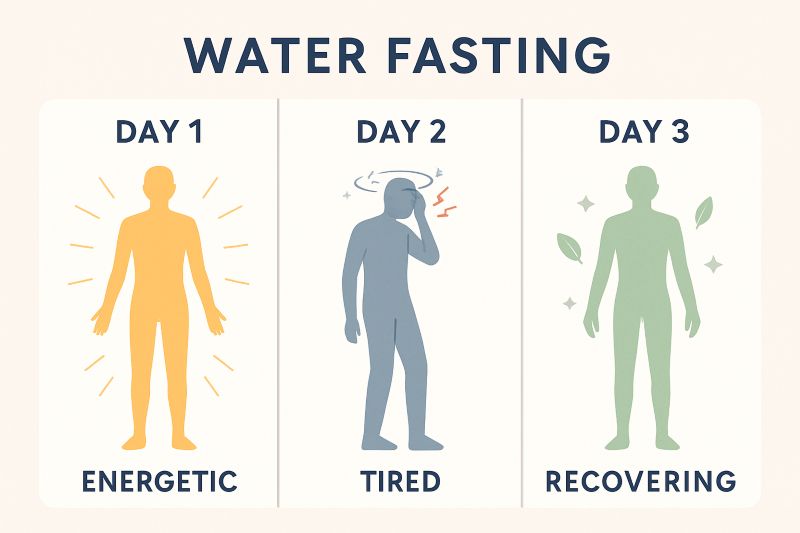
During the first day of fasting, the body uses up glycogen stores from the liver and muscles. By the end of the first day, these stores are depleted, and the body begins to switch to alternative energy sources. The drop in blood sugar levels can lead to body weakness, drowsiness, headaches, dizziness, and nausea.
By the third day of fasting, the so-called acidotic crisis occurs – a turning point when the body completely switches to feeding on ketone bodies. Symptoms include body weakness, headache, nausea, dizziness, dark urine, and a certain coating on the tongue.
These are not signs that something is going wrong – this is the natural physiology of the body’s adaptation to a new energy supply regime.
Day by Day: An Honest Journal of Sensations
Day One usually passes relatively easily. The body is still feeding on glycogen stores, so there’s no serious discomfort. Many people even notice a surge of energy and mental clarity.
Day Two is the most difficult. The fasting person experiences physical weakness, dizziness, nausea, and uncontrollable tremors of the limbs. The skin and lips become dry, and headaches and lethargy often develop. The feeling of hunger practically disappears, but strong irritability appears.
Day Three often becomes a turning point. The process of switching to ketone nutrition can be accompanied by dizziness, weakness, nausea, blood pressure fluctuations, and sleep disturbances. But by the end of the day, many feel like they’ve “broken through” – an unusual lightness and energy appear.
Scientific Evidence of Benefits
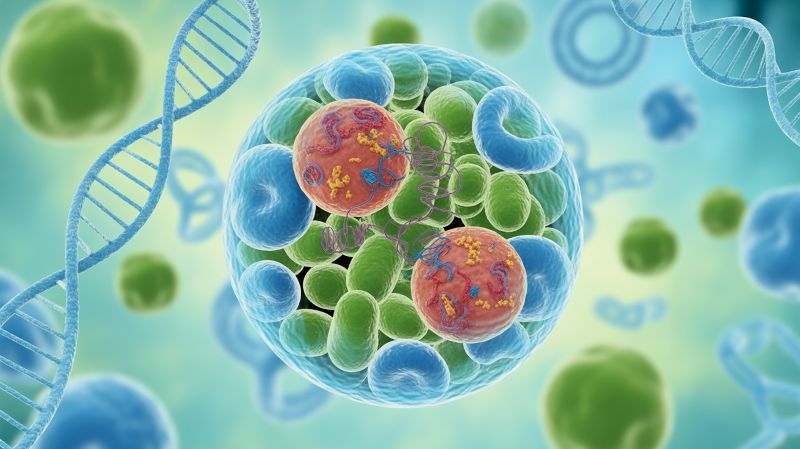
Modern research confirms that three-day fasting triggers powerful renewal processes. Autophagy is activated – a cellular cleansing mechanism where cells literally eat their damaged parts. Growth hormone synthesis increases, insulin sensitivity improves, and inflammation levels in the body decrease.
A 72-hour fast can completely renew the immune system, stimulating the production of new white blood cells and eliminating old, damaged cells.
When Fasting is Absolutely Forbidden
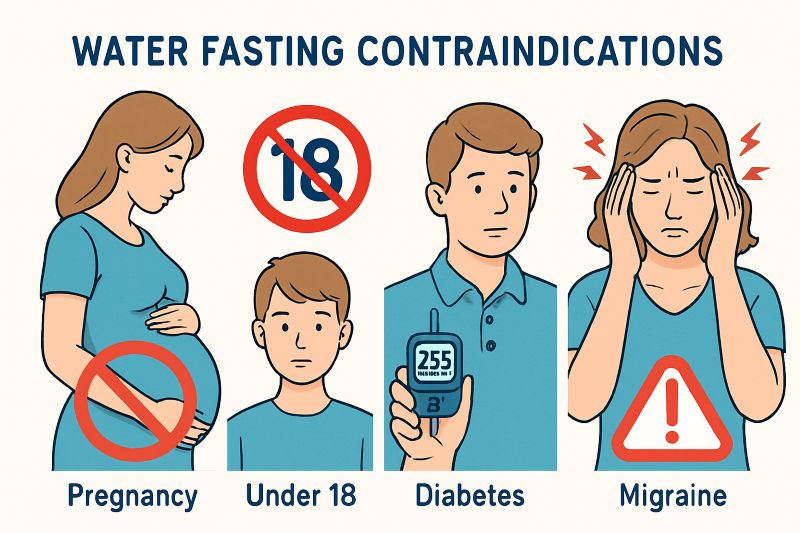
Water fasting is serious stress for the body, and it has strict contraindications:
Absolute contraindications:
- Age under 18 years (the body is growing and needs constant nutrient intake)
- Pregnancy and breastfeeding
- Diabetes of any type
- Mental disorders, especially eating disorders
- Oncological diseases
- Heart and vascular diseases
- Migraines and frequent headaches
Why can’t teenagers fast? During the growth period, the brain and all organs need constant nutrient intake. Fasting can disrupt normal development and hormonal balance.
Why is it dangerous for mental disorders? Fasting affects neurotransmitter production and can trigger exacerbation of depression, anxiety disorders, or eating disorders.
Why with migraines? Hunger is one of the main triggers of migraine attacks, so fasting is contraindicated for people prone to migraines.
Is It Normal to Break and What to Do About It?
Breaking during fasting is absolutely normal, especially if you’re doing it for the first time. Your body isn’t used to this regimen, and psychological stress can be very strong.
If you break:
- Don’t blame yourself – it’s part of the learning process
- Exit fasting gradually, even if only a day has passed
- Analyze what led to the break, to account for it next time
- Remember: better a short fast completed correctly than a long one with an abrupt break
How to Prepare and Exit Safely
2-3 days before starting, eliminate heavy food, alcohol, and coffee. The exit should be very gradual: start with diluted juice, then light broth, only then solid food.
Remember: fasting is not a weight loss method, but a practice of cleansing and rebooting the body. If your goal is to lose weight, it’s better to consult a nutrition specialist.
If you feel ready for this experience and have no contraindications, I invite you to join my 3-Day Detox program. Here you’ll get not only detailed instructions but also support from a community of people going through the same journey. Together, it’s easier to cope with difficulties and see what you started through to the end.