 Meeting the Master
 Meeting the Master
Namaste, friends! Today, we want to share with you a unique experience from our friend Maxim. For over six years, Maxim has been practicing and teaching the art of nail-standing in Bali. Maxim doesn’t just practice himself—he helps others discover this ancient method of self-discovery and transformation.
“When someone stands on nails for the first time, a real miracle happens,” Maxim shares. – “In just a few minutes, one can experience a journey from sharp physical sensations to incredible lightness and euphoria.”
So, dear friends, make yourself comfortable – we are about to embark on an amazing journey to the origins of this ancient practice and learn how it can transform your life.
History and Traditions of Nail-standing Practice
The practice of standing on sharp objects originates in ancient India, where it was known as one of the methods of asceticism or “tapasya.” Sadhus – holy sages who renounced worldly life in search of higher truth, used this technique to discipline mind and body. They wanted to overcome fears, pain, and attachment to bodily pleasures to achieve a state of complete mental clarity and deep concentration.
It is believed that the origins of this practice lie in the traditions of Hatha Yoga, described in ancient texts such as “Hatha Yoga Pradipika” and “Shiva Samhita.” Sadhus believed that the pain experienced during such practices helps “burn” accumulated negative karmic imprints, preparing the body and mind for spiritual awakening.
Why did sadhus do this?
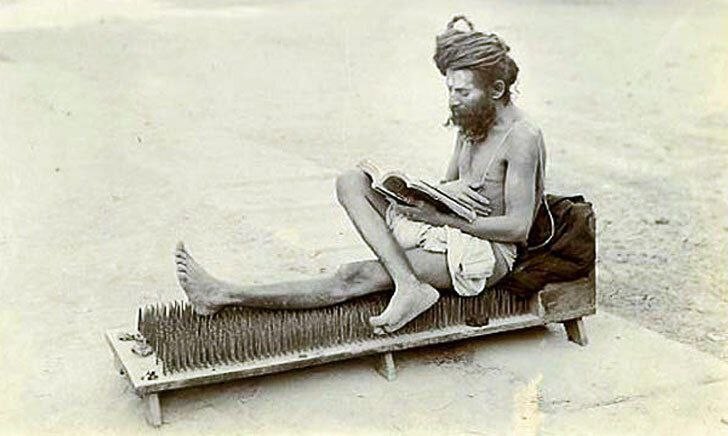
The answer is simple yet profound: they sought liberation from suffering. They viewed pain not as an enemy but as an ally, revealing the true state of their mind. Standing steadily on nails symbolized their ability to maintain stillness and focus even in the most challenging circumstances.
Who could have inspired them?
Ancient traditions held that such practices were transmitted by Shiva himself, the deity known as the patron of yogis and the embodiment of supreme wisdom. In yogic understanding, Shiva taught that control over body and mind through asceticism opens doors to an immortal state of consciousness.
Although the world has changed dramatically today, nail-standing continues to inspire people. Modern practitioners’ experiences are very similar to those of ancient sadhus — realizing one’s strength, liberating one from anxiety, and achieving a state of harmony. Now imagine that this very transformation could happen to you!
The Miracles of Transformation Through Nail-standing
“The most amazing thing,” says Maxim, “is that within just 5-7 minutes of practice, people begin to experience entirely new sensations. Some laugh with overwhelming joy, while others feel as if they are being pulled upward by an invisible force. Everyone’s experience is unique, but no one remains indifferent.”
These transformations are not a coincidence – they are the result of deep processes taking place in our body and mind. Let’s explore how this incredible practice works.
The Mechanism of Nail-standing Practice
Imagine that your feet are a map of your entire body, where each point is connected to a specific organ or system. This principle forms the basis of reflexology, an ancient Eastern practice that studies the relationship between areas on the feet and internal organs. Scientists and doctors confirm that the feet have thousands of nerve endings and reflex points. This is why working on the feet has a profound effect on the entire body.
When we stand on nails, these reflex points are stimulated, activating blood circulation and energy channels (known as “nadis” in Ayurveda). This stimulation triggers several processes simultaneously:
- Improved blood circulation: Blood flows more actively to tissues and organs, enhancing nutrient delivery and eliminating toxins.
- Activation of the lymphatic system: The body deals with inflammation more efficiently and removes waste products faster.
- Harmonization of the nervous system: Stimulating nerve endings helps reduce stress levels and restore emotional balance.
“Many of my students,” Maxim observes, “after just a few sessions, experience relief from back pain, improved digestion, and an incredible sense of lightness in the body.”
This is not just a feeling – it’s the result of deep physiological changes triggered by well-distributed pressure on the feet.
Why the Feet?
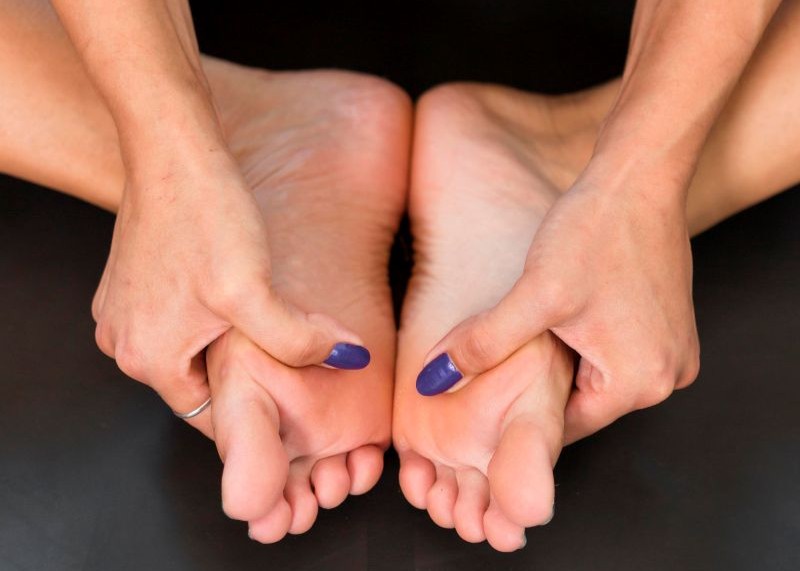
The feet are an area often underestimated in the modern world. We wear uncomfortable shoes, spend long hours sitting, and forget that our feet are the very foundation of the entire body. Ancient Chinese and Indian texts claim that most of the body’s vital energy, or “prana,” flows through the feet. Working on them through nail-standing helps to unblock energy channels, eliminate stagnation, and restore overall balance.
Why Nails?
You might wonder – why nails and not, for example, a massage? The reason is that nails create a unique direct pressure, which, when spaced correctly, becomes completely safe and evenly distributed.
“The first fear is entirely in the mind,” Maxim assures. “In reality, these nails are rounded and spaced about 10 mm apart, making them a safe tool when used properly.”
Nails affect the feet much more deeply than regular massage. They not only relax the muscles but also penetrate deeper layers, including ligaments, tendons, and even influence internal organs through reflexology.
What Boards to Choose?
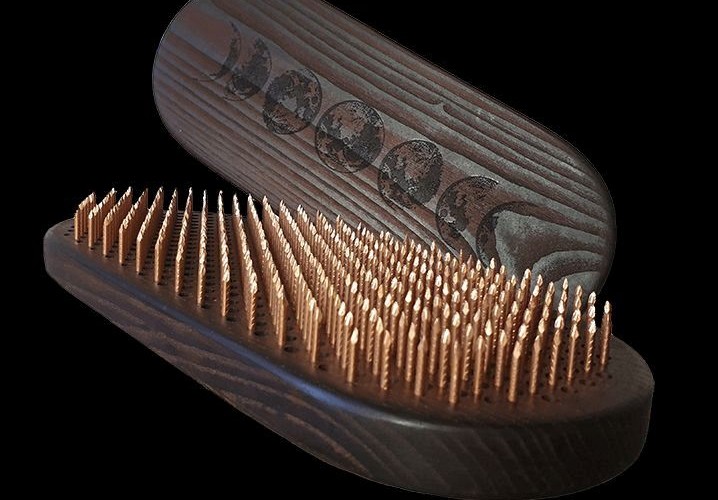
“For the practice, it’s important to choose the right tools,” Maxim explains. “It’s not just nails and a board – every detail matters.”
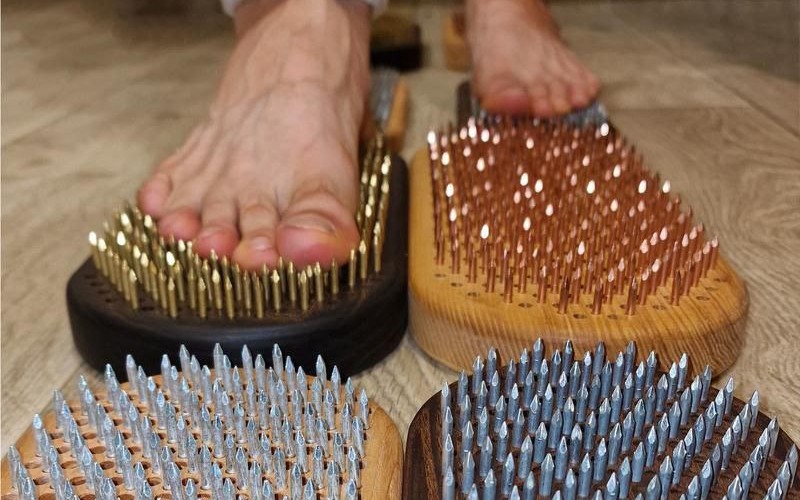
- The board base. Ideally, it should be made of sturdy yet lightweight material, such as polypropylene foam. This makes it convenient for travel and day-to-day use.
- Nail material. Iron, copper, silver, or even gold. The material influences the energy and cost. For example, silver nails are considered to have a “cooling” and cleansing effect, while copper nails provide a warming effect.
- Distance between nails. 10 mm is the classic standard for beginners. With more experience, you can try boards with greater spacing, but that’s an advanced level.
- Compactness and practicality. If you travel, the board must be easy to transport.
“I always tell my students: this is your tool – choose it mindfully,” Maxim adds.
A nail board isn’t just a physical device. For many, it becomes a symbol of continuous growth.
How to Start Nail-standing Practice
You might be wondering, “It sounds intriguing, but isn’t it dangerous?” Let us reassure you! Nail standing is a safe practice if all rules are followed.
“In all my years of teaching,” smiles Maxim, “no one has ever been scratched. The secret is the right approach and proper preparation.”
The best time for nail-standing is early morning, when the body feels fresh and the mind is calm. Begin with a simple breathing exercise to get centered, and then step onto the nails confidently!
“Imagine you are preparing not for a challenge but for a meeting with your true self,” advises Maxim. “This is a unique moment in your life.”
How to Prepare
You will need:
- A nail board (with 10 mm spacing between nails – standard for beginners);
- A comfortable chair for support;
- A quiet spot where you won’t be disturbed;
- 15–20 minutes;
- A willingness to explore yourself.
Step-by-Step Guide:
- Choose a quiet place and time where no one will disturb you.
- Perform a light warm-up or breathing exercise to relax.
- Calmly place both feet on the nails.
- Distribute your weight evenly between both feet.
- Take a deep breath through your nose and exhale slowly, imagining tension leaving your body with each breath.
- Close your eyes and focus on your inner state.
- Start with 1–3 minutes. Over time, you can increase the duration.
Finishing:
- Gently step off the board, using the chair for support.
- Massage your feet to restore circulation and conclude the session with a short meditation or a stretch.
Take your time before starting nail-standing practice on your own
Before beginning, it’s essential to remember: it’s best to start this practice with the guidance of a professional. Why is this important?
- Safety. An experienced specialist will teach you the correct foot placement and proper weight distribution to avoid injuries.
- Support. Your guide will help you overcome the initial sharp sensations and provide emotional support.
- Error correction. Beginners often make small mistakes that can prevent them from experiencing the true effects – a mentor will help you avoid and correct these.
“Every time I see someone conquer their fear and take their first step onto the nails,” Maxim says, “I witness the birth of a new, stronger version of that person. It’s a genuine transformation miracle!”
Conclusion
Friends, we hope that this introduction to nail-standing practice has inspired you to explore. Remember, each of us is capable of incredible internal transformation. Nail-standing isn’t just a physical practice – it’s a path to discovering yourself, overcoming fears, and unlocking your potential.
If you feel ready to take your first step toward your true self, join us for our Yoga Retreat in Bali. This is a unique opportunity to find harmony through meditation and yoga and meet Maxim, a dedicated guide to nail-standing practice. Under his attentive guidance, you’ll safely take your first steps on the nails, overcome doubts, and experience an amazing journey of inner growth.
Join our trip to Bali! May your path to self-discovery be filled with the joy of exploration!