Namaste, my dear friends! Today I want to share one of the most interesting and powerful techniques that can change your morning – pranayama. I will not burden you with complicated terms and ancient texts, although great wisdom is behind them. Let’s keep it simple. Pranayama is the art of breath control. And Breath, as you probably know, is not only a necessity of life, but also the key to energy, balance, and inner harmony.
I am an experienced yoga master, astrologer, and numerologist. For many years now I have been studying ancient practices and adapting them for modern people. I know exactly how small changes in your daily routine can lead to big transformations. Pranayama is one such technique, and it is incredibly effective.
I’m often told that yoga is beautiful and beneficial, but too difficult. They say it requires meditating in a cave or sitting in a lot on some peak. That’s not true at all! Yoga is a practice for life. It helps you become calmer, stronger, and more confident right here and now – at home, in the city, in our current circumstances. The same goes for pranayama.
This technique is suitable for everyone, even if you have never practiced yoga before. With its help, you can literally in 10-15 minutes achieve mental clarity, energize your body, and set yourself up for a productive day. All you need is your desire, a little time, and one of the simplest and most natural actions we do every day – breathing.
Today I’m going to tell you how you can use pranayama to work with your inner state, balance your energy, and start your day off right. And, trust me, it’s easier than it looks!
The essence of pranayama: what are Ida and Pingala?
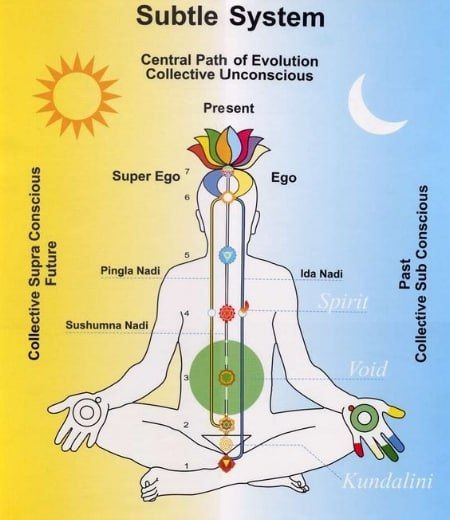
When we talk about pranayama, it is important to realize that this practice is not just a breathing exercise. It’s about working with the energy of our body. The whole point is that inside us, according to the yogic system, there is life energy – prana – flowing inside us. This energy moves through special channels called “nadis”. Of these, the main three channels are:
- Sushumna – the central channel, which is responsible for balance and spiritual development;
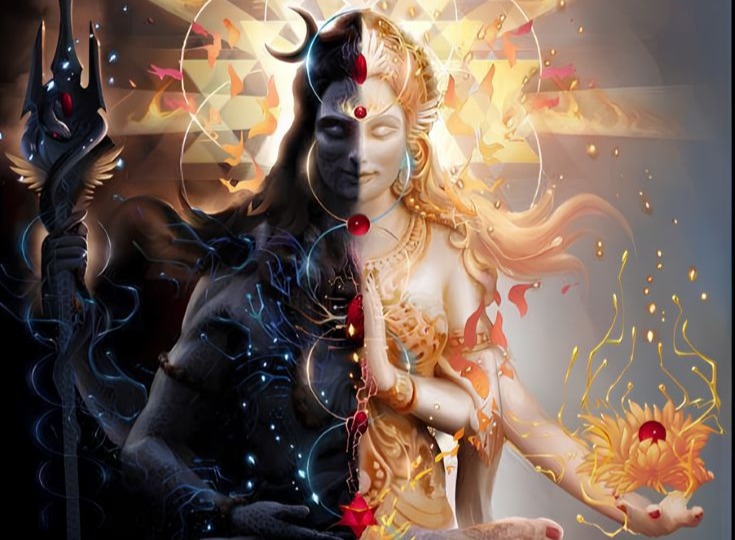
- Ida – the left channel, which is connected with the Moon, the receiving energy (in yoga it is called the “feminine beginning”);
- Pingala is the right channel, which is associated with the solar, active energy (“masculine beginning”).
To keep it simple: Ida helps us slow down, calm down, and find inner harmony. And Pingala activates, energizes, and helps us make decisions.
The energy of Ida and Pingala wraps around the central channel, Sushumna, and proper breathing helps to direct these flows as you need them. For example, when we have something important to do – a negotiation or a difficult task – we need to activate Pingala. And if your day will be connected with reflection, meditation, or creativity, working with the Ida channel will help.
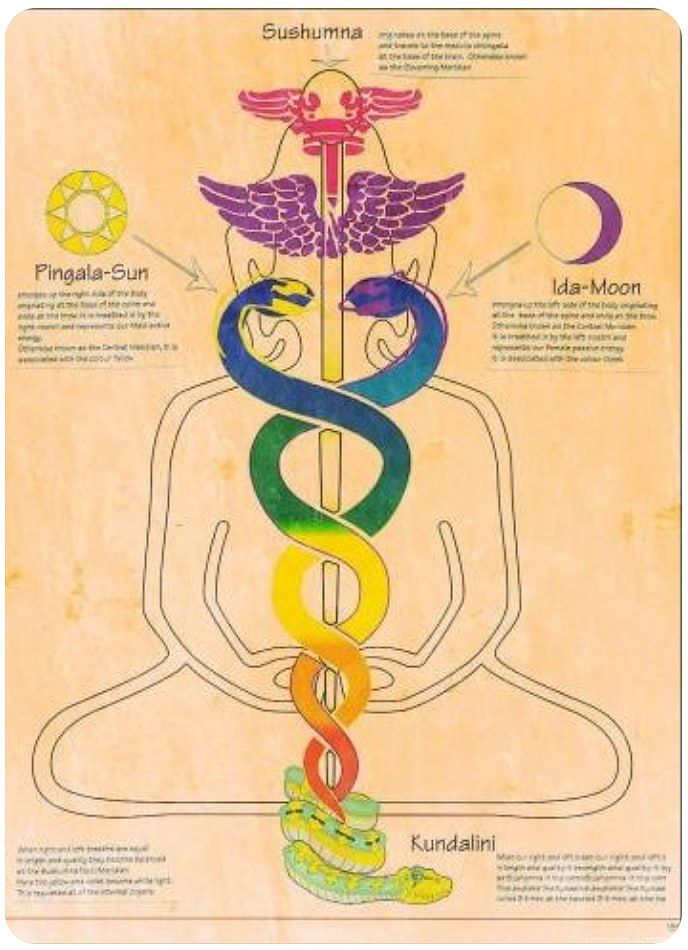
Pranayama is a universal tool: it allows you to work with these channels to bring your state into harmony. And the amazing thing is that this ancient practice is relevant even in today’s world, where we are constantly in the flow of things.
Now that you know how energy works inside us, let’s understand how you can put this knowledge into practice. I have prepared for you a simple and understandable morning pranayama technique, which will take only a few minutes and will help you perfectly set up for the day.
Morning ritual of pranayama: step-by-step instructions
Now let’s get to the practice. I will show you a simple morning technique that will help you harmonize your energy channels – Ida and Pingala – and fill you with energy for the whole day.
Preparation: create a space to practice
You don’t need to be an expert or have sophisticated equipment. For this practice, find a place where you won’t be disturbed for 10–15 minutes.
Take a comfortable asana (meditation posture)
- Sit with a straight back in any comfortable asana;
- if your knees are high, put pillows under them – this will help to relax your legs;
- remember: it is important not to tense the legs, but to concentrate on the breathing channels;
- the top of the head gently pulls upwards.
Prepare the mudra for pranayama
Fold the fingers of the right hand into a special mudra (“duck”):
- two fingers (index and middle fingers) are placed inside the palm;
- the ring finger will cover the little finger;
- the thumb will cover the right nostril;
- ring finger – the left nostril.
Tune in to the practice
- join the palms of your hands in front of you;
- say “OM” out loud or to yourself three times;
- this will help you focus and tune into the sacred rhythm of breathing.
Now you are fully ready to practice.
Detailed algorithm of actions
Step 1: Work with the left channel (Ida)
- Close the right nostril with the thumb of the right hand. Open your left palm outward – it will help you to accept energy calmly.
- Take 22 sharp exhalations (kapalabhati) through the left nostril. As you inhale, visualize that you are drawing in a dense liquid, as if you were sucking up water. On the exhalation, push the air into the water, creating a sensation of resistance.
- After kapalabhati, perform 22 calm breathing cycles. One cycle = smooth inhalation through the left nostril + soft exhalation.
- Breathe slowly and relax while continuing to visualize the flow of cool, calming energy.
The number 22 corresponds to the even energy of the feminine, soft and harmonious.
Step 2: Work with the right channel (Pingala)
- Switch to the right nostril: take a deep breath through the left nostril, then close the left nostril with your ring finger. Keep your right palm relaxed.
- Exhale 21 sharp exhalations (kapalabhati) through the right nostril. Use the same technique with the representation of water. When breathing, follow the correct sequence: on the inhalation first fill the abdomen, then expand the chest; on the exhalation – in reverse order.
- Do 21 calm breathing cycles. One cycle = deep inhale + long exhale.
The number 21 is not chosen by chance – it is an odd number that corresponds to the masculine, active energy of the right channel.
Step 3: The final step is square breathing for balance
- Starting with the left breath: close the right nostril with your thumb, and take a deep breath through the left nostril for 4 counts.
- Breath-hold: close both nostrils and hold your breath for 4 counts.
- Exhale through the right nostril: open the right nostril, close the left nostril with the ring finger, and exhale for 4 counts.
- Delay after exhaling: hold your breath with empty lungs (both nostrils closed) for 4 counts.
- Switch to the right side: inhale through the right nostril for 4 counts, then repeat the cycle starting with a delay and exhaling through the left nostril.
What is important to know about the square breathing technique
Square breathing is a great way to balance the Ida and Pingala energy channels and to attune the mind and body to a state of harmony. The technique is based on breathing evenly through the four phases as if you were drawing the sides of a square with your breath.
A complete cycle consists of:
- Inhalation through one nostril.
- Holding the breath (above).
- Exhaling through the other nostril.
- Holding the breath (bottom).
Start with 4 full cycles, performing breathing in this beginner’s rhythm:
- inhale for 4 counts;
- hold at the top for 4 counts;
- exhale for 4 counts;
- bottom hold for 2 counts.
When you feel that this practice is given easily, you can move to more advanced levels:
- 6 counts: inhale for 6 counts, top delay for 6 counts, exhale for 6 counts, bottom delay for 4 counts;
- 8 counts: inhale – 8, hold at the top – 8, exhale – 8, hold at the bottom – 4.
For most, the level will be sufficient as practice will become approximately 10 minutes.
Important: increase the duration gradually, making sure that your breathing remains soft and comfortable. Always keep the delay a little shorter to keep the rhythm smooth and easy.
Square breathing is your tool for inner balance. Try it and you will feel your mind calm, your body fill with energy, and your day begin with a clear mind and power forward.
Conclusion
My dear friends, today we have touched on this amazing practice! You know, every morning when I sit down for my pranayama, I feel infinite gratitude to the ancient yogis for discovering and preserving this system for us. After all, the Creator really did create us perfectly – with these amazing energy channels that help us to be both soft and accepting and strong and determined.
Remember: when you have to make an offering, go to bow to someone, or subdue your ego – activate the left channel. And if you have important negotiations, people management, or active social actions ahead of you – activate the right channel. But the most beautiful thing is to start every morning with the activation of both channels. After all, living in harmony is a real art, and pranayama helps us to master it.
I hope that this simple morning practice will become your little miracle, your special time for yourself. Just 10–15 minutes – and you are already a different person: calm, filled, ready for a new day.
And for those who want to practice more and deeper, I’ve recorded the full version of this morning’s practice on our learning platform. There you will also find many other helpful yoga videos for home practice. Choose your format – monthly or year-long access – and practice at your own pace, at a time that’s comfortable for you.
Let this ancient wisdom come into your life easily and naturally!